Okra with lime
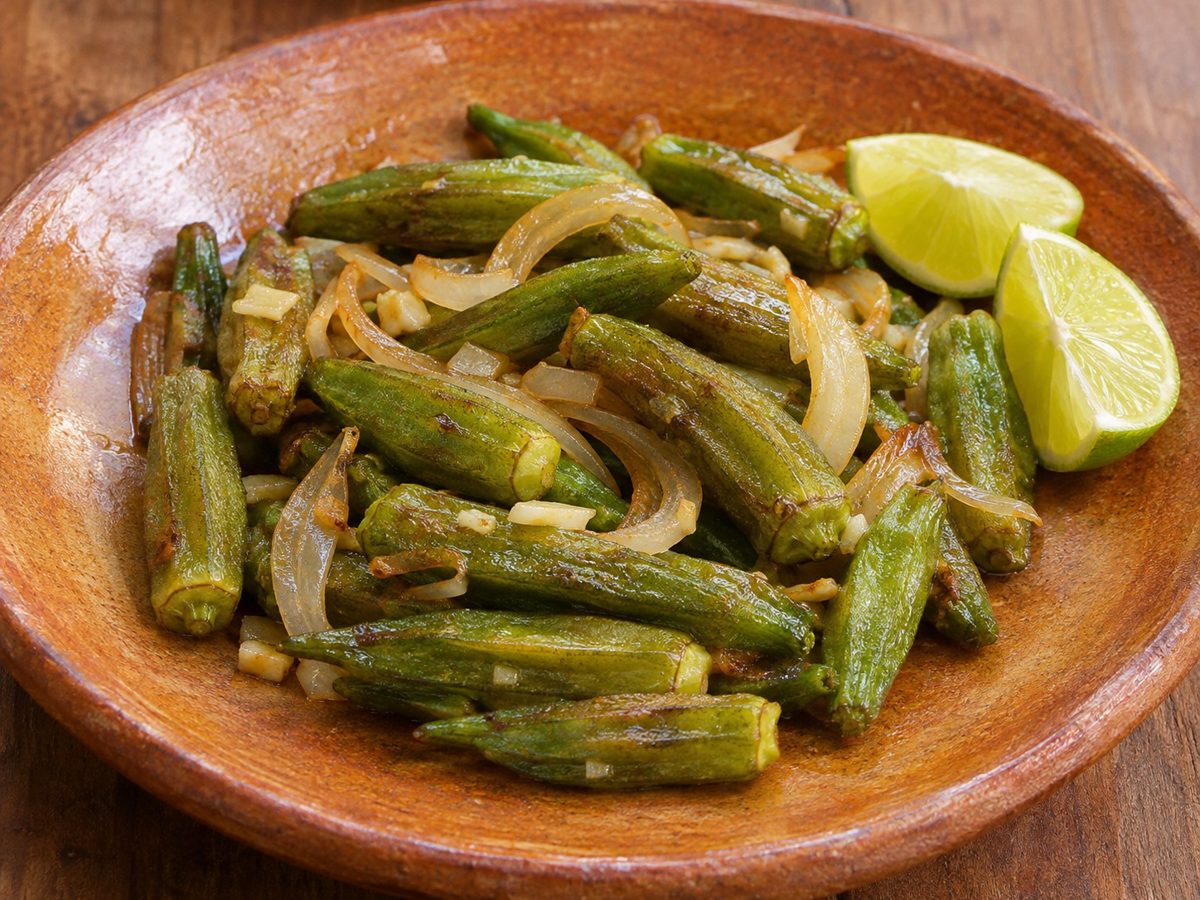
Okra can be served whole with a little onion and citrus rather than becoming a large pot of sauce. The small pods are briefly browned, then tenderized under a lid with very little water. Their shape stays visible and the texture retains a little firmness. Serve with rice, grilled food or fish. This is a contemporary use of okra, distinct from soupou kandia and preparations in which the vegetable is pounded to thicken sauce.
Ingredients
- 500 g small fresh okra
- 120 g finely sliced onion
- 2 garlic cloves, finely chopped
- 30 ml neutral oil
- 60 ml hot water initially, adjusted slightly if needed
- 15 ml lime juice, added gradually
- 2 g salt, adjusted after tasting
- Pepper and optional chili
- A few extra citrus wedges for the table, optional
Preparation
Wash okra and dry thoroughly. Shorten the hard stem ends without opening the pods. Discard badly damaged or fibrous pieces. Keep small pods whole for cooking.
Heat oil over medium-high heat. Add okra in as even a single layer as possible. Lightly brown for 5 minutes, turning with a spatula. Work in two batches if the pan is too small.
Lower heat and add onion. Stir gently and cook for 4 minutes. Add garlic and stir for about 1 minute, preventing burning on the hot base.
Pour in 60 ml water, add salt and cover. Cook gently for about 8–10 minutes. Check one of the largest pods: it should cut easily without a long tough fiber.
If still firm and the water has evaporated, add a spoonful of hot water and cook a few more minutes. Once tender, uncover to evaporate any excess liquid.
Remove from heat, add pepper and half the lime juice. Taste and add more to preference. Serve promptly with onions shared between portions and chili offered separately.
Introduction
Okra can be served whole with a little onion and citrus rather than becoming a large pot of sauce. The small pods are briefly browned, then tenderized under a lid with very little water. Their shape stays visible and the texture retains a little firmness. Serve with rice, grilled food or fish. This is a contemporary use of okra, distinct from soupou kandia and preparations in which the vegetable is pounded to thicken sauce.
Okra naturally contains mucilage. Cutting and the quantity of liquid affect its perception, but the aim is not to promise its disappearance. Here the pods remain whole and are handled gently. Lime brings brightness at serving; it does not change the vegetable's nature. Attentive cooking balances lightly browned surfaces with a tender interior, without drying the tips or leaving tough pods.
Cultural context
At a glance Makes 4 side portions. Preparation 15 minutes. Cooking about 20 minutes. Equipment: wide frying or sauté pan with lid and spatula. No major allergen is deliberately added to the basic formulation. Use small fresh okra of similar size. Rice and other accompaniments are prepared separately and are not included in the quantities.
Choosing tender pods Okra's size and condition matter more than a very precise cooking time. Small fresh pods are easier to cook whole than large fibrous ones. Their surfaces should be sound, without soft or moldy areas. Reserve noticeably larger pieces for a preparation where they can be cut and checked separately. Mixing them with small pods complicates the even cooking sought here.
Sorting does not mean every pod must be a perfect decoration. A small superficial mark can be removed if the rest is sound. However, old tough vegetables do not regain pleasant texture simply through a long time in the pan. If one pod is very resistant, check its structure before extending cooking for the entire batch. Already-tender pieces could collapse while waiting.
Preparing without opening too much Wash before drying and trimming the stems. A very wet surface cools the pan and initially encourages steaming, whereas the first stage aims for a few browned areas. Dry with a clean cloth or suitable paper. Then shorten only the hard end of the stem. Cutting deeply into the top opens the pod and changes how mucilage meets the cooking juices.
There is no need to remove every tip. Keeping okra whole makes handling and presentation easier. Use a spatula instead of vigorous spoon stirring. A pod pierced during cooking remains edible if initially sound; it may simply thicken the juices a little more. This is a method for a particular texture, not a rule that any opened okra is a failure.
Two heat levels, two results The first stage lightly colors the surface. An overcrowded pan struggles to do this; use two batches rather than raising heat until the few pieces touching the bottom burn. Browning can be subtle and uneven. It must not turn black. Small brown areas already provide pleasant aroma without drying the entire pod.
The second phase is covered with little water to soften the center. The lid limits evaporation and low heat prevents sticking. Check moisture before adding liquid: one or two spoonfuls can suffice. Lots of water would change the method and produce more sauce. Once the texture is right, uncover briefly if necessary. Do not continue merely to reach a stated time if the pods are already tender.
Adding lime Add lime gradually after cooking. Its acidity should complement okra and onion without dominating each bite. The proposed volume suits this quantity of vegetables, but actual fruit flavor varies. Half may suffice initially. Extra wedges allow everyone to adjust their portion. Juice does not replace sorting or correct a fibrous pod.
Omitting chili does not change the cooking. Garlic, onion and pepper already provide clear seasoning. Adding tomato sauce at the last moment would change the dish more substantially; it might suit another formulation but would obscure the small amount of citrus-flavored sauce here. The restrained ingredient list also makes comparison with the collection's other okra recipes easier.
Serving and storage Present in one layer in a shallow dish, onions between the pods. They easily accompany a plain grain or fish dish. There is no need to crush them into rice; their whole shape offers another way of eating this vegetable. Provide a serving spoon or tongs to avoid tearing pieces when lifting them.
Cool leftovers quickly and refrigerate within two hours, sooner in very hot weather. Keep at no more than 4 °C and eat within 48 hours. Reheat gently, covered, with very little water until evenly hot. Texture will be softer than at first serving. Add fresh lime only after tasting the reheated dish rather than automatically repeating the full original amount.
Editorial note An original contemporary formulation for RecettesAfricaines.com. Whole pods and a small amount of sauce distinguish it from okra sauces already in the collection: https://www.recettesafricaines.com/recettes/127