Sweet potato leaves
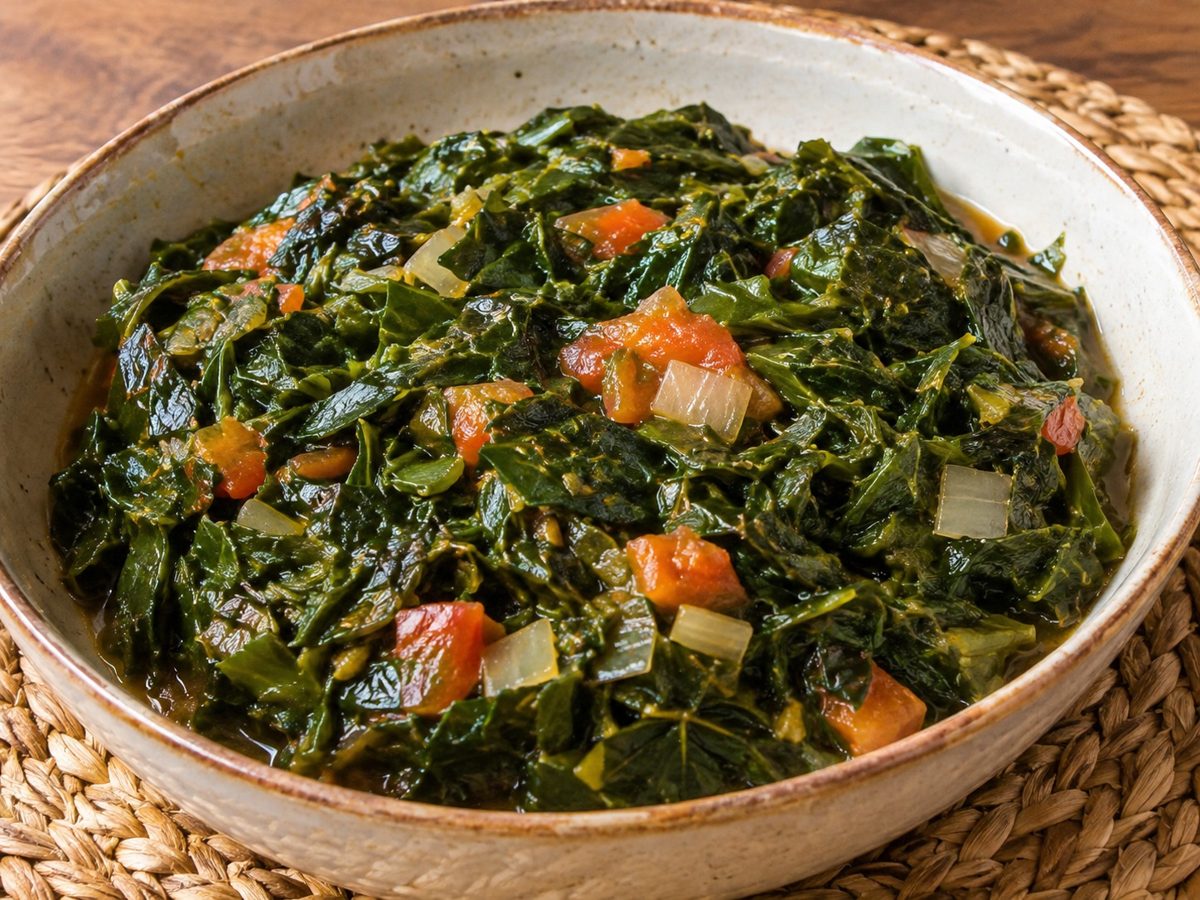
Sweet potato leaves are a vegetable in their own right. Here they cook with onion, a little tomato and garlic in a small amount of sauce. Sort, wash and precook them, then simmer gently. The result is tender, dark green and moist enough to accompany a grain. This recipe contains neither peanuts nor fish, keeping it simply plant-based and allowing the leaves' own flavor to emerge.
Ingredients
- 500 g fresh edible sweet potato leaves, sorted and without thick stalks
- 200 g finely chopped onions
- 250 g chopped tomatoes
- 2 garlic cloves, chopped
- 30 ml neutral oil
- 150 ml hot water for simmering, adjusted as needed
- 15 ml lemon juice for serving, optional
- 2 g salt initially, adjusted as needed
- Pepper and optional chili
- Enough drinking water to wash and precook the leaves
Preparation
Sort the bunches. Discard damaged leaves and remove the thickest stalks. Weigh 500 g prepared leaves. Wash in several changes of drinking water if needed, lifting them from the basin to leave particles at the bottom.
Bring a large saucepan of water to the boil. Add leaves and cook for about 5–7 minutes until softened. Drain, discard the precooking water and cool slightly before chopping coarsely.
Heat oil in the sauté pan. Fry onions gently over medium-low heat for about 7 minutes. Add garlic and stir for 1 minute, then tomatoes and cook for 5 minutes.
Add chopped leaves, 150 ml hot water, salt and pepper. Partly cover and simmer about 10 minutes, stirring two or three times. Check texture and continue if still too firm.
Adjust the sauce. If the base dries before leaves are tender, add a little hot water. If very watery at the end, uncover for a few minutes. The mixture should be moist and spoonable without much separate liquid.
Taste and adjust seasoning. Offer lemon and chili separately or add a little lemon to the pan. Serve hot with the chosen accompaniment, distributing leaves and sauce together.
Introduction
Sweet potato leaves are a vegetable in their own right. Here they cook with onion, a little tomato and garlic in a small amount of sauce. Sort, wash and precook them, then simmer gently. The result is tender, dark green and moist enough to accompany a grain. This recipe contains neither peanuts nor fish, keeping it simply plant-based and allowing the leaves' own flavor to emerge.
Identify the product correctly: these must be edible sweet potato leaves, Ipomoea batatas. Ordinary potato leaves are unsuitable. Visual resemblance, an abbreviated market name or a plant growing in a garden is not enough to select the ingredient. Request a food product from a supplier who can identify it. This recipe describes home cooking, not identification of wild plants.
Cultural context
At a glance Makes 4 side portions. Preparation 25 minutes, depending on the bunches' condition. Cooking about 30 minutes. Equipment: large washing basin, saucepan, colander and sauté pan. The 500 g refers to sorted leaves without thick stalks. No major allergen is deliberately added; check other products. Use fresh leaves, not powder or dried leaves.
Buying the leaves A bunch sold as food is a safer starting point than an ornamental plant whose treatments are unknown. Check freshness and origin, then prepare without leaving the leaves for long in a closed bag at room temperature. They can be bulky raw and shrink considerably. Weighing after sorting provides a reproducible quantity even when purchased bunches contain different proportions of stalks.
Small tender stalks may sometimes be kept depending on the product; thick fibrous parts would lengthen cooking and interfere with eating. This recipe removes them for a simple reference. If your supplier offers prepared or frozen leaves, follow the instructions rather than automatically applying the fresh-leaf timing. A bag's apparent volume is not equivalent to the stated net weight of sorted leaves.
Washing and preparation Use a sufficiently large washing container. Gently stirring and then lifting the leaves out leaves any sand at the bottom instead of pouring it back over the vegetable. Change the water if still dirty. The final water should be clean. This does not replace good sourcing but avoids unpleasant particles that would be difficult to remove after chopping.
Precooking makes chopping easier and gives an initial texture check. The leaves soften and finish cooking in the onion and tomato base. Discard the water in this formulation; do not turn it into stock for reuse without a reason. This culinary step cannot make a wrongly identified plant edible. Resolve any uncertainty about identity before starting.
Simmering Cook onion and tomato before adding the leaves. They provide an already aromatic base without unnecessarily prolonging the leaves' cooking. Once leaves are in the pan, keep the heat moderate. Stir to distribute juices and check the bottom, without turning the mixture into a smooth purée. Coarse chopping keeps a recognizable leafy texture in each bite.
Tenderness varies with leaf age and the thickness of retained parts. The final ten minutes are therefore an initial guide, followed by an actual check. Taste a small cooled amount: it should chew easily without long resistant fibers. If more cooking is needed, add a little water and continue covered. Uncover to evaporate only when the texture is right.
Finding balance Tomato acidity varies with season and product. Lemon is therefore optional and offered in small amounts. Taste with the accompanying grain before adding it. Plain rice softens some flavors that seem stronger when the leaves are tasted alone. Pepper and chili can stay restrained; they should neither mask the vegetable nor cover abnormal bitterness.
A smoked-fish version would require declaring the allergen and accounting for salt and usage instructions. It is not part of this formulation. Likewise, cassava or moringa leaves are not immediate substitutes at identical quantities and cooking times. Each plant needs its own preparation. The precise ingredient name matters for shopping as well as passing on the recipe.
Serving and storage Serve with rice or another grain in quantities suited to the rest of the meal. This preparation can accompany separately cooked fish or meat but remains a vegetable dish in an entirely plant-based meal too. Include some sauce in each portion to avoid dry leaves. Offer remaining lemon at the table rather than automatically pouring it all into the pan.
Cool leftovers quickly in a shallow container and refrigerate within two hours, sooner in very hot weather. Keep at no more than 4 °C and eat within 48 hours. Reheat with a little water until evenly hot, stirring the bottom. Do not keep a badly damaged raw bunch expecting cooking to compensate for its condition. Fresh leaves are best prepared soon after purchase.
Sources FAO, sweet potato and its leaves as vegetables: https://www.fao.org/family-farming/detail/fr/c/1619513/ Société nationale d’horticulture de France, distinction from ordinary potato leaves: https://www.snhf.org/fiche-plante/patate-douce/ The proportions and cooking method above are an original formulation, without claiming an exclusive origin for this preparation.