Aubergines with nététou
Eggplant absorbs the cooking juices and becomes meltingly tender, while nététou gives the sauce a deeper fermented note. This preparation uses ordinary purple eggplant cut into large cubes, with onions and tomato. It makes a plant-based side or part of a meal with a grain. The formulation is contemporary, highlighting a condiment used in Senegalese cooking without assigning an undocumented regional origin to this particular combination.
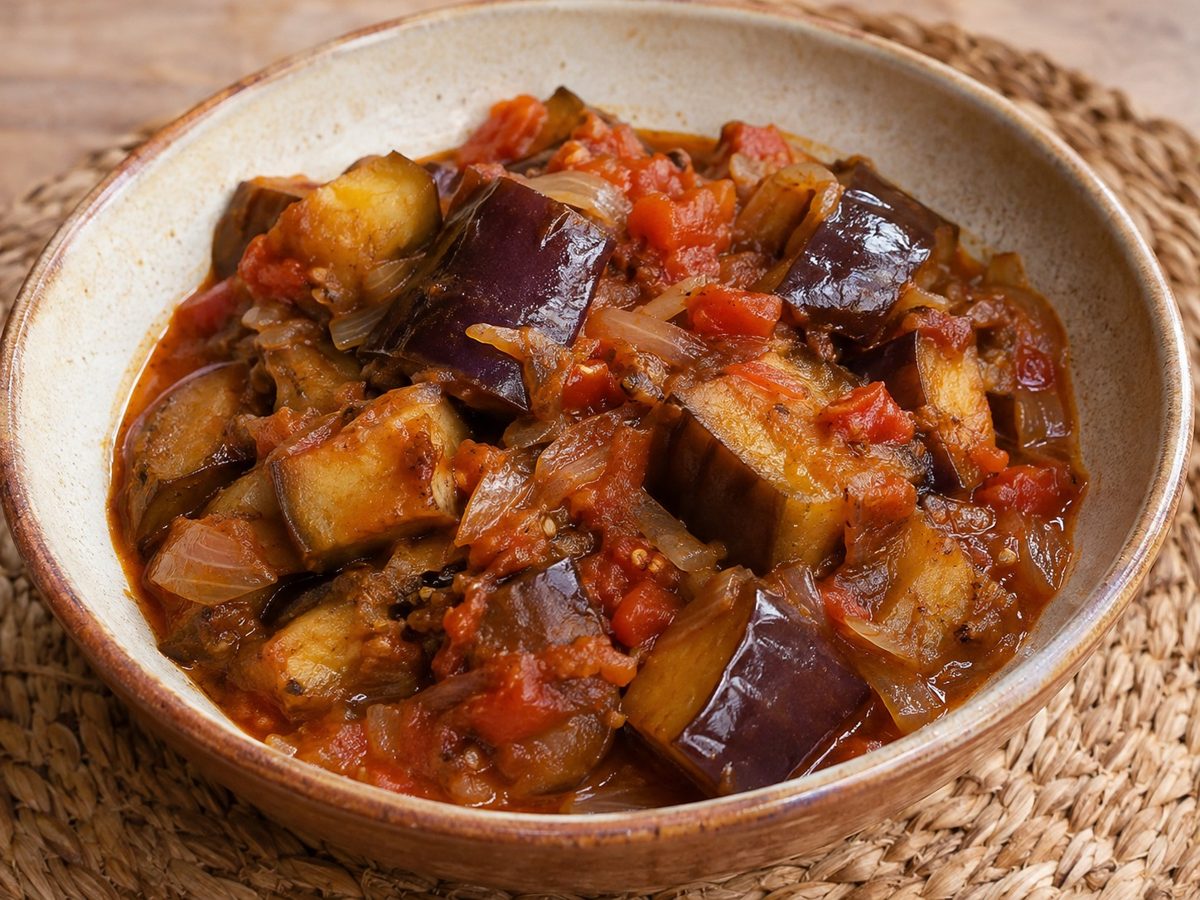
Ingredients
- 700 g purple eggplant, weighed after removing stems, in 3 cm cubes
- 200 g sliced onions
- 250 g chopped tomatoes
- 15 g tomato paste
- 2 garlic cloves, chopped
- 5 g plain food-grade nététou, crumbled
- 40 ml neutral oil, divided into two additions
- 200 ml hot water initially, plus a little more if needed
- 10 ml lemon juice for serving
- 2 g salt initially, adjusted according to the condiment
- Pepper and optional chili
Preparation
Wash eggplants, remove stems and cut into cubes. Keep the skin to help hold pieces together during cooking. Pat dry if the surface is very wet. Prepare onion, garlic and nététou before heating the pan.
Heat 20 ml oil over medium-high heat. Add half the eggplant and lightly brown for about 4 minutes, turning. Set aside, then repeat with the remaining eggplant and 20 ml oil.
Put onions in the same pan. Lower the heat and add two spoonfuls taken from the 200 ml water. Cook for 5 minutes, stirring to loosen the browned juices without blackening the base. Add garlic and tomato paste and stir for 2 minutes.
Add tomatoes, crumbled nététou, remaining water, salt and pepper. Stir, then return eggplant. Cover and simmer for 15–20 minutes, gently turning the pieces halfway.
Check one of the largest cubes: the flesh should yield easily to a knife tip. If it resists and the base is dry, add a little hot water and continue covered. If tender but with abundant liquid, uncover for a few minutes.
Taste sauce with an eggplant piece. Adjust salt only if necessary. Add some lemon or offer it at the table. Serve hot or warm with optional chili separately.
Introduction
Eggplant absorbs the cooking juices and becomes meltingly tender, while nététou gives the sauce a deeper fermented note. This preparation uses ordinary purple eggplant cut into large cubes, with onions and tomato. It makes a plant-based side or part of a meal with a grain. The formulation is contemporary, highlighting a condiment used in Senegalese cooking without assigning an undocumented regional origin to this particular combination.
The result relies on measured oil and gentle covered cooking. Eggplant does not need to be submerged in oil to become tender. An initial spell in the pan adds a little color, then tomato juices and water finish the cooking. A small amount of nététou keeps the vegetable recognizable. Its strength varies: learn your product gradually rather than trying afterward to correct a sauce dominated by the condiment.
Cultural context
At a glance Makes 4 side portions. Preparation 20 minutes. Cooking about 35 minutes. Equipment: wide sauté pan with lid and spatula. No major allergen is deliberately added to the basic formulation; check the nététou's composition and possible traces in other products. The recipe uses neither stock cubes nor dried fish.
Recognizing the product Nététou is a fermented néré-seed condiment also found under other names across West Africa. Its form and composition vary between producers. A powder blended with salt differs in strength from a plain ball or whole-seed product. Read the ingredient list and weigh the amount actually used. The recipe specifies five grams of plain food-grade product, not an undefined spoonful of compound seasoning.
Its aroma is pronounced and its flavor spreads through the juices. Crumble before adding to avoid a very concentrated mouthful. If trying it for the first time, start with three grams, taste the sauce after a few minutes, then add more. This initial reduction does not change the rest of the method; it simply lets you get to know your product. A larger dose may suit other preparations but is unnecessary to give this dish character.
Making the eggplant tender Raw eggplant has spongy flesh that can quickly absorb surface oil. Pouring in lots more at every stage is no requirement for success. The initial browning is light; moist cooking then tenderizes the cubes inside. Keep the lid on during this second phase and watch the bottom. The flesh should soften without disintegrating under the spatula.
A sufficiently wide pan makes initial browning easier. If all the cubes are piled up, they release water and mainly steam. Two batches give more control. There is no need to brown every side evenly; a few colored surfaces suffice. Be restrained, because flesh dried out heavily before simmering is less pleasant and needs more liquid to regain softness.
Skin helps cubes keep their shape. Cut similar sizes and turn with a spatula that slides underneath. Handle already-soft pieces less. A bitter African eggplant such as diakhatou cannot replace this purple variety without changes: flavor, size and cooking time can differ. Such a variation deserves separate measurements and labeling.
Finding the right amount of sauce The sauce should coat the pieces and leave a little juice at the bottom of the dish. It need not be as thick as tomato paste. Over-reduction makes nététou and salt seem more concentrated. Add a little hot water, reheat and taste again. Measure lemon at the end to control acidity, which already depends on the tomatoes chosen.
If the dish seems too watery, first check whether the eggplant is cooked. If still firm, continue covered instead of immediately reducing. Once tender, remove the lid and evaporate at a gentle simmer. Constant stirring would needlessly break the cubes. A few movements to prevent sticking are enough, with steady heat and attention to the bottom.
Serving These eggplants can accompany rice, fonio or grilled food. The juices spread well over a plain grain. Another vegetable portion can vary the meal's color and texture, but this recipe is sufficient as a side. Do not automatically cover it with another spice blend: first taste the combination of eggplant, tomato and nététou. Add chili to individual portions for those who want it.
For warm serving, allow only the time needed to bring everyone to the table; this does not mean leaving the dish unrefrigerated all afternoon. Cooled eggplant absorbs more juice. When reheating, one or two spoonfuls of water can loosen the sauce. Heat the dish before judging consistency, because cold juices naturally seem thicker.
Storage Cool quickly in a shallow container and refrigerate within two hours, sooner in very hot weather. Keep at no more than 4 °C and eat within 48 hours. Reheat gently, covered, until evenly hot, turning cubes carefully. Avoid repeatedly reheating the entire dish. Resting makes the texture softer; this is expected and does not justify longer storage.
Context and sources An original contemporary formulation for RecettesAfricaines.com. The collection also discusses nététou's role in aromatic bases: https://www.recettesafricaines.com/recettes/1217 This reference provides context for the condiment; it does not attribute a specific tradition to the precise purple eggplant and sauce combination described here.