Cowpeas with smoked fish
Cowpeas give this stew substance, while smoked fish brings a more pronounced flavor to the sauce. Cook the beans before adding them to the pan; the final cooking combines them with tomato and onion, then heats the fish without breaking it into crumbs. The result should stay loose, with enough sauce to coat every spoonful. Serve on plates, with a grain accompaniment prepared separately if desired.
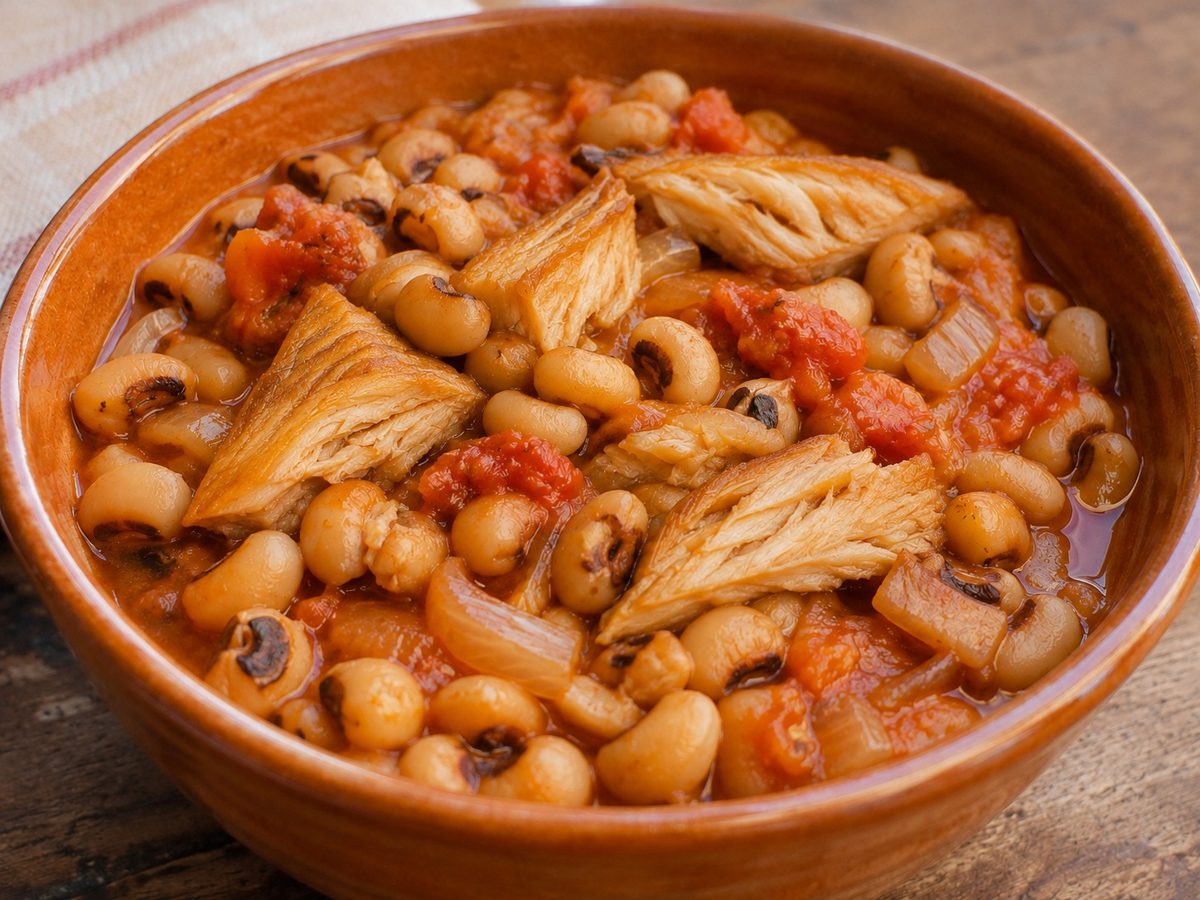
Ingredients
- 600 g fully cooked cowpeas, drained weight
- 250 g fully cooked hot-smoked mackerel flesh, without skin or bones
- 250 g finely sliced onions
- 300 g chopped tomatoes
- 20 g tomato paste
- 2 garlic cloves, chopped
- 25 ml neutral oil
- 250 ml hot water, plus a little more if needed
- 1 bay leaf
- 10 ml lemon juice for serving
- Pepper and optional chili
- Salt only after tasting, depending on the products used
Preparation
Drain the cowpeas and check they are tender. Carefully remove the mackerel's skin and bones. Separate the flesh into pieces large enough to remain visible after mixing. Keep refrigerated while making the sauce.
Heat oil in the sauté pan. Fry onions over medium heat for 7 minutes, stirring. Add garlic and tomato paste, then cook for 2 minutes without letting the base blacken.
Add chopped tomatoes, 250 ml hot water, bay leaf, pepper and optional chili. Simmer uncovered for 12 minutes. The tomato should lose its raw taste and the onions become meltingly soft.
Add cooked cowpeas. Stir gently and simmer for 5 minutes. If too thick, add one or two spoonfuls of hot water rather than stirring harder.
Lay mackerel pieces in the sauce. Gently press them down with the spoon and cover. Heat for about 4–5 minutes or until very hot at the center. Avoid vigorous boiling, which would break them apart.
Remove the bay leaf. Taste a complete mouthful before deciding whether to add salt. Offer lemon separately or add some to the sauce. Distribute fish pieces among the four portions and serve hot.
Introduction
Cowpeas give this stew substance, while smoked fish brings a more pronounced flavor to the sauce. Cook the beans before adding them to the pan; the final cooking combines them with tomato and onion, then heats the fish without breaking it into crumbs. The result should stay loose, with enough sauce to coat every spoonful. Serve on plates, with a grain accompaniment prepared separately if desired.
This is a contemporary home adaptation, distinct from the collection's meat ndambé and cowpeas with squash. It uses fully cooked hot-smoked mackerel sold for this purpose and kept refrigerated. It does not describe preparing traditionally dried fish or smoking fish at home. This distinction defines the recipe's real timetable and keeps the fish recognizable in the composition.
Cultural context
At a glance Serves 4. Preparation 20 minutes. Cooking about 30 minutes with already-cooked cowpeas. Equipment: wide sauté pan with lid, colander and two forks. Allergen: fish. Rice or bread served alongside is not included in the quantities. Fish weight refers to net flesh after removing skin and bones.
Preparing the cowpeas Weigh cowpeas after cooking. The same dried weight would yield far more beans than needed. If starting with dried beans, follow the product's soaking and cooking instructions, then drain and weigh out the six hundred grams required. Do this beforehand; the time can vary considerably with the beans' age and variety. Still-firm beans will not become tender in the sauce's last few minutes.
Canned or jarred beans are suitable. Read their seasoning before starting because the fish also contributes salt. Rinse if necessary, drain thoroughly and weigh the net amount. Use broad, infrequent movements in the pan. Very soft beans mainly need reheating; constant stirring breaks their skins and turns the sauce into a purée, which is not the aim here.
Choosing smoked fish The word “smoked” alone does not describe whether a product is cooked. Here the fish is fully cooked by hot smoking, and its instructions permit eating after opening or reheating. Cold-smoked fish, heavily dried fish or a product requiring desalting needs a different process. Specify its preliminary treatment and cooking time rather than applying only this recipe's final five minutes.
Small bones can remain even when fillets look clean. Work over a light-colored plate and check pieces between clean fingers without crushing them. Very fine pieces quickly disappear when mixed. Keeping them fairly large also helps portioning: each plate gets fish, not merely flavored sauce. The two hundred and fifty grams refers to the weight after this sorting.
Adjusting the sauce The sauce starts with little liquid because the beans are already cooked. Its role is to coat them and receive the fish. Very watery tomatoes may need a few more minutes of reduction before adding cowpeas. Reduce without the mackerel, then return to a gentle simmer. Conversely, if the base dries out, add small amounts of hot water and stir once to distribute.
Taste before salting. This instruction concerns the dish's balance, not an assumption that all smoked fish has identical saltiness. Two products can give very different results. Lemon adds brightness; it does not remove salt already present. A mouthful of cowpeas with fish gives a better guide than sauce alone. Chili remains optional and can be offered at the table so everyone can choose their preferred intensity.
At the table Present the stew in a dish wide enough that the fish is not buried under beans. Lift out and distribute fish pieces first, then add cowpeas and sauce around them. Plain rice, some fonio or bread can accompany the meal; choose their quantities separately. The recipe already contains a legume and fish. A fresh salad offers a contrasting texture without multiplying garnishes.
For advance preparation, make only the sauce and cowpeas, keeping the mackerel for final reheating. This better preserves its texture. Do not leave the fish on the worktop while the base cools. Keep it refrigerated in its packaging or a clean container, following its instructions. Time spent outside the refrigerator does not reset when a product is chilled again.
Storage Cool leftovers quickly in small containers and refrigerate within two hours at room temperature, sooner in very hot weather. For this stew, eat within 24 hours at no more than 4 °C, or earlier if the fish instructions require it. Thoroughly reheat only the portion needed, adding a little water if the sauce has thickened. Reheating cannot make improperly stored fish safe to eat.
Sources Collection reference for cowpeas, without attribution of this specific variation: https://www.recettesafricaines.com/recettes/53 Assurance maladie, seafood-related risks and the importance of storage: https://www.ameli.fr/assure/sante/themes/alimentation/poisson-fruits-mer-autres-produits-mer/manger-du-poisson-connaitre-les-risques-immediats-et-les-prevenir The proportions and combination presented here are an original formulation for this collection.