Banana fritters
Ripe banana brings fruity flavor and a tender crumb to these small spoon-dropped fritters. The batter uses no baker's yeast and needs no long rise. A small amount of baking powder, mixed with the flour just before cooking, provides lightness. Weigh the fruit after peeling to reduce variation between batches. Two large bananas and three small ones do not necessarily supply the same amount of pulp.
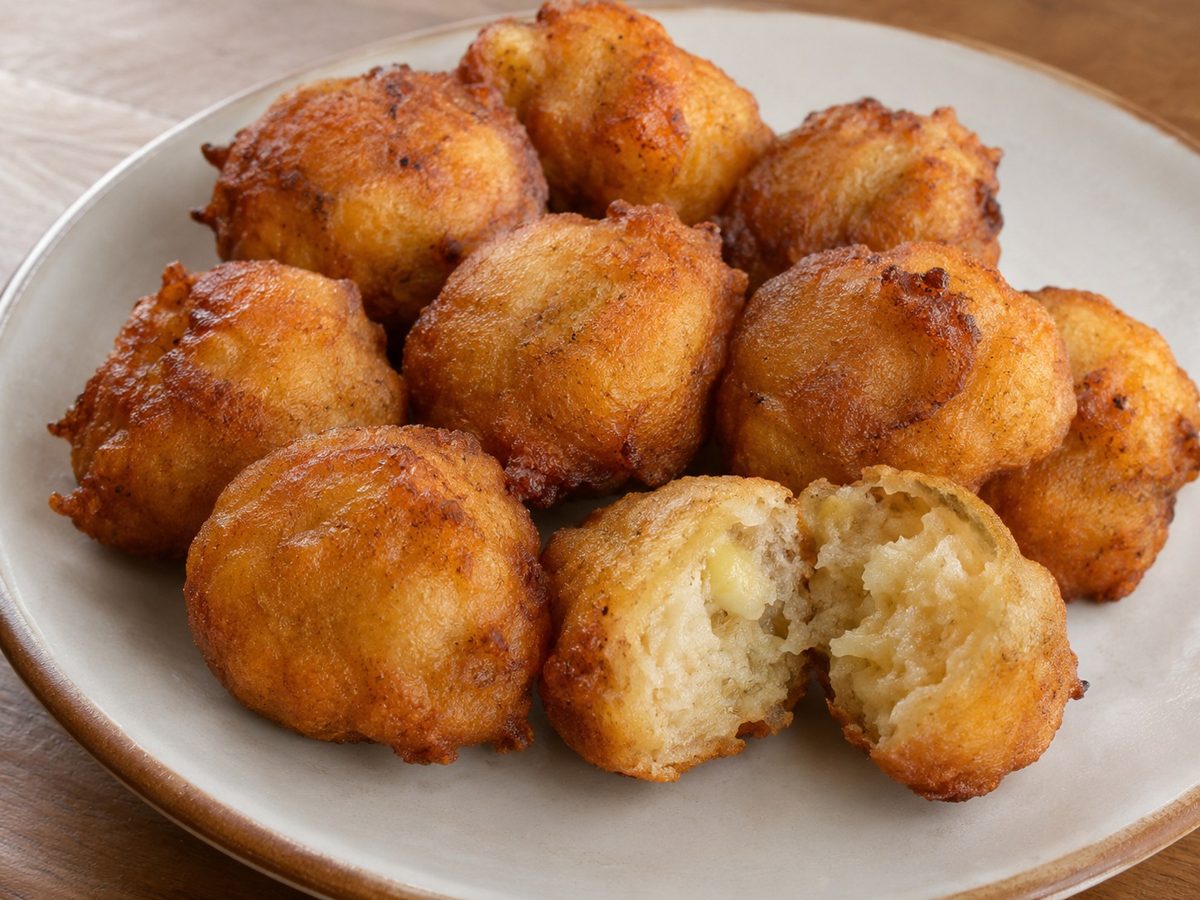
Ingredients
- 350 g very ripe dessert banana pulp, weighed without skin
- 200 g wheat flour
- 6 g baking powder
- 15 g sugar, optional depending on fruit ripeness
- 1 g salt
- ½ teaspoon vanilla extract, optional
- 1 liter suitable frying oil, adjusted to the vessel without exceeding its safe fill level
- No milk or water added in the starting formulation
Preparation
Peel and weigh the bananas. Discard fruit showing spoilage, an abnormal fermented smell or mold. A heavily spotted skin can indicate ripeness, but the flesh must remain sound. Mash the 350 g pulp in the bowl with a fork.
Separately mix flour, baking powder and salt. Add optional sugar and vanilla to the pulp if using. Fold in the dry mixture with a spoon just until a thick, even batter forms, without prolonged beating.
Observe the batter: a small spoonful should hold some shape before slowly falling back. It must not flow like crêpe batter. Do not add water out of habit. Prepare the draining station while the oil heats.
Heat oil to about 165–170 °C in a deep saucepan no more than half full. Scoop a small amount of batter with one spoon and gently slide it off with the second. First make a test fritter of about 30–35 g.
Cook the first fritter for about 5–6 minutes, turning to brown evenly. Drain, let cool until warm, then open: the crumb must be cooked, without wet flour pockets or a doughy center. Adjust spoonful size or heat before continuing.
Fry the remaining fritters in small batches of three to five, depending on the pan's width. Maintain the oil temperature and turn as needed. Remove batter scraps between batches so they do not burn.
Drain on a rack or absorbent paper. Serve warm once the center is comfortable to eat. No additional serving sugar is necessary in this version; banana already provides aroma and noticeable sweetness.
Introduction
Ripe banana brings fruity flavor and a tender crumb to these small spoon-dropped fritters. The batter uses no baker's yeast and needs no long rise. A small amount of baking powder, mixed with the flour just before cooking, provides lightness. Weigh the fruit after peeling to reduce variation between batches. Two large bananas and three small ones do not necessarily supply the same amount of pulp.
These fritters belong to a family of preparations shared by several African cuisines. Their inclusion in a Senegalese cookbook does not make them an exclusively Senegalese invention. This version uses dessert bananas, not plantains, and differs from the plain flour and millet fritters already in the collection. Mash the fruit with a fork; a slightly uneven texture is fine as long as the batter holds together enough to be dropped into oil.
Cultural context
At a glance Makes about 16 small fritters, or 4 afternoon-snack portions. Preparation 15 minutes. Frying about 20–25 minutes in several batches. Equipment: scales, bowl, fork, two spoons, deep saucepan and frying thermometer. Allergen: wheat. This formulation contains neither egg nor milk. Exact yield depends on spoonful size; small, regular pieces cook more evenly.
Choosing and preparing bananas Ripe fruit mashes easily and distributes better through the batter. A still-firm banana would produce larger pieces and a less sweet flavor. Variety and ripeness nevertheless affect the pulp's moisture. Weighing gives a more precise starting point than counting fruit without eliminating these differences entirely. Use a fork rather than a blender: a very liquid purée requires reassessing the flour proportion and makes control harder.
Ripe fruit must not be confused with spoiled fruit. Frying is no justification for keeping pulp in doubtful condition. Prepare bananas when making the batter and use clean utensils. If some fibers or slightly firmer pieces remain visible, mash them against the bowl's side. A perfectly smooth cream is unnecessary for these small fritters.
Understanding consistency Flour gives the pulp enough structure to remain in small masses in the oil. Do not knead this batter: stir until no dry flour remains, then stop. Overmixing can make the crumb less pleasant. Distribute the baking powder through the flour to avoid concentrated pockets. It does not work like baker's yeast and does not require the batter to double in volume before cooking.
If the pulp is especially moist and the batter immediately spreads, check the weight first. An extra banana changes the balance considerably. A small flour adjustment may be necessary depending on the fruit, but keep it measured and record it for the next attempt. Do not add enough to make bread dough. Conversely, a dry mixture that is difficult to scoop often indicates a quantity error or insufficiently ripe pulp.
Checking the first fritter A test fritter gives information that outside color cannot. Banana's natural sugars encourage fairly rapid browning. A very brown piece can therefore remain wet inside if it is too large or enters oil that is too hot. Let it cool until warm before opening and inspect its structure. A tender crumb retains moisture; a doughy center is still a compact, sticky mass unlike the rest of the crumb.
If the center is uncooked, make smaller pieces and lower the oil temperature slightly. Merely extending cooking without correcting the heat would make a very dark crust. The suggested thirty- to thirty-five-gram portions keep the fritters modest in size. Two spoons let you deposit batter without bringing fingers near the oil and help maintain fairly regular size between batches.
Organizing batches An overloaded oil bath cools abruptly. Leave enough room to turn the fritters without sticking together and let the temperature recover between batches. The oil must never smoke. A deep saucepan filled below halfway leaves room for the oil to rise when pieces are added. Keep utensils dry; never pour water into the oil to try to cool it.
Have the rack or absorbent paper ready before the first batch. Spread fritters out instead of piling them in a bowl. Their own steam quickly softens the surface if they are enclosed while hot. When serving several people, offer successive small batches rather than keeping the whole quantity warm for a long time. Banana aroma and the contrast between crust and crumb are best soon after cooking.
Serving and storage Serve warm with a drink suited to the meal. Kinkeliba or an unsweetened drink works without adding a new topping. The sugar in the batter is optional; very ripe bananas may be sweet enough. Cinnamon or another spice would make a variation but is unnecessary for this fruit-centered formulation. Plantain needs a separate recipe because its texture and behavior differ.
The fritters are best the same day. Cool leftovers quickly, then refrigerate in a closed container within two hours on the table, sooner in hot weather. Preferably eat within 24 hours after reheating thoroughly in the oven. The crumb will remain denser than at first serving. Prepare only the batter you plan to fry: a long wait after adding baking powder gives less consistent results.
Sources Aïssatou Mbaye, Beignets moelleux de bananes, October 21, 2018, documenting this family of preparations in contemporary African cooking: https://aistoucuisine.com/publications/beignets-moelleux-de-bananes The weights, intended yield and cooking guidance above are a formulation specific to this collection. No exclusive national origin is attributed to these fritters.