Cowpeas with pumpkin
Here cowpeas meet the sweetness of squash in a stew without meat or fish. The beans remain whole, and tender squash cubes lightly bind the tomato sauce. Onion, garlic and a small optional amount of nététou add depth to this base. This recipe is a contemporary creation for the collection, built around an ingredient firmly established in Senegalese cooking. It is not presented as an old specialty with a particular regional name.
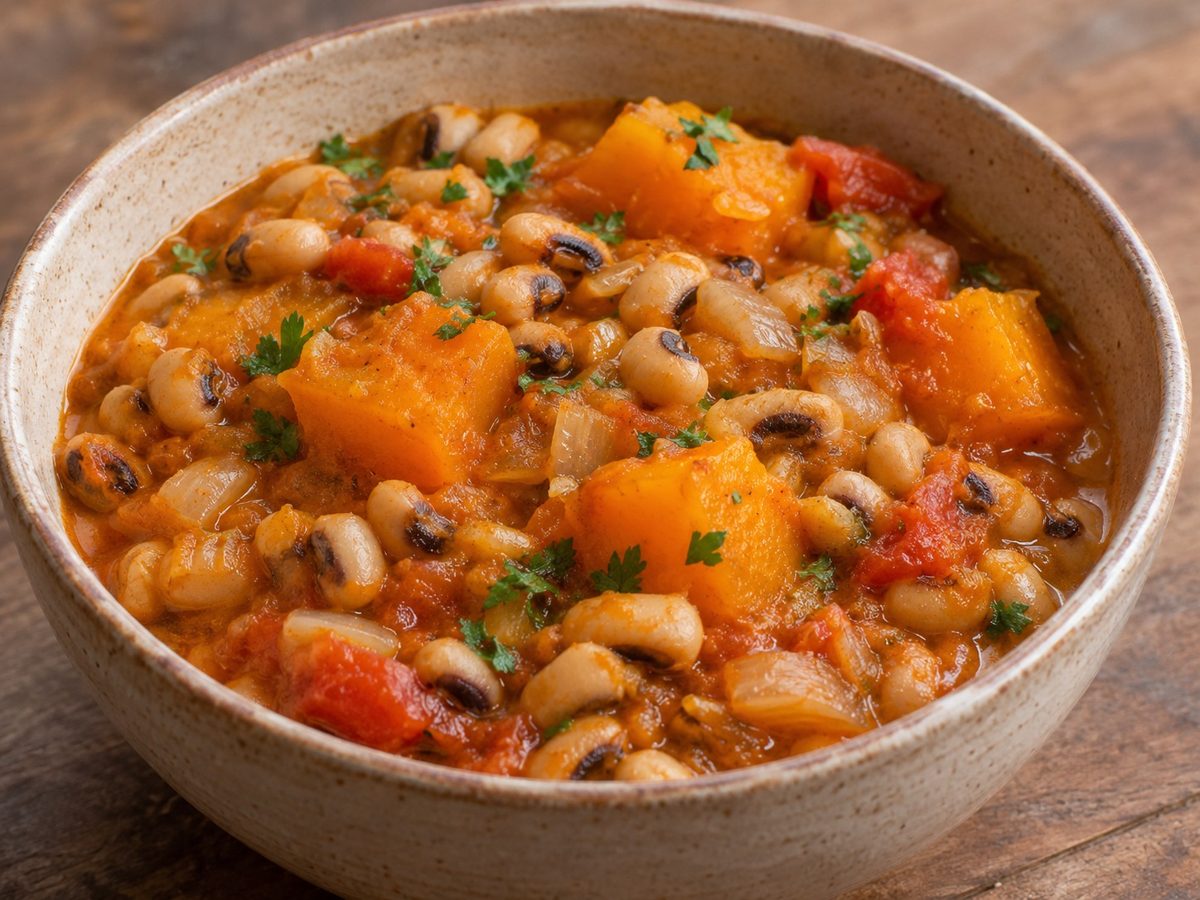
Ingredients
- 600 g cooked cowpeas, drained weight
- 600 g firm squash flesh, peeled and deseeded, in 2.5 cm cubes
- 200 g chopped onion
- 300 g chopped tomatoes
- 20 g tomato paste
- 2 garlic cloves, chopped
- 30 ml neutral oil
- 350 ml hot water initially, plus a little more if necessary
- 5 g plain food-grade nététou, optional
- 10 ml lemon juice for serving
- 10 g parsley, washed and chopped
- 2 g salt initially, adjusted according to the cowpeas used
- Pepper and optional chili
Preparation
Drain the cowpeas and check they are cooked: a bean should crush easily under a fork but keep its shape when lifted. If still firm, finish cooking separately before starting the stew. Prepare the squash cubes and aromatics.
Heat the oil in the sauté pan. Fry the onion over medium heat for 7 minutes. Add garlic, then tomato paste, and stir for 2 minutes without letting it blacken. Add tomatoes and cook for 5 minutes, stirring the bottom regularly.
Add squash, 350 ml hot water, salt, pepper and crumbled optional nététou. Partly cover and simmer for 15–20 minutes. Stir gently to prevent sticking without crushing the pieces.
Check the squash with a knife tip. When almost tender, fold in the cooked cowpeas. Cook gently for about 8 minutes until the whole mixture is thoroughly hot and the flavors combine.
If the sauce is still watery, remove a few squash cubes, mash them with a small ladleful of sauce and return this purée to the pan. Stir gently. If too thick instead, add hot water a spoonful at a time.
Remove from the heat. Add parsley and half the lemon juice, taste, then add more according to the tomatoes' acidity. Check salt with a mouthful containing both cowpeas and squash. Distribute the pieces so that the four portions are similar.
Introduction
Here cowpeas meet the sweetness of squash in a stew without meat or fish. The beans remain whole, and tender squash cubes lightly bind the tomato sauce. Onion, garlic and a small optional amount of nététou add depth to this base. This recipe is a contemporary creation for the collection, built around an ingredient firmly established in Senegalese cooking. It is not presented as an old specialty with a particular regional name.
Unlike ndambé, this recipe gives squash a prominent place and is served on a plate. It is neither a sandwich nor a filling. The portions can form a plant-based meal with a grain, or a substantial accompaniment to other dishes. To make the result reproducible, weigh the cowpeas after cooking and draining. The soaking and cooking time for dried beans is therefore not hidden within the stew's short cooking time.
Cultural context
At a glance Serves 4. Preparation 20 minutes. Cooking about 40 minutes using fully cooked cowpeas. Equipment: wide sauté pan with lid and wooden spoon. No major allergen is deliberately added to the basic formulation; check ingredients and possible traces in the products used. Rice, fonio or bread served alongside is not included in the quantities.
Start with the correct cowpea weight Cooked weight avoids a common approximation in legume recipes. Six hundred grams of dried cowpeas would produce a very different amount from that intended here. If starting with dried beans, prepare them separately according to the supplier's instructions, then weigh out six hundred grams after draining. Reserve any extra for another recipe, respecting cooling and storage requirements. Do not try to finish cooking still-hard beans in the final few minutes of this sauce.
Jarred or canned cowpeas can work. Check their seasoning, drain and rinse if necessary before weighing the net amount. Some products are already very salty: omit the initial two grams of salt and adjust at the end. The skins should remain intact enough for the beans to be mixed without falling apart. Very soft canned beans require even gentler handling.
Choosing the squash Firm-fleshed squash allows cubes to remain in the sauce. The weight given refers to flesh without skin or seeds. The amount to purchase will therefore be greater and will depend on the variety. A very watery squash needs more reduction; dense flesh may require a small water top-up while simmering. These differences do not justify changing all the other ingredients: observe the cooking and consistency first.
Even cutting prevents a mixture of small collapsed fragments and large pieces that are still firm. Cubes about two and a half centimeters across remain distinct on the plate. Keep the heat moderate and the lid partly open. If the pan is almost dry while the squash is still firm, add a little hot water and cover more fully for a few minutes. Turning up the heat would mainly make the tomato sauce stick.
Adding flavor without concealing the vegetables Tomato paste, onions and garlic form the base. Nététou is optional because its strength and seasoning vary between products. Use an identified food-grade preparation and read its composition: some blends already contain salt or other ingredients. Five grams are enough to add aromatic presence in this formulation. Omitting it makes a milder stew that still works with the same quantities of squash and cowpeas.
The sauce thickens through a small amount of mashed squash. This keeps the ingredients recognizable and avoids adding flour out of habit. Remove only a few cubes if necessary; puréeing them all would remove the intended contrast. Add lemon after cooking, little by little. Taste a complete mouthful rather than sauce alone because the squash's sweetness changes how acidity is perceived.
Putting the meal together Serve in deep plates or a serving dish. Plain rice or fonio can receive the sauce, with quantities suited to the meal and appetite. Cowpeas already provide substance and squash a volume of vegetables; there is no need to multiply accompaniments. Keep chili separate so everyone can choose its intensity. A little parsley added at the last moment brings freshness.
For a more rustic version, let some squash pieces break down naturally in the sauce while others remain whole. Blending everything would turn it into soup or purée and require a different presentation. Adding smoked fish would change the flavor, plant-based character and allergens; it is not part of this recipe. The formulation deliberately retains an identifiable plant-based dish in a collection where animal products are already well represented.
Storage Cool quickly in shallow portions, then refrigerate within two hours, sooner in very hot weather. Keep at no more than 4 °C and preferably eat within 48 hours. To reheat, add a little water, cover and stir gently until the center of the entire portion is very hot. Cowpeas and squash thicken the sauce as it rests; reheat the dish before deciding whether to thin it further.
Editorial note An original contemporary formulation for this collection. The RecettesAfricaines collection already documents cowpeas in ndambé and cowpea salad: https://www.recettesafricaines.com/recettes/53 This reference places the ingredient within the collection; it does not justify any historical attribution for this precise cowpea and squash combination.