Stuffed crab
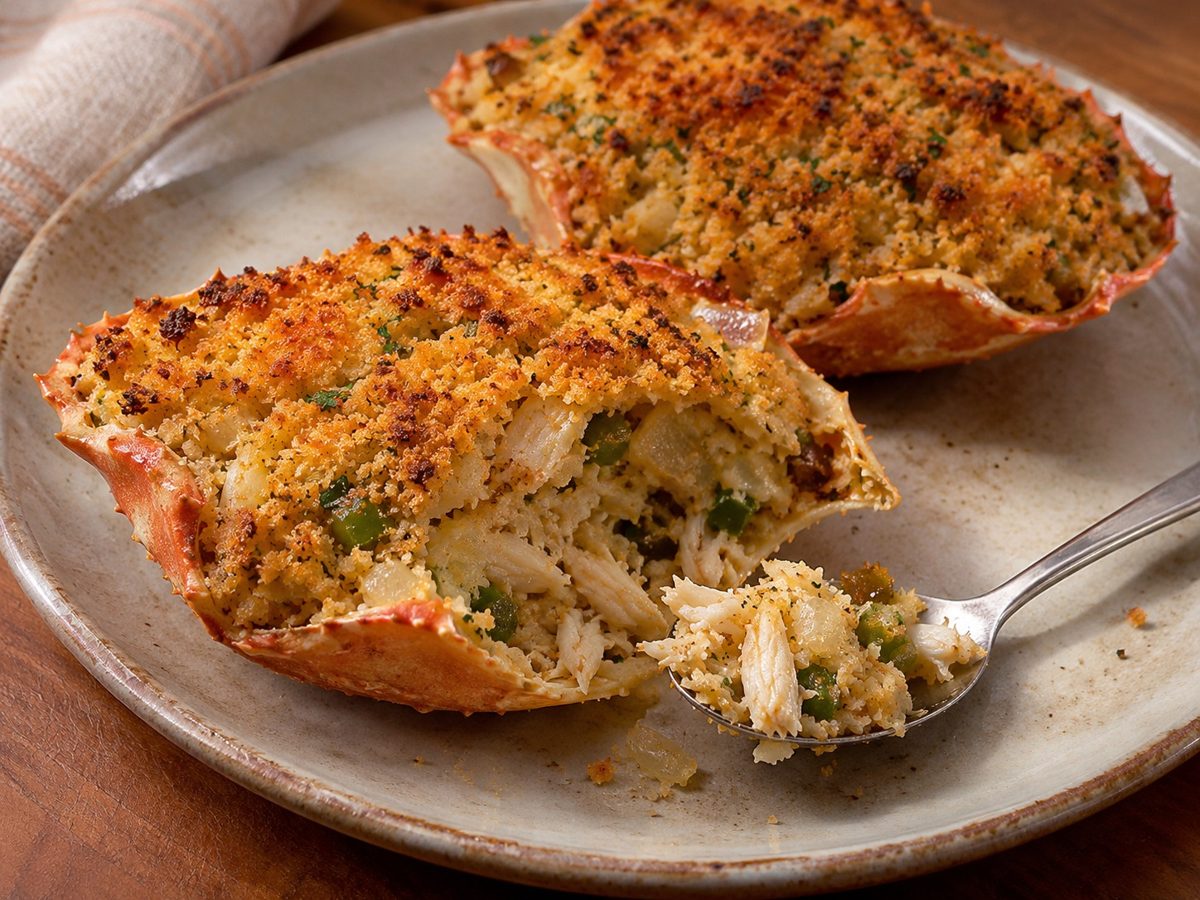
A successful crab stuffing lets you recognize the crab meat. Onion and pepper bring aroma, soft bread holds a little moisture, and a short spell in the oven brings everything together. The surface turns lightly golden while the inside stays soft. This version uses ready-cooked crab meat purchased through a regulated food supplier. Serve it in clean shells intended for food service or in four small ramekins.
Ingredients
- 400 g plain, cooked, refrigerated and drained crab meat
- 150 g very finely chopped onion
- 100 g green pepper, finely diced
- 1 garlic clove, chopped
- 60 g soft wheat bread, without hard crust
- 80 ml pasteurized milk
- 1 medium egg, about 50 g without shell
- 20 ml neutral oil, including 5 ml for ramekins if used
- 20 g wheat breadcrumbs
- 10 g parsley, washed and finely chopped
- 10 ml lemon juice
- Pepper and up to 1 g salt, only after tasting the base
- 4 clean shells suitable for food service, optional, or 4 ramekins
Preparation
Check the crab meat carefully for any small shell fragments. Keep it refrigerated while preparing the vegetables. Put the bread in the 80 ml milk and leave to soak for a few minutes.
Preheat the oven to 180 °C. Set the clean shells or ramekins on a stable baking tray. If using shells, steady them with crumpled aluminum foil if necessary. If using ramekins, lightly grease them with the reserved 5 ml oil.
Heat the remaining 15 ml oil in a frying pan. Sweat the onion and pepper over medium-low heat for about 10 minutes until the small cubes are tender. Add the garlic and cook for another 2 minutes. No substantial liquid should remain in the pan.
Transfer the vegetables to a bowl and let them cool until warm. Mash the soaked bread with a fork without discarding the milk it has absorbed. Add it to the vegetables with parsley, lemon and pepper. Taste this base and add a little salt if necessary, allowing for the crab's saltiness.
Fold in the crab meat, preserving some visible fibers. Add the beaten egg and mix just enough to distribute it. Once raw egg has been added, do not taste the stuffing again before cooking.
Divide among the four containers, keeping the layer moderately thick, no more than about 3 cm. Sprinkle with the 20 g breadcrumbs. Bake for about 18–22 minutes. Check that the filling is very hot at the center and reaches 74 °C; do not rely solely on the crust's color.
If the stuffing is cooked but still very pale, finish briefly under the grill, watching continuously. Rest on the tray for 3 minutes, then serve. The shells and ramekins remain very hot: place them on plates that allow handling without direct contact.
Introduction
A successful crab stuffing lets you recognize the crab meat. Onion and pepper bring aroma, soft bread holds a little moisture, and a short spell in the oven brings everything together. The surface turns lightly golden while the inside stays soft. This version uses ready-cooked crab meat purchased through a regulated food supplier. Serve it in clean shells intended for food service or in four small ramekins.
Stuffed crabs appear, for example, on a restaurant menu in Cap Skirring. This places the dish among the culinary offerings of coastal Casamance, without claiming an exclusive origin for a technique found in several cuisines. This recipe is a home adaptation with onion, pepper and parsley. It does not claim to reproduce a restaurant's recipe. Its small amount of bread and absence of cheese keep the crab's flavor at the forefront.
Cultural context
At a glance Makes 4 generous starters. Preparation 30 minutes. Cook the vegetables for 12 minutes, then bake for about 18–22 minutes. Preheat a conventional oven to 180 °C. Equipment: frying pan, mixing bowl, baking tray and four ovenproof containers of about 250–300 ml. Allergens: crustaceans, wheat, milk and egg. The stated crab weight refers only to cooked, drained meat.
Buying and weighing the meat Using cooked meat lets this recipe focus on the stuffing and its cooking. The meat must be plain: a seasoned preparation containing mayonnaise or sauce is unsuitable for these proportions. Check the ingredient list and storage instructions too. If buying whole cooked crabs, the yield varies greatly with their size and how full they are. Weigh the meat actually removed before starting instead of estimating it from the shells' weight.
Canned crab can be a practical adaptation. Drain it thoroughly and add salt sparingly. Its texture may be finer and wetter than freshly picked meat. In that case, mix even less to avoid a uniform stuffing. This recipe does not call for puréeing the meat: visible fibers and small pieces make it more pleasant to eat.
Keeping the stuffing soft Soft bread provides a gentle binding. Soak it before adding it so that it does not suddenly draw moisture from the meat during baking. Mash it with a fork and distribute it through the cooled vegetables. No large pockets of bread should remain. Keep the breadcrumbs for the surface; adding them all to the mixture would produce a drier stuffing and conceal more of the crab.
Dice the pepper finely and cook it before assembly. Large raw cubes would remain crunchy in a stuffing whose crab is already cooked and needs only a relatively short time in the oven. The same applies to the onion. Evaporate the vegetables' cooking liquid without drying them out. If much liquid remains in the pan, cook gently for a few more minutes before removing the vegetables; do not try to absorb it with lots of extra bread.
Choosing a baking container A crab shell gives a recognizable presentation, but a ramekin is a simple, consistent alternative. Use only clean shells supplied through a food business and intended for this purpose. Decorative shells are not automatically suitable for oven use. Whatever you choose, a stable container prevents spilling the stuffing when it goes into the oven. Prepare the tray before filling.
Thickness matters more than an impressive mound. A very tall stuffing can brown outside while its center is not hot enough. Divide the mixture into four similar portions and check the center of the thickest. Small buffet ramekins need less baking time; use the temperature at the center as your guide and adjust the time.
Serving and variations Serve these stuffed crabs with a lemon-dressed green salad prepared separately. The lemon in the stuffing is measured to complement the meat's sweetness. Offer an extra wedge at the table if guests want it. A very spicy sauce is unnecessary for the balance of this version. Serving it as a main course would require redefining the quantities of accompaniments and the number of servings, rather than treating these four starters as main portions.
Reduce the parsley if you want an even more marine flavor. Replacing the milk with another liquid or omitting the egg would change the binding and requires a separate formulation. Removing large pieces of crab does not make this dish suitable for someone allergic to crustaceans: all the stuffing and utensils have been in contact with that ingredient.
Storage Assemble the stuffing close to baking time and follow the supplier's instructions for the cooked meat. Cool any leftovers quickly in a shallow container, then refrigerate within two hours at room temperature, sooner in very hot weather. For this recipe, eat within 24 hours at no more than 4 °C, after reheating thoroughly. Avoid keeping a partly eaten portion in its shell to return to a buffet.
Sources Campement Way-Kassala, restaurant menu in Cap Skirring, accessed November 2, 2026: https://www.way-kassala.fr/index.php?ct=tarifs This menu documents stuffed crab in local dining; it supplies neither the recipe nor the proportions above. FoodSafety.gov, safe minimum temperatures for casseroles and leftovers: https://www.foodsafety.gov/food-safety-charts/safe-minimum-internal-temperatures