Diaga sauce
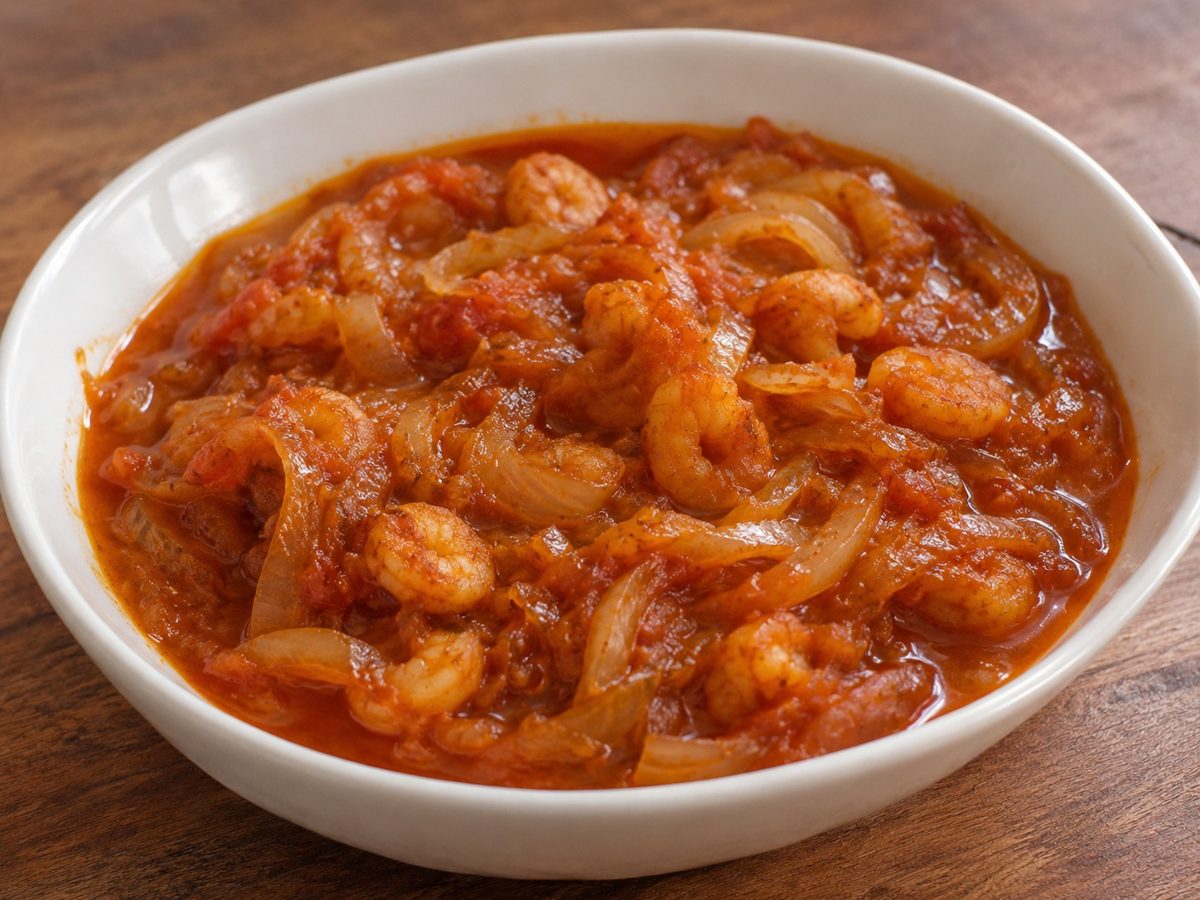
Diaga sauce brings a substantial topping to a dish. The onions soften, the tomato concentrates, and the shrimp are added at the end to retain their texture. This shrimp version accompanies roasted fish, fish rice or plain white rice. It contains no small fish balls: that other form of diaga requires extra preparation and a different timetable. Always read the sauce's name alongside its ingredients.
Ingredients
- 300 g raw shrimp, shelled and deveined, thawed in the refrigerator if necessary
- 500 g fairly thinly sliced onions
- 300 g chopped tomatoes with their juices
- 30 g tomato paste
- 2 chopped garlic cloves
- 30 ml neutral oil
- 150 ml hot water, plus a little extra if needed
- 10 ml lemon juice, added gradually
- 1 bay leaf
- 2 g salt initially, adjusted after tasting
- Pepper and a small pinch of ground chilli, optional
Preparation
Prepare the onions and garlic. Check the shrimp, pat them dry and keep refrigerated while the base cooks. Keep prepared vegetables and raw shellfish in separate containers.
Heat the oil in the sauté pan over medium heat. Add the onions and salt. Stir for 5 minutes to coat them and begin softening. They may take on a little colour but should not become deeply browned.
Pour in 50 ml of the measured water. Partially cover and cook over low heat for 10 minutes, stirring two or three times. If one side of the pan is hotter, move the onions around to keep cooking even.
Add the garlic and tomato paste. Stir for 2 minutes, then add the tomatoes, bay leaf, pepper, optional chilli and remaining 100 ml water. Simmer uncovered for approximately 12 minutes. The onions should be tender and the tomato should lose its raw taste.
Check consistency before adding the shrimp. A spoon should leave a channel that closes slowly. If too dry, add one or two spoonfuls of hot water; if very runny, reduce for a few more minutes.
Add the shrimp to the sauce. Stir gently and cook at a gentle simmer, generally for 4–6 minutes depending on size, until the flesh is fully opaque and firm. Check one of the largest without unnecessarily prolonging cooking for the others.
Remove the bay leaf. Add half the lemon juice, taste and add more if necessary. Distribute the shrimp and onions over the four portions of the chosen dish. Serve hot with a little additional sauce on the side.
Introduction
Diaga sauce brings a substantial topping to a dish. The onions soften, the tomato concentrates, and the shrimp are added at the end to retain their texture. This shrimp version accompanies roasted fish, fish rice or plain white rice. It contains no small fish balls: that other form of diaga requires extra preparation and a different timetable. Always read the sauce's name alongside its ingredients.
The desired contrast is between soft onions and shrimp that remain firm. Prolonged boiling of everything together would remove that distinction. Preparation takes place in two stages: gently cook the vegetable base, then briefly cook the shellfish. Lemon only adjusts the finish. It replaces neither ripe tomato flavour nor the time required to soften the onions. The quantities below make four portions of sauce with its topping, to distribute over the chosen dish.
Cultural context
Practical details Serves 4 as an accompaniment. Preparation: 20 minutes. Cooking: approximately 35 minutes. Equipment: wide sauté pan with a lid, knife and serving spoon. Allergen: crustaceans. Weigh the shrimp raw, after shelling and removing the digestive vein. Fish, rice or other accompaniments are not included in the sauce quantities.
Giving the onions the right texture Raw, softened and caramelised onions give different results. Here the main aim is to soften the slices. They should remain visible in the sauce rather than become a purée. Fairly even cutting helps: very thick pieces would remain firm while thin ends began to burn. Slice in a consistent direction and separate the slices before putting them in the pan.
The first 50 ml water supports this cooking. It allows continued softening over low heat without adding oil every time the bottom seems dry. Keep the lid slightly ajar, however: the onions need to cook and then lose some water. An overcrowded narrow pan would give a wetter mixture and require longer. Allow that extra time before the shrimp go in.
Building the tomato base Tomato paste gives a deeper colour and more concentrated flavour than chopped tomatoes alone. Stir it briefly into the onions before diluting. This should not become aggressive roasting. An acrid smell or blackening base means the heat is too high. Burnt tomato stays bitter after water is added; adjust the heat immediately rather than later trying to conceal the bitterness.
Fresh tomatoes vary with the season. If using them instead of chopped tomatoes, weigh the prepared flesh with its juices and watch the liquid released during cooking. Some will need longer reduction, others a little extra water. The stated timetable assumes a fairly concentrated base. Do not cook the shrimp throughout that reduction: removing and returning them will not restore their lost texture.
Cooking the shrimp at the last moment Choose fairly uniform sizes. Tiny shrimp and large prawns would not finish cooking together. The stated quantity refers to usable flesh; a 300 g bag of whole shrimp does not give the same yield. If frozen, follow the thawing instructions and drain carefully. Do not use thawing liquid to dilute the sauce.
Surface colour alone is insufficient for every variety. Check one of the thickest shrimp: its centre must no longer be translucent. Keep the sauce at a gentle simmer and move the spoon carefully. Once cooked, serve promptly. Keeping the topping on the heat while waiting for the rice makes the shrimp tougher. Have the main dish ready before starting this final stage.
At the table On roasted fish, pour a small amount of sauce first and present the remainder in a warm bowl. On fish rice, visibly distribute the shrimp so the first portion does not receive the entire topping. Add the onions and juices with a second spoon. This helps preserve the presentation of the dish receiving the sauce.
Mustard and sugar are not part of this formulation. If the tomato seems acidic, first check that it has cooked sufficiently and taste it with a mouthful of the accompanying dish. Add lemon sparingly too. For a milder sauce, simply omit the small pinch of chilli: the garlic, onion and tomato aromas remain. A fish-ball version needs a separate recipe with the corresponding fish, binding ingredients and cooking times.
Storage Making the onion and tomato base ahead allows the shrimp to be kept for serving time. Cool the base quickly and refrigerate in a shallow container. At mealtime, bring it back to a gentle simmer before cooking the shellfish in it. For a completed sauce, refrigerate leftovers within two hours at room temperature, sooner in very hot weather, and consume within 24 hours at 4 °C or below. Thoroughly reheat only the portion needed; the shrimp will be less supple than at first serving.
Sources Aïssatou Mbaye, Poisson farci au roff et sa sauce Diaga aux crevettes, 8 November 2025: https://aistoucuisine.com/publications/poisson-farci-au-roff-et-sa-sauce-diaga-aux-crevettes This source documents a shrimp version of diaga. The quantities and detailed method above are an original formulation, not a reproduction of the author's recipe.