Beef dibi
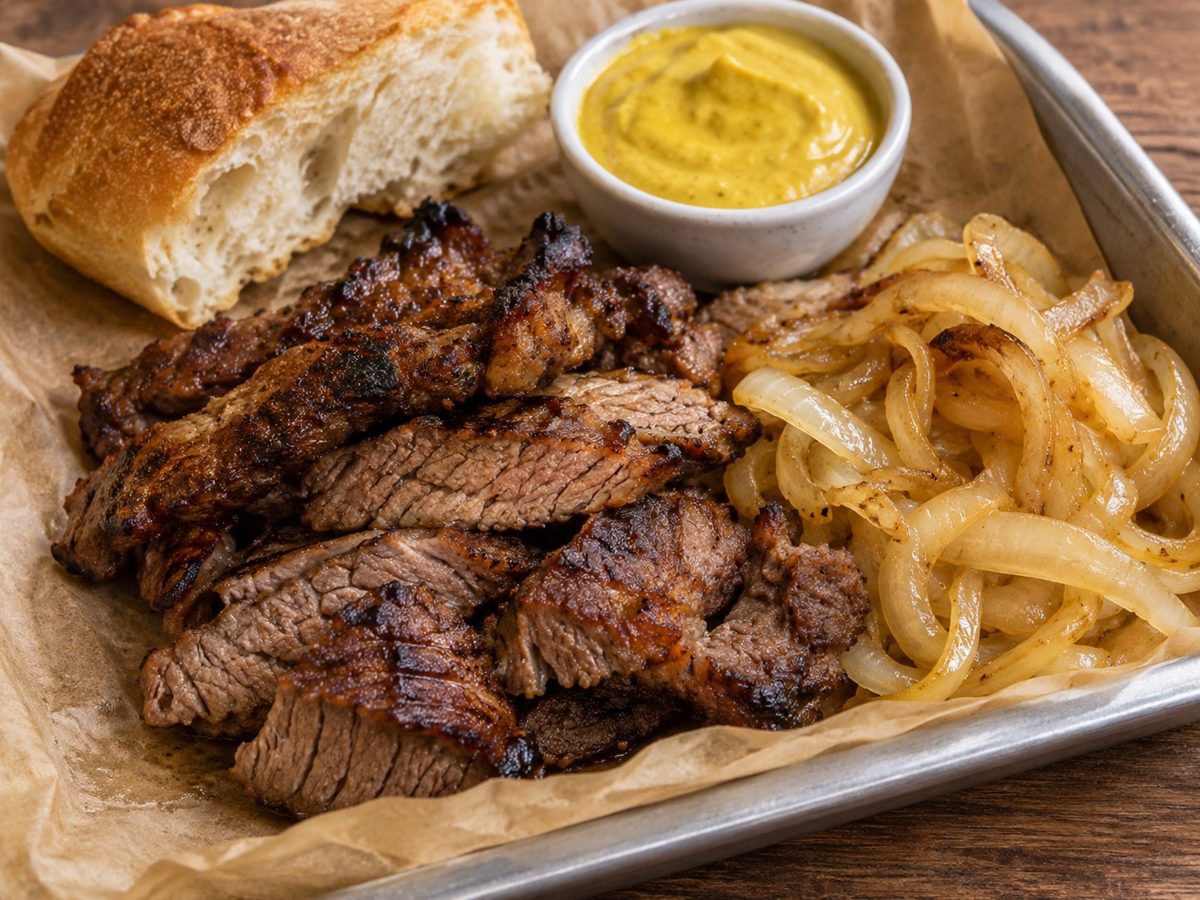
Beef dibi complements the mutton dibi recipe already on the site. The difference is more than replacing one word in the title: the cut, thickness and grilling method must suit beef. This version uses tender grilling meat, cooked as thick steaks and sliced for serving. Soft onions, a small amount of mustard and bread complete the plate. It works on a well-managed barbecue or a thoroughly heated griddle pan.
Ingredients
- 800 g tender grilling beef, in 4 steaks 2.5–3 cm thick
- 600 g sliced onions
- 3 crushed garlic cloves: 2 for the meat and 1 for the onions
- 30 ml neutral oil: 15 ml for the meat and 15 ml for the onions
- 20 g mustard for serving, kept away from raw meat
- 15 ml lemon juice, for the onions at the end of cooking
- 60 ml water to help cook the onions
- 4 g salt, divided, pepper and optional chilli
- 240 g bread to accompany
Preparation
Check that the beef is suitable for quick grilling. A stewing cut will not become tender with this method. Pat the steaks dry and remove only troublesome membranes or excess fat, without cutting them into small cubes.
Mix 15 ml oil, 2 garlic cloves, approximately half the salt and some pepper. Coat the meat. Cover and refrigerate for 30 minutes. Keep the serving mustard in a separate clean container.
During this rest, heat the remaining 15 ml oil in a sauté pan. Add the onions and remaining salt. Cook over medium heat for 8 minutes, stirring. Add the last garlic clove and the 60 ml water, partially cover and cook over low heat for another 12–15 minutes.
Once the onions are tender, remove the lid and let excess water evaporate. Add the lemon juice, taste and season with pepper. Keep warm without drying them out. They should be soft and lightly coloured, not burnt.
Heat the cooking surface thoroughly. On a barbecue, prepare a cooler zone to finish cooking away from direct flames. Put on the steaks, sear for approximately 3 minutes on each side, then continue according to thickness and equipment power.
Check the centre temperature by inserting the probe from the side: reach at least 63 °C for the whole cuts described here. Transfer to a clean dish and rest for at least 3 minutes. Do not reuse the plate or tongs that touched raw meat without washing them.
Slice the meat against the grain. Arrange on a serving dish with the onions, mustard and bread. Chilli remains optional and separate. Serve immediately, spooning the resting juices over the slices if desired.
Introduction
Beef dibi complements the mutton dibi recipe already on the site. The difference is more than replacing one word in the title: the cut, thickness and grilling method must suit beef. This version uses tender grilling meat, cooked as thick steaks and sliced for serving. Soft onions, a small amount of mustard and bread complete the plate. It works on a well-managed barbecue or a thoroughly heated griddle pan.
This exact combination is not attributed to every Senegalese dibiterie. It is a home formulation of grilled beef with onions in the spirit of dibi. It also differs from the collection's beef skewers: the meat remains in whole pieces while cooking, rests, then is sliced. That technique determines both the serving arrangements and the meat's texture.
Cultural context
Practical details Serves 4. Preparation: 20 minutes. Rest the seasoned meat for 30 minutes in the refrigerator. Onion cooking: approximately 25 minutes. Meat cooking: approximately 8–14 minutes according to thickness and equipment, followed by at least 3 minutes' resting. A core temperature of 63 °C followed by resting is the reference used here for whole, unminced steaks. Allergens: mustard and wheat in the accompanying bread. Check labels.
Choosing the cut The word beef alone does not define a cooking method. Properly trimmed rump steak, rib steak and sirloin do not behave like stewing chuck. Ask for a cut suitable for grilling and specify the desired thickness. Very thin steaks cook too quickly for these timings; a much thicker piece needs longer in a cooler zone. This information determines the entire recipe and choice of cooking method.
The seasoning rests briefly in the refrigerator. It flavours the surface but does not turn a tough cut into tender meat. Lemon is reserved for the onions in this formulation; prolonged immersion in plenty of acid would alter the meat's surface without solving a poor choice of cut. Garlic can also burn on an excessively hot grill. Remove large clumps before cooking and avoid flames directly licking the meat.
Organising the heat and resting time A hot surface produces clear browning, but the meat must be able to finish cooking more gently. Two barbecue zones provide that flexibility; indoors, lower the griddle heat after searing. Do not press steaks with a spatula to speed things up. This squeezes out juices and replaces neither heat nor thermometer checks. Turn them with tongs rather than repeatedly piercing them with a fork.
Resting is included in the timetable. Prepare the onions and plates before removing the steaks from the heat so these few minutes do not become a long wait. The resting dish must be clean and large enough to avoid stacking the steaks. A tight cover traps plenty of steam and softens the surface; a loose covering suffices during the short rest specified. Slice as close as possible to serving time.
Look at the direction of the fibres before cutting. Long parallel fibres remain harder to chew if the slices follow them. Cutting across them shortens them. This is particularly helpful with certain hindquarter cuts and remains useful with other beef cuts suitable for grilling.
Onions and serving The onions are a substantial part of the recipe. Start them early so they are ready when the meat goes onto the grill. The measured water helps soften them without repeatedly adding oil. It should then evaporate so the plate is not flooded. Add lemon at the end and keep mustard separate; everyone can compose a mouthful without automatically hiding the grilled beef under a generous sauce.
Bread is weighed in the ingredients to make serving reproducible. Another accompaniment would require its quantity and possible allergens to be specified. This version contains no stock cube, so adjust salt according to the stated formulation. If a prepared product is added during a family trial, noting its brand and ingredients helps explain changes in the result rather than simply adding more salt out of habit.
Storage and passing on the method Cool leftovers quickly in small portions and refrigerate within two hours, sooner in very hot weather. Store meat and onions separately at 4 °C or below and consume within 48 hours. Thoroughly reheat only the portion needed; further cooking will make the meat slightly less supple. Prepare only the bread needed for the meal. Mustard served with a clean utensil should be stored according to its jar's instructions.
Adjusting the preparation If the onions are ready too early, add a spoonful of water and keep covered over very low heat during the meat's short cooking time. If they contain plenty of liquid, finish them uncovered before plating. Soft onions do not need to become dark brown. When serving several people, arrange the beef slices in a loose layer rather than a tight pile and distribute the onions around them. Warm the bread separately without pouring meat juices over it in advance. This preserves its contrast with the onions and grilled meat until each mouthful is assembled.
Sources The RecettesAfricaines mutton dibi recipe, ID 49, used to position this variation within the collection: https://www.recettesafricaines.com/recettes/49 USDA FSIS, core temperatures and resting for whole cuts of meat: https://ask.fsis.usda.gov/article/What-is-a-safe-internal-temperature-for-cooking-meat-and-poultry The beef variation, its quantities and its method are an original home formulation, distinct from the skewers and the mutton recipe.