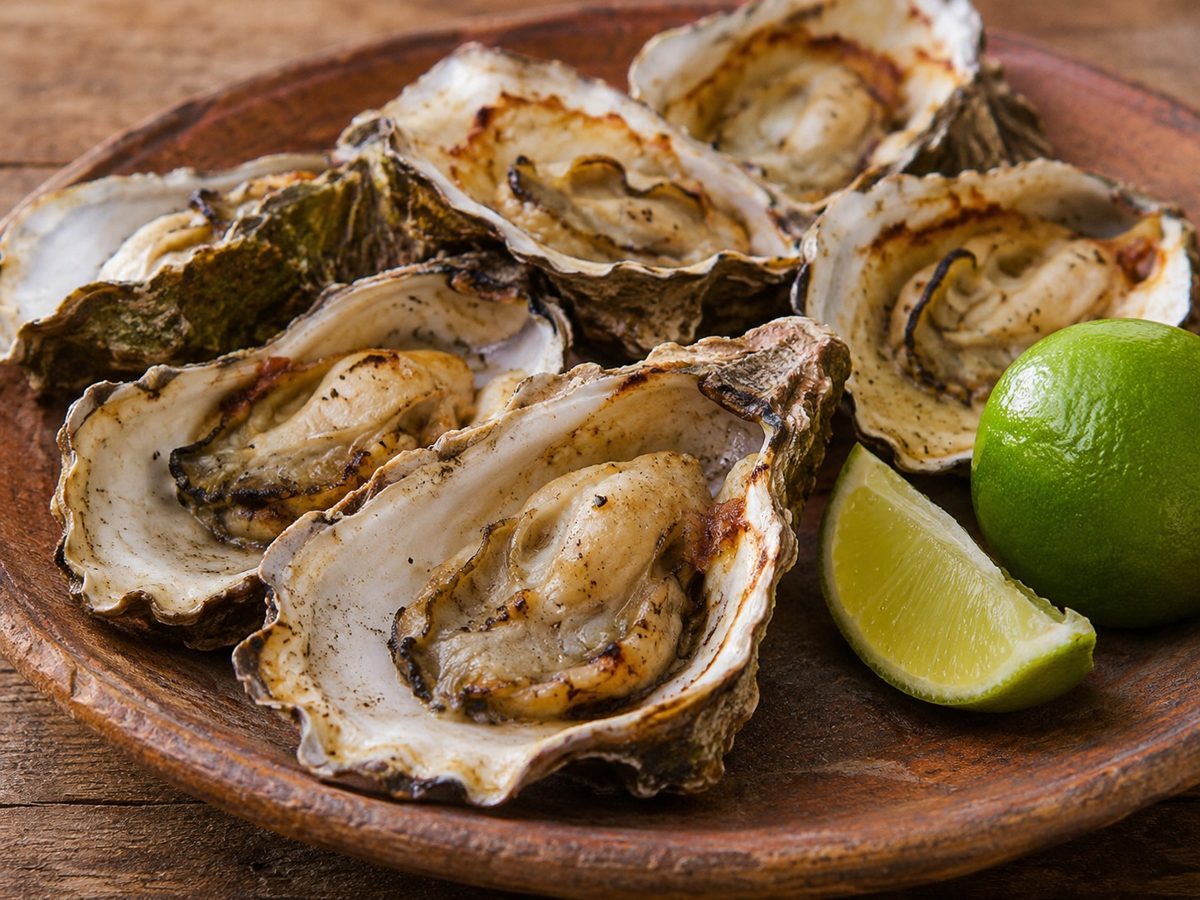
Grilled oysters
Mangrove oysters offer a glimpse into the cooking of the bolongs, the tidal channels of Casamance. Grilled oysters are notably described at Essaout in Lower Casamance. This recipe offers a precise home adaptation: full steaming in the shell, followed by a brief finish under the grill for a lightly roasted note. It does not claim to reproduce local wood-fire cooking exactly. Instead, it makes the method explicit for a kitchen equipped with an oven and saucepan.
Ingredients
- 24 medium live oysters from a controlled supply chain
- 2 limes, washed and cut into wedges for serving
- A little freshly ground pepper, optional
- Drinking water as required for the steamer, without direct contact with the shellfish
- No added salt in the basic formulation
Preparation
Keep the oysters chilled according to the seller's instructions until preparation. Discard any with broken shells or shells that remain open. Do not try to rescue suspect shellfish by cooking them longer.
Briefly brush the shells under running drinking water to remove outside dirt. Do not soak them in fresh water. Wash your hands and clean the work surface after handling raw shellfish.
Bring water to the boil in a pan fitted with a steaming basket and lid. The basket base must remain above the water. Prepare the oven grill and a stable tray while steam develops.
Place a single layer of oysters in the already-steaming basket, with the deeper shell down as far as their shape allows. Cover and steam steadily for 9 minutes. Use several batches rather than piling shells into a small pan.
Carefully remove the oysters with tongs. Discard any that have not opened. Using a thick glove and a suitable utensil, remove the upper shells from the others, avoiding dropping fragments into the flesh.
Place the filled half-shells on the tray, stabilising them with crumpled aluminium foil if necessary. Put under the hot grill for approximately 2 minutes, just to add a light roasted finish. Stay by the oven: the already-cooked flesh dries quickly.
Serve immediately with the lime wedges and optional pepper. The shells are extremely hot; diners must be able to handle them without injury. Do not pour any raw juices collected during opening over the cooked oysters.
Introduction
Mangrove oysters offer a glimpse into the cooking of the bolongs, the tidal channels of Casamance. Grilled oysters are notably described at Essaout in Lower Casamance. This recipe offers a precise home adaptation: full steaming in the shell, followed by a brief finish under the grill for a lightly roasted note. It does not claim to reproduce local wood-fire cooking exactly. Instead, it makes the method explicit for a kitchen equipped with an oven and saucepan.
The oysters remain the focus. Neither cheese nor a thick sauce covers the flesh. Lime offered at the table and a little pepper suffice in this version. The oysters are served fully cooked; the opening of a shell alone does not mark the end of this method. A controlled source matters just as much as cooking: a book should not encourage gathering shellfish in an area of unknown sanitary quality.
Cultural context
Practical details Makes 4 starters, with 6 oysters per person. Preparation: 20 minutes. Steam for 9 minutes in equipment already producing steam, then grill for approximately 2 minutes, in batches if needed. Total time increases according to equipment capacity. Allergen: molluscs. Use only live oysters purchased from an authorised, traceable food supply chain. Outside Senegal, another oyster can be used to carry out the method; identify it accurately rather than renaming it a mangrove oyster.
Casamance oysters Grilled mangrove oysters are described as part of meals at Essaout in Lower Casamance. Their local presence documents the choice of product; the home-cooking parameters given here belong to our formulation. Cooking over embers requires a different approach depending on oyster size and the fire. Steaming followed by grilling allows preparation in a domestic kitchen without claiming to reproduce a wood fire exactly.
Buying shellfish as close as possible to mealtime makes planning easier. Retain their identification and ask the seller about transport and storage. Take an insulated box for the journey if necessary. Appearance and smell alone cannot certify that shellfish come from an authorised area: traceability is part of ingredient selection. Careful cooking does not justify buying a product of uncertain origin.
Controlling the cooking Steaming comes before grilling. This separates the shellfish's cooking from the surface finish. Simply putting oysters under a heating element until they begin opening would leave too much variation according to size and position. Load the basket without stacking and start the timer in equipment already producing steam. Regularly check that enough water remains in the pan, without letting it touch the shells.
The grill adds a restrained finishing touch. Flesh that shrinks strongly and becomes tough has probably spent too long under the heat. Two minutes is a guide: distance from the element and oven power affect browning speed. Watch continuously. Since the main cooking is already complete, there is no need to prolong grilling for a very dark colour. The flesh should remain slightly juicy when eaten.
Shells make serving attractive but are also irregular, very hot containers. Prepare stable support before taking the oysters out of the steamer. A tilted tray or tipping shells complicate the oven stage and spill the juices. Long tongs and a dry oven glove make handling easier. Take time to check for fragments after removing the upper shell.
Seasoning and accompaniments Taste a cooked oyster before adding anything. Its natural saltiness may be sufficient. Offer lime separately so each diner can choose; it adds flavour but does not replace cooking. Use pepper sparingly. A chilli sauce could accompany another version provided it is prepared and described separately. It is not necessary to give this product an identity.
The six oysters are a starter in the planned meal. Their number does not guarantee an identical weight of flesh between purchases. Actual flesh weight depends on size. Choose oysters of comparable size to distribute portions more evenly.
Storage and passing on the method Prefer immediate serving and cook only what is needed. Quickly refrigerate any leftovers in a clean container, without leaving them at room temperature for more than two hours, or one hour in very hot weather. For this recipe, consume within 24 hours at 4 °C or below after thorough reheating. Their texture will nevertheless be poorer than when first served. Before cooking, follow all the seller's storage instructions.
Adjusting the preparation Prepare the lime before cooking and leave a clear space for the hot tray. If several batches are necessary, serve them successively rather than letting the first dry out in the oven. Count the oysters discarded because they remain closed after cooking, without replacing them with shellfish added to the same batch at the last moment: the newcomers would not have undergone the complete method. Always keep serving utensils separate from those used for the raw product. Clean the brush and sink after preparing the shellfish and before placing other meal components there.
Sources Le Papayer Écolodge, excursion to Essaout, for local context: https://www.lepapayer.com/casamance/excursions/excursion-essaout-casamance.html CDC, Preventing Vibrio Infection, for the shellfish steaming method: https://www.cdc.gov/vibrio/prevention/index.html The serving quantities and finish under the grill are an original adaptation for this collection.