Domoda with tomato
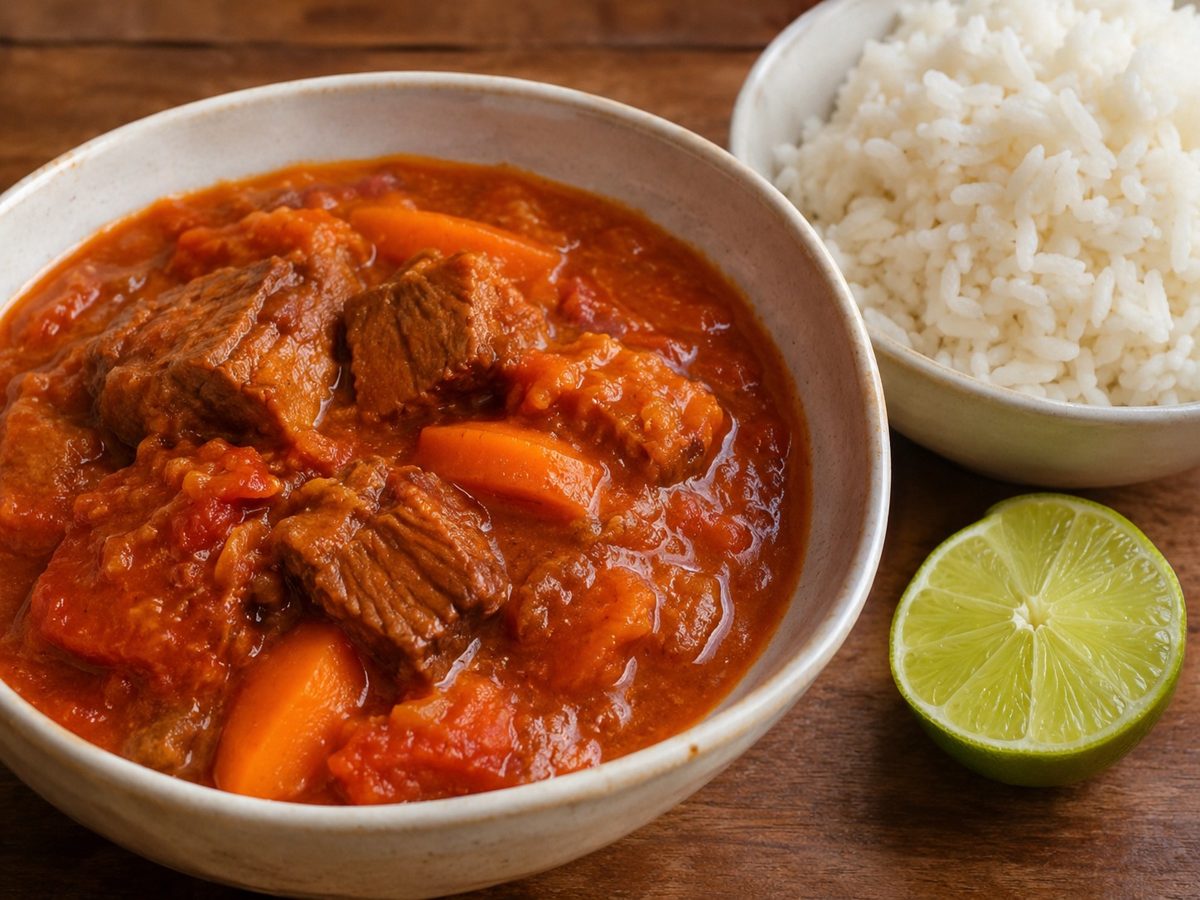
Tomato domoda is recognised by its tangy, lightly thickened sauce. This version combines a tart tomato sauce, stewing beef and a light flour thickening. It contains no peanuts. Other Senegambian preparations with similar names do contain them; their ingredients distinguish the dishes. The rice cooks separately and receives the sauce when served. The sauce should remain fluid enough to spread between the grains while leaving an even, thin coating on a spoon.
Ingredients
- 600 g beef chuck or shoulder, cut into 3 cm cubes
- 250 g uncooked white rice
- 300 g peeled carrots, cut into large pieces
- 250 g peeled sweet potato, cut into 4 cm pieces
- 300 g chopped tomatoes
- 50 g tomato paste
- 200 g sliced onion
- 3 crushed garlic cloves
- 30 ml neutral oil
- 1 litre hot water initially, plus extra as needed
- 15 g wheat flour and 60 ml cold water for thickening
- 20 ml lime juice, adjusted when serving
- 1 bay leaf
- 3 g salt initially, pepper and 1 small whole chilli, optional
- Water for cooking the rice as directed on its packaging
Preparation
Pat the beef dry. Prepare all the vegetables before heating the casserole. Reserve the flour and lime juice until the end: neither is used in the initial cooking. Rinse the rice if its packaging requires it, then drain.
Heat the oil over medium-high heat. Brown the meat in two batches for approximately 8 minutes in total. The pieces should colour without burning. Transfer to a plate; they are still raw inside.
Lower the heat. Cook the onion for 6 minutes, scraping up the browned juices with a spoon. Add the garlic and tomato paste. Stir for 2 minutes, then add the chopped tomatoes and cook for another 5 minutes. If the base threatens to blacken, pour in a little of the measured water.
Return the beef and its juices. Add the litre of water minus any already used, the bay leaf, salt, pepper and optional chilli. Partially cover and simmer gently for approximately 65 minutes. The liquid should surround the meat; top up with a little hot water if needed.
Add the carrots. After 15 minutes, add the sweet potato and cook for approximately another 15 minutes. Check that a fork enters the beef easily. Set aside the cooked vegetables if the meat needs longer. Cook the rice separately according to its packaging.
Mix the flour with the 60 ml cold water until lump-free. Gradually pour the mixture into the simmering sauce while stirring. Cook gently for 8–10 minutes, regularly scraping the base. The sauce should lightly coat a spoon without becoming as thick as a purée.
Remove the bay leaf and chilli. Add half the lime juice first, taste, then add more according to the tomatoes' acidity. Return any reserved vegetables, heat gently and serve the beef, vegetables and sauce over the hot rice.
Introduction
Tomato domoda is recognised by its tangy, lightly thickened sauce. This version combines a tart tomato sauce, stewing beef and a light flour thickening. It contains no peanuts. Other Senegambian preparations with similar names do contain them; their ingredients distinguish the dishes. The rice cooks separately and receives the sauce when served. The sauce should remain fluid enough to spread between the grains while leaving an even, thin coating on a spoon.
The order of the cooking stages matters. First develop the flavour of the meat and tomato, wait until the beef is tender, then adjust the thickening and acidity. Flour added too early can catch on the bottom and complicate the beef's cooking. Lime juice added without tasting can overwhelm the flavour developed during simmering. This recipe gives measured quantities for four people, with room for adjustment according to the cut of beef and the width of the casserole.
Cultural context
Practical details Serves 4. Preparation: 25 minutes. Cooking: approximately 2 hours 10 minutes; allow longer if the beef is still firm. Prepare the rice during the final stages. Equipment: heavy casserole, small saucepan, bowl and whisk. The quantities include the rice accompaniment. Recipe allergen: wheat. Check the ingredients used and any possible traces of allergens.
Techniques that make a difference The cut of beef determines the timetable. Beef rich in connective tissue needs time to become tender; fierce heat cannot replace that time. If the meat still resists, continue simmering it before adding the flour. The vegetables need not undergo this extra cooking: lift them out with a slotted spoon and keep them covered until needed. This preserves recognisable pieces and prevents the sauce from becoming a sweet potato purée.
Thicken the sauce once its other ingredients have cooked. Whisking flour with cold water disperses it before it meets the heat. Pour it in while stirring and maintain a gentle simmer. A vigorous boil does not improve the thickening and splashes thick sauce onto the sides. If lumps appear, take out a little sauce without meat or vegetables, whisk it vigorously, then return it to the casserole. Do not blend the entire dish.
Lime juice acts as a seasoning. Its strength varies from fruit to fruit, so the stated volume is a starting point. For a useful taste test, try a small spoonful of sauce with a few grains of rice. A sauce that seems sharp on its own may be balanced with a neutral accompaniment. If the acidity suits you before all 20 ml have been added, stop there. Sugar should not become an automatic correction for too much lime juice.
Variations and serving This version contains neither guédj nor nététou. Their absence is a choice for this home recipe, not a general definition of domoda. Some family recipes use these condiments; adding them requires reconsidering the salt and, for guédj, declaring the fish allergen. A lamb version requires its own checks for doneness. For a wheat-free recipe, starch would give a different texture and should be measured separately rather than substituted in an equal quantity without testing.
Present the rice and stew in separate serving dishes or plate individual portions. A broad serving spoon protects the vegetables. Offer chilli separately and keep some sauce available for those who want to moisten their rice further. The dish already contains grain, meat and vegetables; additional accompaniments depend on the meal you choose. Spoon the red sauce over the rice at serving time.
Storage Quickly divide leftovers between shallow containers and refrigerate within two hours at room temperature, sooner in very hot weather. Store the rice separately and consume within 24 hours. Consume the stew within 48 hours, keeping the refrigerator at 4 °C or below. Reheat only the portion needed until evenly hot throughout, adding a little water if the thickened sauce has firmed up. Avoid repeatedly reheating the whole dish.
Adjusting the preparation If making the stew ahead, leave the thickening and lime juice until the final reheating. First bring the cooked meat and vegetables back to an even simmer, then stir in the flour mixed with water and allow it to cook for the specified time. This lets you adjust the consistency of the dish actually being served. Prepare the rice separately. A cooled sauce always appears thicker; wait until it is hot before deciding to dilute it. To double the quantities, choose a wider casserole and brown the meat in several batches. The water does not necessarily need to be doubled exactly because evaporation depends on the pan's surface area and lid.
Sources La Cuisine de Daba, Domoda viande, 23 June 2016: https://lacuisinededaba.wordpress.com/2016/06/23/domoda-viande/ IRD, Outils d’enquête alimentaire par entretien, for the distinction between preparations: https://horizon.documentation.ird.fr/exl-doc/pleinstextes/divers10-06/010032376.pdf The quantities, detailed method and technical comments above are an original formulation for this collection.