Ojojo
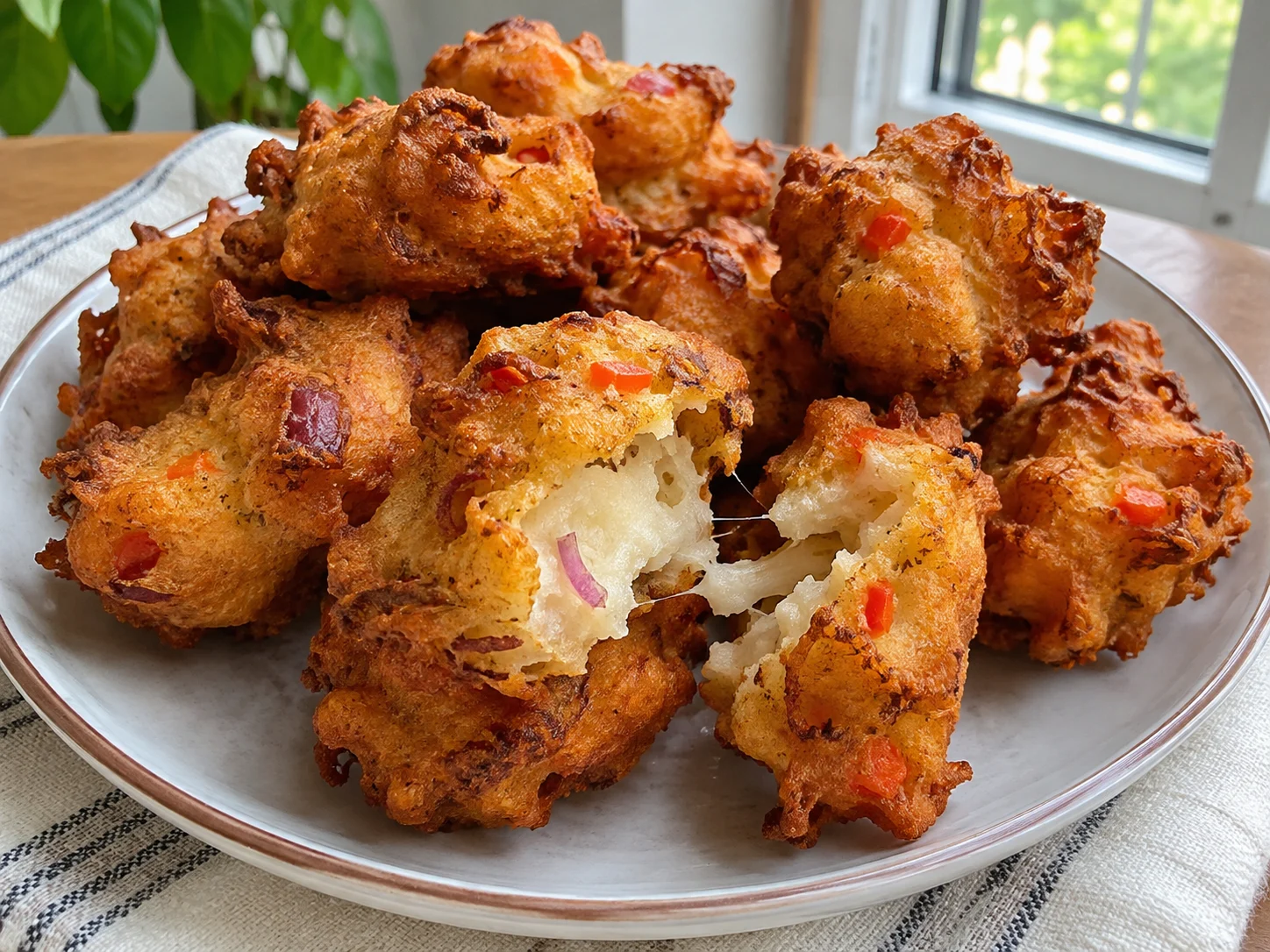
About sixteen water-yam fritters with a golden crust and tender lightly elastic centre.
Ingredients
- 600 g food-grade water yam flesh, peeled weight
- 60 g peeled onion, very finely chopped
- 30 g washed deseeded red pepper, finely chopped
- 3 g fresh chilli, or less
- 10 g dried shrimp powder
- 3 g fine salt, reduced according to shrimp powder
- 700 ml neutral frying oil, not all consumed
Preparation
Peel and rinse food-grade water yam, dry the surface and weigh 600 g. Prepare finely chopped aromatics and a stable fine grater.
Grate finely into a clean bowl. Retain its natural moist binder; do not rinse grated flesh, press it dry or add blending water.
Mix onion, pepper, chilli, shrimp powder and salt evenly. Do not taste the raw yam mixture.
Heat oil to about 170 °C in a stable pot no more than half full. Lower a test portion about 3 cm wide using two spoons.
Fry 5–7 minutes, turning until evenly golden. Reduce heat if browning quickly; floating alone does not prove doneness.
Drain and briefly cool, then open: centre must be cooked, tender and cohesive without raw wet paste. Adjust heat and size, then fry small batches.
Remove loose scraps between batches, drain and serve warm, about four pieces each. Declare crustaceans despite their invisible powder form.
Introduction
Identify water yam; dry floury yam is not an automatic substitute.
Cultural context
Associated with Yoruba and Ijebu cooking; differs from pot-cooked Ikokore and boiled-yam balls.
Tips
Keep the natural grated binder and use small even portions.
Storage
Cool promptly, refrigerate and use within two days; reheat through. Do not leave raw grated paste warm for days.
Variations
Removing shrimp requires new seasoning; cooked mashed yam is another method.
Accompaniments
Serve warm with sauce separately to keep the crust.
Nutrition notes
Yam supplies carbohydrate; absorbed frying oil and shrimp affect estimates.