Masa
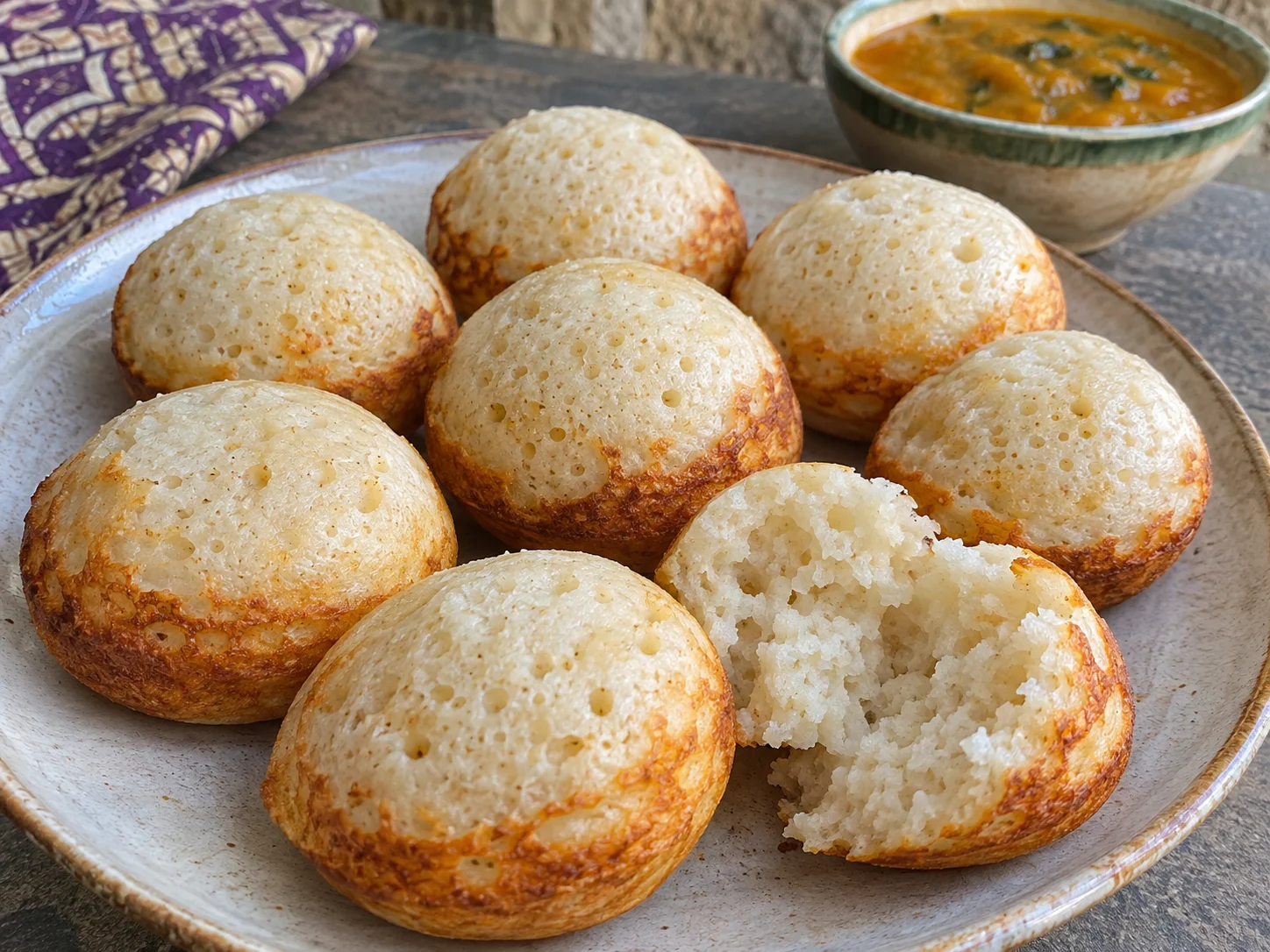
Small, lightly fermented rice cakes with golden bottoms and soft centres. Makes about 16–20 pieces for four; soaking and rising are included in the total time.
Ingredients
- 350 g dry white rice: 300 g for soaking, 50 g for cooking
- 1 litre drinking water for soaking, discarded
- 150 ml water for cooking the 50 g rice
- 220 ml room-temperature water for blending
- Up to 50 ml extra water to adjust
- 4 g instant dry baker’s yeast
- 25 g sugar
- 3 g fine salt
- 3 g baking powder
- 45 ml neutral oil for the cavities, used gradually
Preparation
Rinse the 300 g rice and soak in 1 litre water in the refrigerator for 8 hours. Drain and discard the soaking water.
Cook the separate 50 g rice in 150 ml water for 15–20 minutes until very soft. Cool promptly until barely warm.
Blend soaked rice, cooked rice and 220 ml water until smooth. Add baker’s yeast and sugar; transfer to a large bowl.
Cover and rise about 90 minutes in a temperate room until visibly airy. Gently add salt and baking powder; adjust with reserve water only if needed.
Heat the cavity pan over medium heat. Grease lightly using the measured oil and fill cavities two-thirds full. Test one cake first.
Cook 2–3 minutes per side, turning gently. Lower heat if browning too fast. Open the test cake: no wet batter should remain inside.
Repeat in batches, adding oil as needed rather than using it all automatically. Set on a rack and serve warm; divide according to actual yield.
Introduction
Use a cavity pan. Of the 350 g dry rice, soak 300 g and cook 50 g separately. Blend thoroughly; a gritty batter produces heavy centres.
Cultural context
Masa, also called Waina in some settings, belongs to northern Nigerian Hausa food traditions. It differs from rice swallow and wheat-based puff puff in batter, shaping and cooking.
Tips
Blend again if the batter feels sandy before rising.
Add reserve water by spoonfuls; yeast and baking powder are different products.
Use the first cake to set the heat and filling level.
Storage
Cool leftovers promptly, refrigerate and eat within two days. Reheat gently in a pan or oven. Do not keep risen batter at room temperature for days.
Variations
Onion or sweeter versions require adjustments. Millet and maize are not direct substitutions with identical hydration.
Accompaniments
Serve with separately made Miyan taushe or alone. Check peanut content if offering yaji.
Nutrition notes
Approximate per quarter: 440 kcal, 75 g carbohydrate, 6 g protein, 11 g fat. Oil absorption varies; soup is excluded.