Gurasa
Four soft round wheat flatbreads in a home-oven adaptation of Gurasa associated with Kano. Toppings are separate.
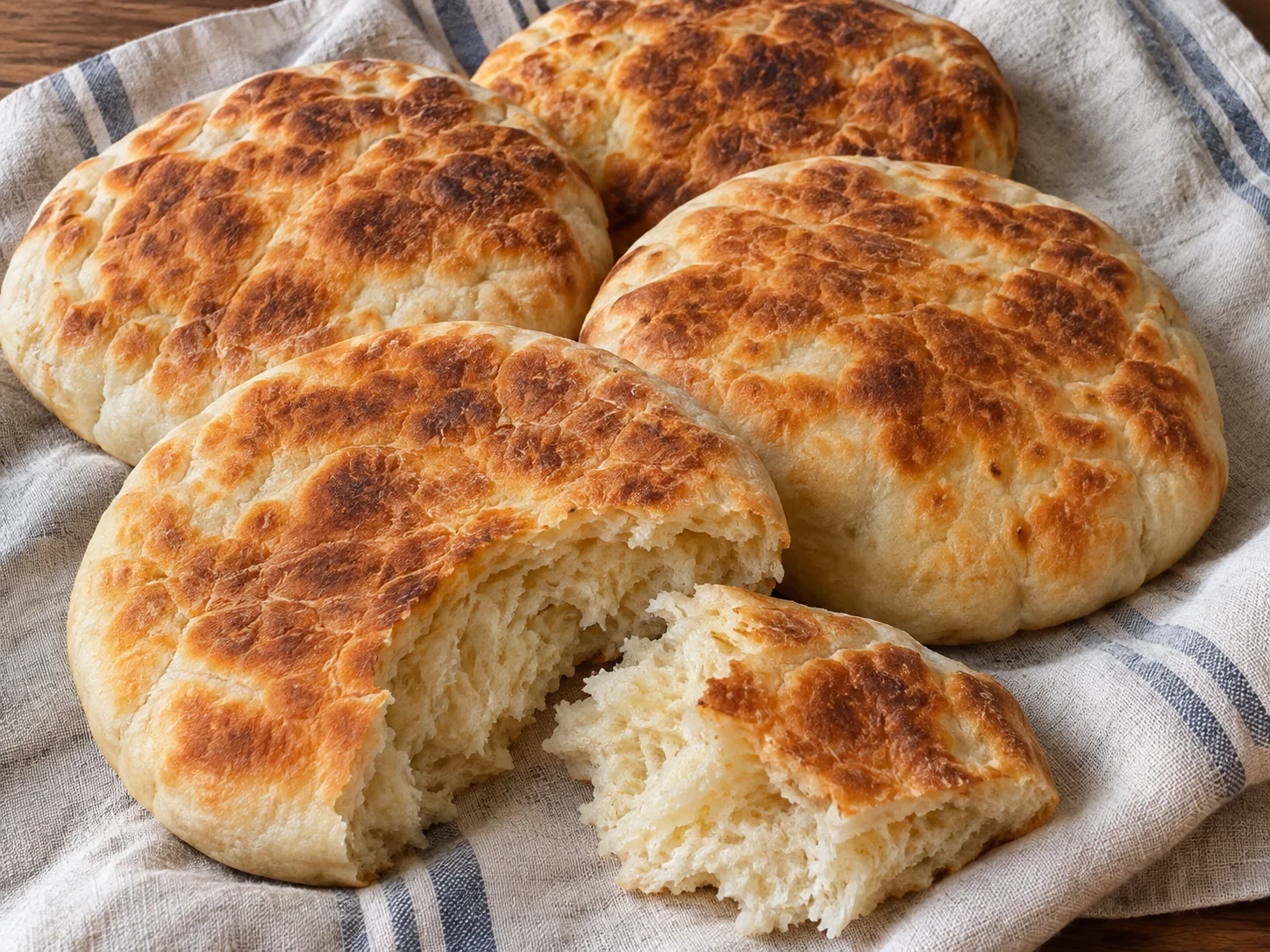
Ingredients
- 400 g white wheat flour for dough
- 260 ml lukewarm, not hot water
- Up to 20 ml extra water according to flour
- 6 g instant dry baker’s yeast
- 6 g sugar
- 5 g fine salt
- 15 ml neutral oil for dough
- 10 ml neutral oil for bowl and hands
- Up to 20 g dusting flour, not automatically used
Preparation
Mix flour, yeast, sugar and salt. Add 260 ml lukewarm water and 15 ml oil; combine until no dry flour remains.
Knead 8–10 minutes until smoother and elastic. Add reserve water only if stiff; avoid drying the dough with excessive flour.
Lightly oil the bowl from the measured 10 ml, cover the dough and rise 60–90 minutes in a temperate room until noticeably expanded.
Gently deflate, divide into four similar pieces and rest covered 10 minutes. Preheat a conventional oven to 230 °C with a metal tray at middle level.
Using lightly oiled hands, flatten to 12–14 cm rounds, 8–10 mm thick. Use minimal dusting flour. Place on suitable baking paper and rest covered 10 minutes.
Transfer carefully to the hot tray. Bake 15–20 minutes until risen and golden with a cooked base. Rotate if needed; check there is no sticky raw band inside.
Cool on a rack 5 minutes, then loosely cover with a clean cloth. Serve warm, whole or torn. Do not seal steaming breads in a box.
Introduction
Weigh flour and water. Keep the dough soft rather than adding all the dusting flour. Transfer safely onto a preheated metal tray using oven-rated baking paper.
Cultural context
Gurasa belongs to northern Nigerian Hausa food culture. Local clay ovens and home methods yield different crusts. This water-based oven version contains no egg or milk and differs from mould-baked Agege bread.
Tips
Allow flour time to absorb water before correcting stickiness.
Watch dough expansion rather than the clock alone.
Rest a shrinking round instead of stretching it forcefully; handle the hot tray with proper gloves.
Storage
Cool completely and wrap cleanly; preferably eat the next day. Freeze for longer storage. Refrigerate fresh toppings separately.
Variations
A heavy-pan method needs different thickness and timing. Sesame is optional in some versions but absent here; declare it if added.
Accompaniments
Serve with soup or Dambu nama. Add onion, tomato and seasoning to torn bread only just before eating. Yaji and kuli-kuli may contain peanuts.
Nutrition notes
Approximate per bread: 420 kcal, 76 g carbohydrate, 10 g protein and 8 g fat, excluding sides. Contains wheat gluten.