Dambu nama
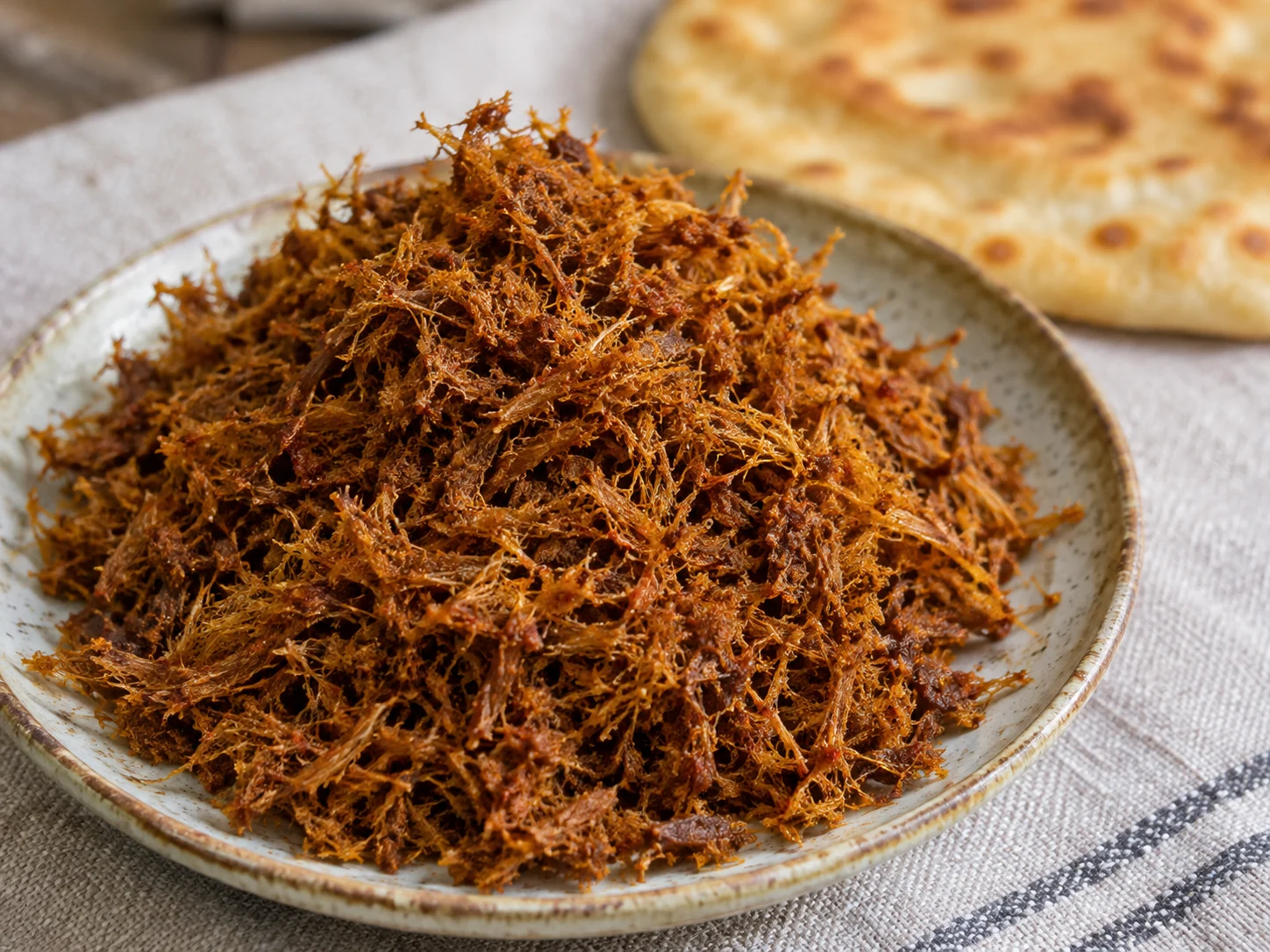
Beef cooked until tender, finely shredded, seasoned and pan-fried into light golden fibres. Four complement portions start from 600 g raw beef. This home version requires refrigeration.
Ingredients
- 600 g trimmed boneless stewing beef, in 4 cm pieces
- 80 g peeled onion, finely sliced
- 8 g peeled fresh ginger, grated
- 6 g peeled garlic, chopped
- 600 ml water for simmering
- Up to 300 ml hot reserve water for simmering
- 50 ml neutral oil for frying
- 12 g food-grade yaji, ingredients and salt checked
- 3 g sweet paprika
- 1 g ground dried chilli, or less
- 0.3 g ground cloves
- About 3 g salt, reduced if yaji is salted
Preparation
Combine beef, onion, ginger, garlic and about half the salt with 600 ml water. Partially cover and simmer 90–120 minutes until easily pulled apart.
Check liquid regularly; add hot reserve water in small amounts if needed. Drain tender meat, keeping stock for another use rather than pouring it into the finishing pan.
Cool briefly until workable, then shred very finely with forks or a clean mortar. Remove resistant tendons and separate thick clumps.
Coat fibres with yaji, paprika, chilli and cloves. Check peanuts and salt in purchased seasoning. Reserve remaining salt until after concentration.
Heat 50 ml oil in a wide pan over medium heat. Fry meat in a thin layer 20–30 minutes, turning frequently and separating clumps without burning spices.
Continue 5–10 minutes on low if still damp. Cool a small sample briefly on a plate: fibres should be separate, light and slightly crisp. Adjust salt.
Spread briefly to drain excess oil. Serve some warm if desired; cool leftovers promptly and refrigerate in small portions. Divide into four and never store this batch in a cupboard.
Introduction
Choose a long-fibred stewing cut, trim visible fat and use a wide pan. Tenderness before shredding matters more than a fixed cooking time.
Cultural context
Dambu nama belongs to northern Nigerian meat traditions. Its fine fibres differ from skewered suya or sheet-like kilishi. A dry feel does not establish shelf stability without measured controls.
Tips
Return tough meat to simmering before shredding.
Separate fibres rather than pounding to paste.
Keep moving the fibres; reduce heat if spices darken or smell acrid.
Storage
Cool quickly in a thin layer, refrigerate and use within two days, or freeze portions. Reheat thoroughly. Crispness is not proof of shelf stability.
Variations
Other meats need their own cooking instructions. For peanut-free seasoning, verify every ingredient and relevant cross-contact information.
Accompaniments
Use a small portion on Gurasa, rice or vegetables. Keep sauce separate to preserve the light texture; sides are not included.
Nutrition notes
Approximate per quarter: 360 kcal, 31 g protein, 5 g carbohydrate and 24 g fat. Water loss concentrates nutrients by weight without increasing total protein.