Usi
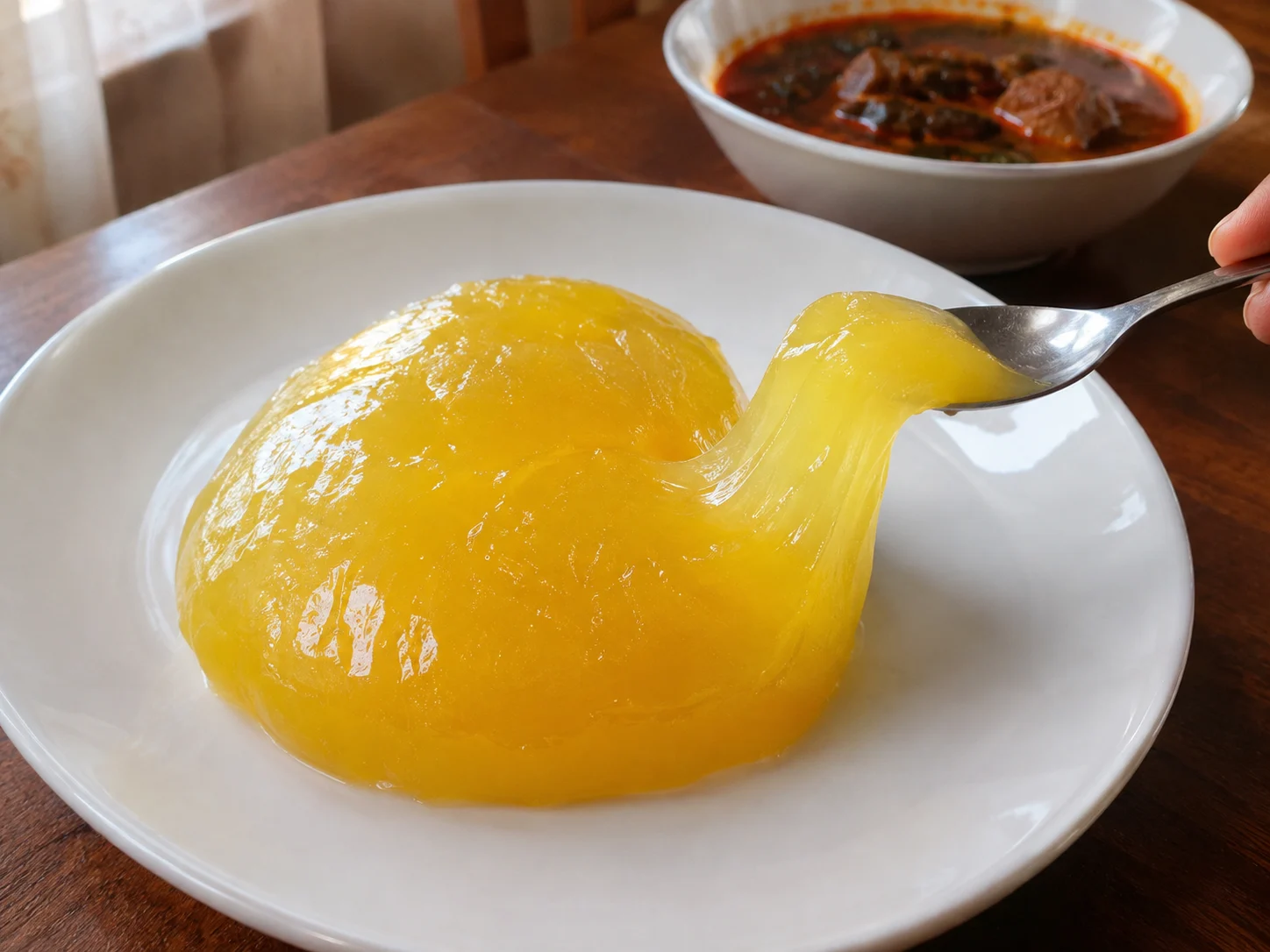
A yellow, smooth, elastic cassava-starch accompaniment made with dry food-grade starch, water and a little palm oil. Makes four side portions, with no soup included.
Ingredients
- 300 g dry food-grade cassava starch intended for usi, composition and culinary use checked
- 650 ml room-temperature drinking water for slurry
- 20 ml food-grade red palm oil
- Up to 80 ml hot water for small adjustments if needed
Preparation
Measure dry starch and 650 ml room-temperature water. Gradually mix into a smooth slurry with no dry pockets. Scrape the bowl bottom because starch settles rapidly when left standing.
Use a stable wide heavy pan and a strong spatula. Add 20 ml palm oil and spread on the base. Gently melt if solid without smoking; keep reserved hot water ready.
Stir slurry again immediately before pouring into the pan over low-to-medium heat. Begin stirring at once, scraping base and sides so a cooked bottom layer cannot form under unmixed liquid.
As thicker patches appear, bring them into the remaining liquid and keep mixing. Reduce heat if catching or splashing; do not compensate with a large water addition.
Fold and press the mass against the sides, about 10–15 minutes total depending on pan and heat. It must become uniform, glossy, yellow and partly translucent, without powdery centres. If too firm, add hot water one spoonful at a time.
Check a supple elastic mass pulls fairly cleanly from the base. Continue if floury opaque areas remain. Stop once texture is uniform with oil and water incorporated and no large separate puddle.
Slide onto a serving plate or divide into four with slightly moistened utensils. Do not shape burning-hot paste with bare hands. Serve promptly with already prepared soup, taking small bites without rushing; do not pour soup into the cooking pan.
Introduction
A yellow, smooth, elastic cassava-starch accompaniment made with dry food-grade starch, water and a little palm oil. Makes four side portions, with no soup included.
Cultural context
Associated with Urhobo, Isoko and other Niger Delta foodways, often served with Banga or Owo. It uses starch rather than the garri of eba or whole pounded yam of iyan.
Tips
Stir slurry just before pouring, use moderate heat and a wide pan, and add reserved water only spoon by spoon. Start with this batch size rather than doubling a heavy mass.
Storage
Cool leftovers promptly in shallow containers and refrigerate at 4°C or below. Preferably use within two days. Reheat only the required portion gently with a little water if needed, until all pieces and the centre are hot. Oil or smoked ingredients do not make food shelf-stable.
Variations
Wet starch contains water and needs another weight and water ratio; 300 g wet does not equal 300 g dry. Cornstarch or whole cassava flour may behave differently and must be labelled as adaptations.
Accompaniments
Serve hot with separately prepared Banga, Owo or another soup. Usi supplies starch; soup supplies its own proteins and vegetables. Briefly cover if service pauses to prevent a dry skin.
Nutrition notes
Approximate values per quarter of the recipe only. Product composition, edible yield and the amount of thickener actually used affect the result. A separately served soup or starch is not included; no medical benefits are claimed.