Nkwobi
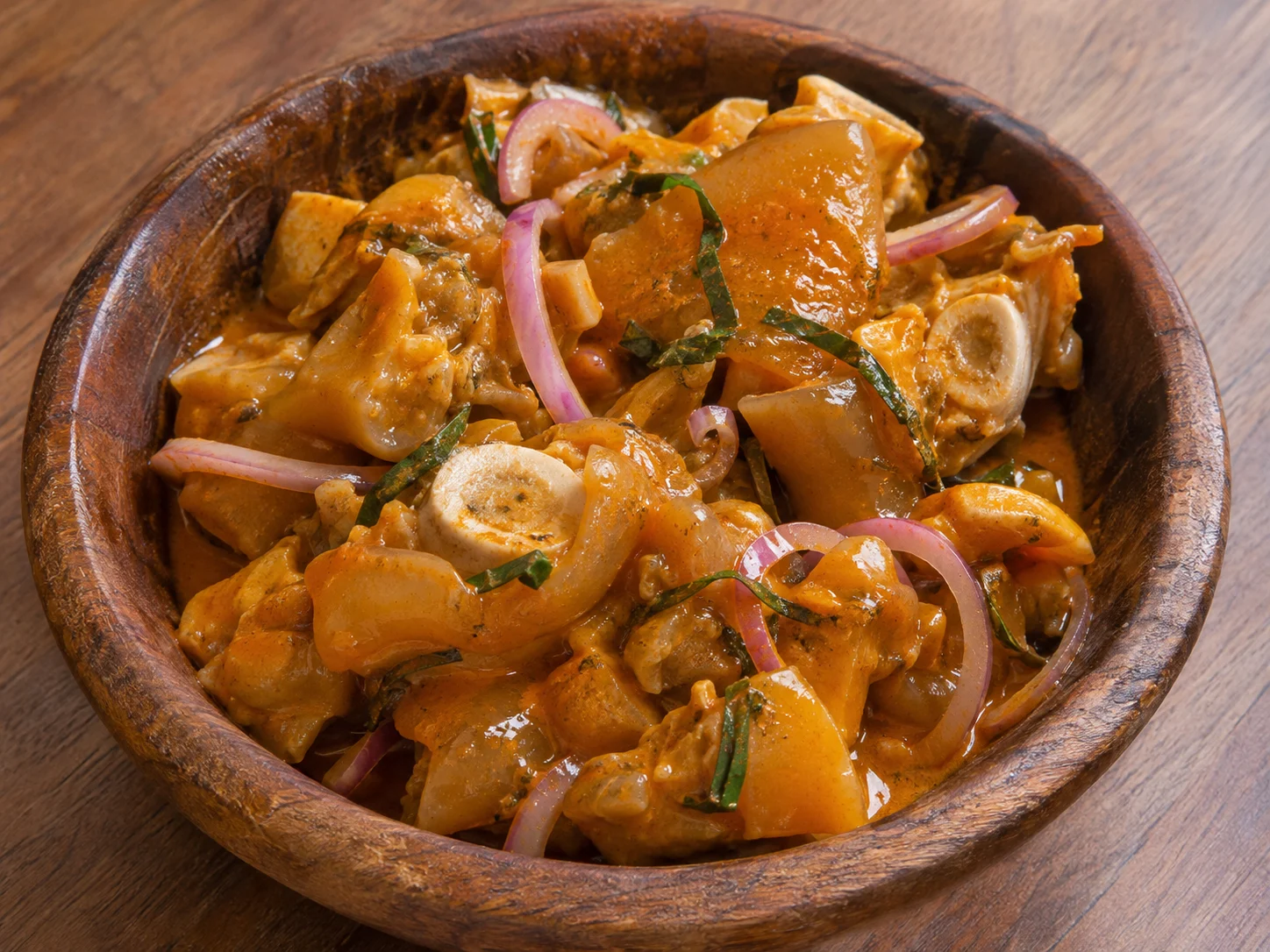
Tender gelatinous cow-foot pieces coated in spiced palm-oil sauce, finished with onion and utazi. This baking-soda adaptation makes four generous tasting portions; raw bone-in weight is not edible meat weight.
Ingredients
- 1.5 kg food-grade cow foot, butcher-cleaned, hoof removed, sawn into pieces; bone-in weight
- 2 onions, about 250 g total, one for cooking and one for serving
- 80 ml food-grade red palm oil
- 1.5 g food-grade sodium bicarbonate, weighed
- 50 ml drinking water for sauce
- 15 g ground dried shrimp
- 2 g ground food-grade ehuru
- 4 g food-grade utazi leaves, washed and finely sliced
- 1 small chilli, 5 g, or less
- 1.5 litres water to start simmering
- Up to 1 litre additional hot water as needed
- About 3 g salt, adjust
Preparation
Inspect butcher-prepared cow-foot pieces and remove loose saw-cut bone fragments; rinse briefly if needed. Put in a pot with the first roughly chopped onion and 1.5 litres water. Boil, skim and reduce heat.
Partially cover and gently simmer about 3–3¾ hours until very tender, topping up with hot water. Test several pieces with a fork and extend rather than serve tough skin.
Lift out cooked pieces and keep covered. Strain stock to remove bone debris and reserve 100 ml for sauce. When handleable, remove easily detached bones and cut edible parts into bites; cool unused stock separately.
Slice second onion, chop chilli and washed utazi. Dissolve 1.5 g food-grade baking soda in 50 ml water. Put oil in a wide pan, gently melt only if solid, then remove from heat.
Gradually stir solution into oil until a lighter, thicker coating forms. Add ehuru, chilli and shrimp powder. Do not add extra baking soda to force a brighter colour.
Add cow-foot bites and half the utazi. Coat gently and reheat on low heat 5–10 minutes until pieces are hot throughout. Loosen with a little reserved strained stock. Taste and adjust salt.
Serve four bowls with remaining onion and utazi. Warn about retained bones. Sauce should coat tender pieces without abundant broth. Eat promptly after thorough reheating.
Introduction
Tender gelatinous cow-foot pieces coated in spiced palm-oil sauce, finished with onion and utazi. This baking-soda adaptation makes four generous tasting portions; raw bone-in weight is not edible meat weight.
Cultural context
An Igbo-associated dish widely served in Nigeria. Cow foot distinguishes it from goat-head isi ewu. This version uses weighed food-grade baking soda instead of potash.
Tips
Tenderness determines cooking time. Bone proportions vary; divide edible pieces evenly. Add strained stock one spoonful at a time. Pressure cooking requires the equipment’s own adapted method.
Storage
Refrigerate leftovers promptly in shallow containers at 4°C or below. Preferably use within two days. Fermentation, smoked fish or a surface oil layer does not make the finished dish shelf-stable. Reheat gently where appropriate until pieces are hot throughout.
Variations
Prepared ugba can be added only after full heating, changing yield. Omit shrimp for a crustacean-free version and check condiments. Goat head makes isi ewu; steak cubes do not reproduce cow-foot texture.
Accompaniments
Serve small sharing or tasting portions with vegetables or a separately prepared starch as appropriate. Any wooden bowl must be food-safe and clean.
Nutrition notes
Approximate values per quarter of the edible food and sauce only. Product composition, bone removal and final yield affect the result. Baking soda contributes sodium where used; no medical benefits are claimed.