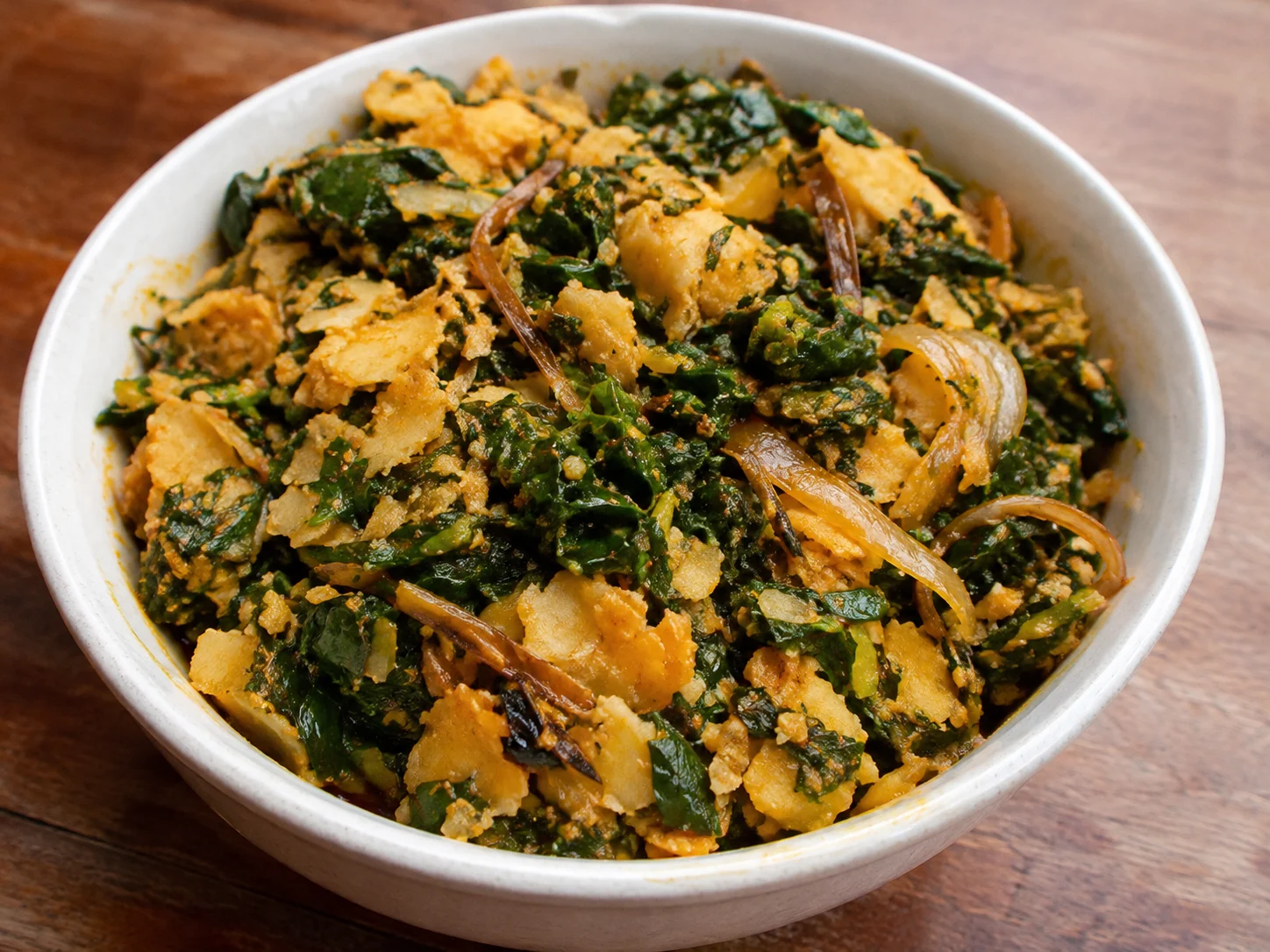
Achicha ede
A moist, crumbly dish of rehydrated dried cocoyam flakes, leafy greens and ready-to-cook ugba. This is a plant-based version using prepared food-grade ingredients, not home fermentation.
Ingredients
- 300 g dried food-grade cocoyam flakes for achicha ede
- 500 g cleaned edible amaranth or ugu leaves
- 100 g food-grade ready-to-cook ugba, stored as labelled
- 2 red onions, about 250 g, sliced
- 45 ml food-grade red palm oil
- 10 g food-grade scent leaves, or basil as an adaptation
- 1 small fresh chilli, 5 g, or less
- About 3 g salt, adjust
- 2 litres drinking water for soaking, discarded afterwards
- About 1 litre water for the steamer, topped up if necessary
Preparation
Sort and rinse flakes. Cover with 2 litres drinking water and soak 10 hours in the refrigerator in a clean container. Discard soaking water and rinse again; soaking does not replace cooking.
Crumble softened flakes and remove unusually hard pieces. Place loosely in a heatproof container that fits a steamer above about 1 litre simmering water, following equipment limits.
Steam 35–45 minutes or longer depending on flakes. Monitor water so the pot never runs dry. Flakes must be very tender under a spoon, without a dry or hard centre.
Meanwhile wash greens, remove thick stalks and chop. Slice onions and chop chilli and herbs. Prepare ugba as labelled and keep correctly chilled until needed; discard suspect product.
Gently heat oil in a large pan. Soften onions 5 minutes, add chilli and ugba and cook 5 minutes. Add greens in handfuls and cook until tender and excess free water has evaporated.
Add fully cooked flakes and herbs. Lift with two spoons without mashing everything. Heat 5 minutes; add 1–2 spoonfuls hot water if dry.
Taste and adjust salt after ugba is thoroughly heated. Check no flakes remain hard. Divide into four portions; the dish should be moist and crumbly, not swimming in broth.
Introduction
A moist, crumbly dish of rehydrated dried cocoyam flakes, leafy greens and ready-to-cook ugba. This is a plant-based version using prepared food-grade ingredients, not home fermentation.
Cultural context
Achicha ede belongs to Igbo cooking, notably around Enugu. Ede identifies cocoyam; dried cassava or yam flour is not the same ingredient. Some versions also contain pigeon peas.
Tips
Steam flakes until truly tender. If using spinach, wilt and drain it separately so it does not waterlog the dish.
Storage
Divide leftovers into shallow containers and refrigerate promptly at 4°C or below. Preferably use within two days. Reheat only the required portion until steaming throughout, adding a little water if necessary.
Variations
Add separately cooked tender pigeon peas for a fio-fio variation, adjusting timing and yield. Smoked fish or shrimp makes a different, non-vegetarian version and must be declared.
Accompaniments
Serve four portions hot in wide bowls. The dish already supplies starch; vegetables can complete the meal without another large portion of rice.
Nutrition notes
Approximate values per quarter of the finished dish. Ingredient composition and cooked yield can change them. No medical benefits are claimed.