Tamarillo juice
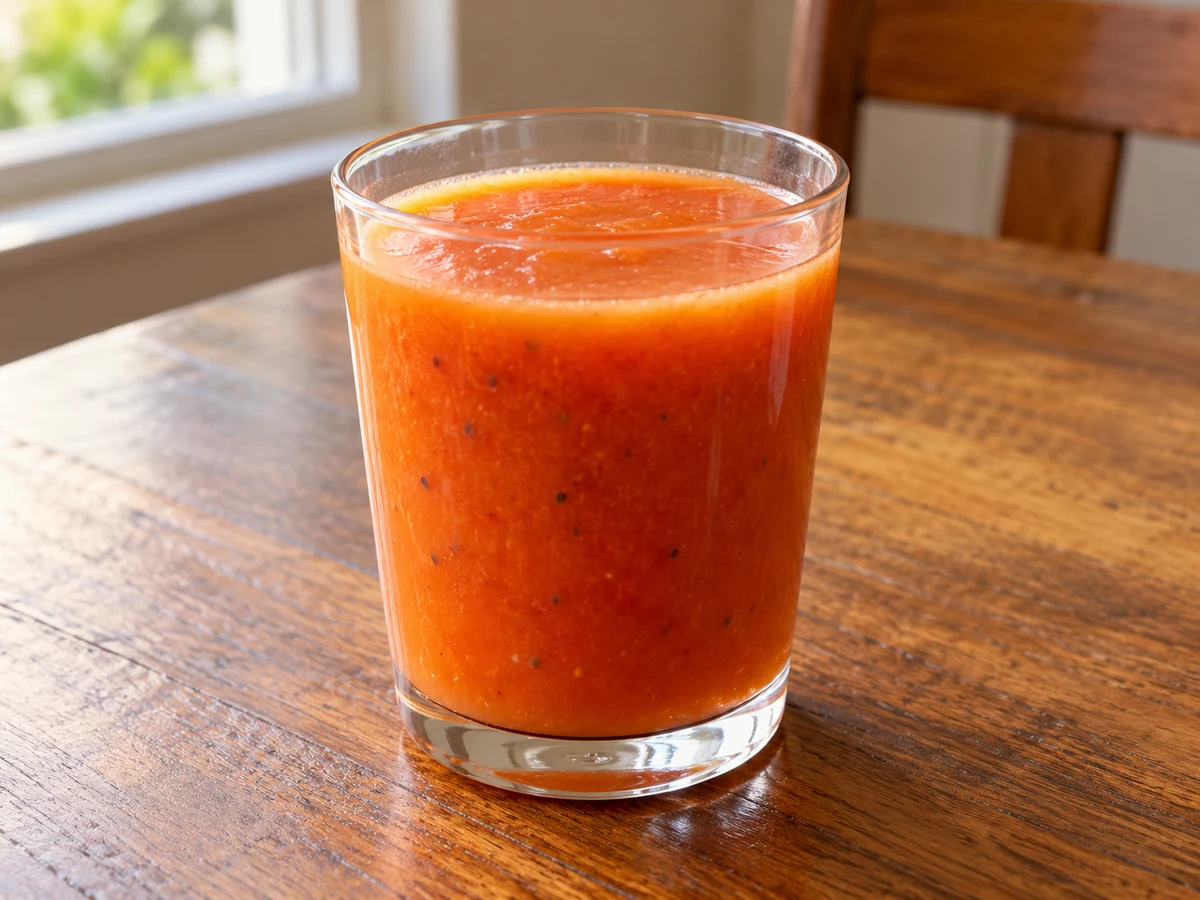
A tree-tomato fruit drink using tamarillo pulp and seeds, not culinary tomatoes.
Ingredients
- 600 g ripe tamarillo flesh, skin removed, pulp and seeds retained
- 650 ml drinking water
- 40 g sugar, adjusted to taste
- 15 ml lemon juice, optional
- 1 litre drinking water for blanching, discarded afterward
Preparation
Wash whole tamarillos and make a shallow skin incision. The 600 g weight is usable flesh after peeling.
Heat the separate litre of blanching water. Immerse fruit for 1 minute at a simmer, remove and cool for handling. Peel and weigh flesh. Discard that water; it is not drink water.
Briefly blend flesh and seeds with 400 ml of the 650 ml drink water. Reference version is unstrained.
Gradually add the remaining 250 ml water and sugar according to acidity. Add optional lemon after tasting. Record actual quantities.
Keep covered in the refrigerator and divide into four glasses. Measure actual yield before stating an exact serving volume.
Introduction
The fruit weight is after peeling. Blanching water and drink water have separate roles. The brief skin blanch is not a validated pasteurization of the finished drink. Allow indicative preparation 20 and heating/blanching 15, total 35 minutes; extra chilling may be needed.
Cultural context
A measured home-style editorial adaptation for the Rwandan repertoire, without claiming exclusive origin. General context: MECS study. This source does not supply the exact formula.
Tips
Taste before optional lemon and record sugar changes. Keep the fresh drink refrigerated; acidity is not preservation.
Straining is a variant with material losses and different fibre; do not copy unstrained pulp nutrition unchanged.
Reference consulted: https://www.fda.gov/food/buy-store-serve-safe-food/what-you-need-know-about-juice-safety
Reference consulted: https://www.foodstandards.gov.au/science-data/food-nutrient-databases/afcd/search/food/F009080
Variations
Varieties change colour and acidity. Extra water changes dilution. Mango, orange, dairy and commercial sweetened preparations change ingredients and composition. A commercial name does not define every homemade drink.
Accompaniments
Divide the recipe evenly between four portions. Choose side dishes according to the rest of the meal; they are not included in quantities or nutrition. Use clean separate serving utensils and clearly announce actual allergens.
Nutrition notes
Estimate uses a composition reference for peeled tamarillo flesh and seeds as a proxy, without measured blanching retention. Sugar 40 g contributes about 40 kcal per serving. No measured vitamins or therapeutic effects.