Fried Tilapia
Fried Tilapia: a domestic version with precise quantities and detailed steps.
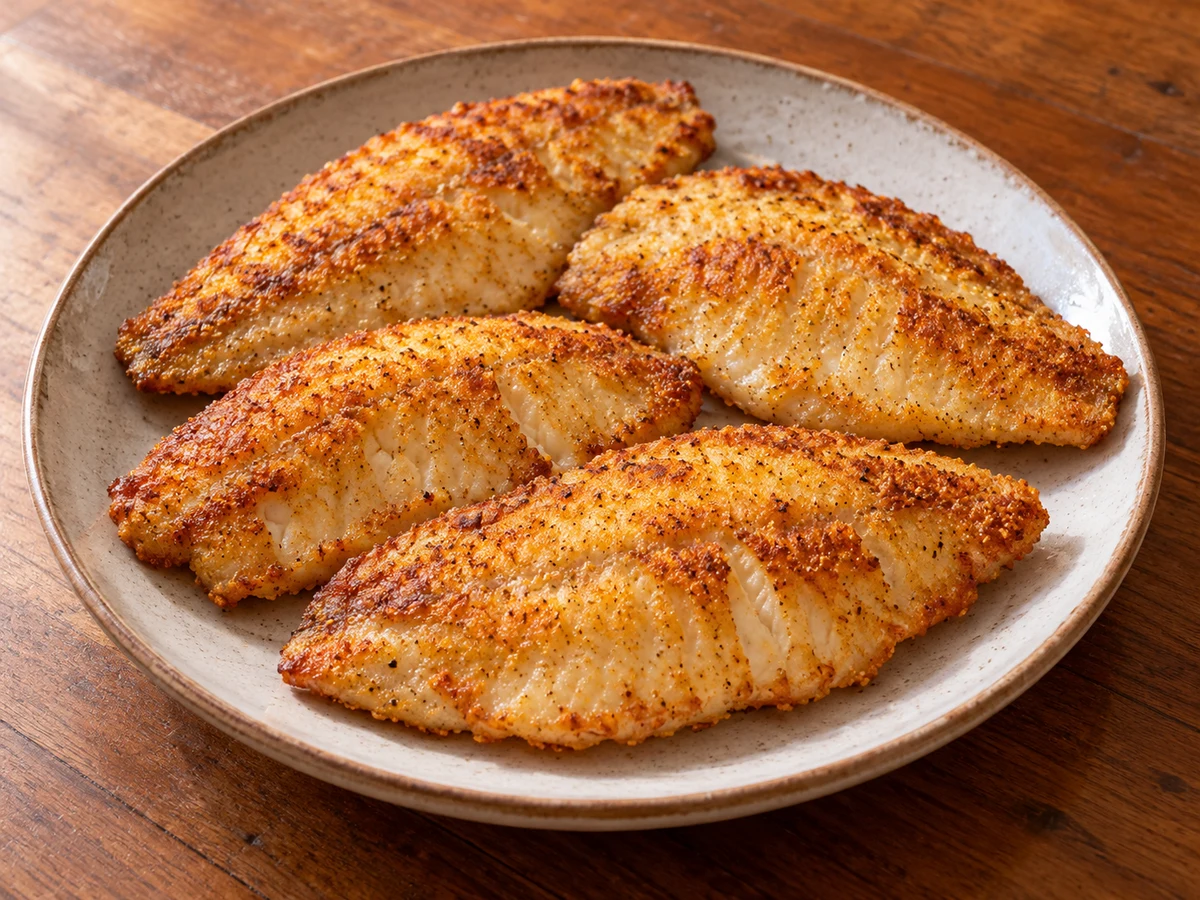
Ingredients
- 800 g raw tilapia fillets, skinless and boneless
- 80 g cornmeal
- 4 g salt
- 1 g black pepper
- 700 ml frying oil for the bath
Preparation
Check for residual bones then pat the fillets dry.
Mix flour, salt, and pepper. Lightly coat the fish and remove excess flour.
Fry in small batches at approximately 170 °C, 4 to 6 minutes depending on thickness.
Check for at least 63 °C internal temperature; drain on a rack and divide into 4 portions.
Introduction
This recipe offers a direct and accessible approach to preparing crispy and tender tilapia fillets, ideal for a family meal or a casual occasion. The appeal of tilapia lies in its white, mild, and low-fat flesh, which lends itself wonderfully to frying, offering a golden and crispy exterior texture contrasting with a moist interior. The simplicity of the ingredients – cornmeal, salt, pepper, and oil – highlights the natural flavor of the fish, without masking it. Cornmeal, in particular, is a wise choice for coating, as it imparts a more rustic texture and a distinctive crispness compared to wheat flour. This dish, though simple, requires careful attention to detail to ensure perfect cooking: oil temperature, frying time, and draining are crucial for optimal results. It is important to note that, as with any frying, the amount of oil actually absorbed by the fish and the flour retained are not precisely measured, making an exact nutritional evaluation difficult.
Cultural context
A home-style editorial adaptation for the Rwandan repertoire, without claiming exclusive origin. General context: MECS study. The source does not supply this exact formula.
Tips
Allergen: fish.
For optimal texture, ensure the tilapia fillets are perfectly dry before coating. Moisture is the enemy of crispiness, as it can make the flour stick and prevent uniform frying. Use paper towels to gently blot each fillet, focusing on both sides. This simple step ensures that the flour will adhere better and form a golden, crispy crust, without becoming pasty or soft. Good preparation beforehand is the key to a successful result.
The mixture of flour, salt, and pepper must be homogeneous for an even distribution of flavors. Use a whisk to thoroughly combine the dry ingredients in a wide, shallow dish. When coating, place one fillet at a time in the mixture, press lightly for the flour to adhere, then gently shake off the excess. A light coating is preferable to allow the fish's flavor to shine through and avoid a too-thick layer that could become pasty.
The oil temperature is crucial for successful frying. A temperature of approximately 170 °C is ideal for cooking the fish without burning the outside or leaving the inside raw. Use a kitchen thermometer to check the temperature. If the oil is not hot enough, the fish will absorb too much oil and be greasy. If it is too hot, the exterior will burn before the interior is cooked. Maintain a constant temperature by adjusting the heat.
Frying in small batches is essential to maintain the oil temperature. Overloading the fryer would cause the oil temperature to drop, resulting in greasy and less crispy fish. Frying two or three fillets at a time, depending on the size of your utensil, allows for uniform cooking and optimal crispiness. Be patient and do not rush the process; each batch must have enough space to cook properly.
The cooking time of 4 to 6 minutes is a general indication. The thickness of the tilapia fillets can vary, which influences the frying time. For thinner fillets, 4 minutes may be sufficient, while thicker fillets will require 6 minutes, or even a little more. Observation is your best ally: the fish should be golden and crispy on the outside. Color is a good visual indicator of doneness.
Checking the internal temperature is the most reliable method to ensure the fish is well-cooked and safe. Insert an instant-read thermometer into the thickest part of the fillet. The internal temperature must reach at least 63 °C. This step is crucial for food safety and ensures the fish is perfectly cooked, without being too dry. Do not rely solely on external appearance.
After frying, immediately drain the fillets on a wire rack placed over a baking sheet. Avoid placing them on paper towels, as this could soften the crust. The rack allows air to circulate all around the fish, promoting efficient draining of excess oil and maintaining crispiness. Let them rest for a few moments before serving so that the oil drains well.
For efficient organization, prepare all your ingredients and your workstation before starting to fry. Have the patted-dry fillets, the flour mixture ready, the oil at temperature, and the draining rack in place. This method, called 'mise en place', will allow you to cook smoothly and stress-free, minimizing interruptions and focusing on the critical cooking steps.
If in doubt about doneness, it is better to slightly extend the frying time rather than serving undercooked fish. However, be careful not to overcook, as tilapia can quickly become dry. Balance is key. If you notice that the exterior is browning too quickly, slightly lower the oil temperature to allow the interior to cook without burning the crust.
Allergen: fish. Accompaniments and variations are prepared separately. It is important to note that precise nutritional values are not available for this recipe due to the nature of frying and variations in oil absorption. Individuals with fish allergies should refrain from consuming this dish.
Variations
Substitutions remain optional and require reviewing allergens and quantities. To vary the pleasures, several adjustments can be made to this basic recipe. Instead of cornmeal, an all-purpose wheat flour can be used for a finer coating and a slightly different texture, although the crispiness may be less pronounced. For a spicy touch, add a pinch of cayenne pepper or smoked paprika to the flour mixture. Dried herbs like oregano or thyme can also infuse a subtle aromatic flavor. If tilapia is not available, other firm white fish, such as hake, cod, or perch, can be used, adjusting the cooking time according to the thickness of the fillets. For a non-fried version, the fillets can be baked in the oven at 200 °C (400 °F) for 15 to 20 minutes, or pan-fried with a drizzle of oil, for a lighter option. These variations offer interesting alternatives while maintaining the spirit of the dish, but it is crucial to check for potential allergens and adapt quantities accordingly for each substitution.
Accompaniments
Accompany according to the role of this dish in the meal. Check the allergens of the chosen products. Fried tilapia, with its crispy texture and mild flavor, pairs wonderfully with a variety of accompaniments, transforming a simple fish dish into a complete and balanced meal. For a light and fresh meal, a crisp green salad with a lemon vinaigrette or a fresh shredded cabbage salad brings a touch of acidity that pleasantly contrasts with the fat from frying. Roasted root vegetables, such as sweet potatoes or carrots, offer natural sweetness and a tender texture. Simple white rice or vegetable pilaf rice is also an excellent choice to absorb the flavors. For a more African touch, serve the tilapia with sadza (corn pap), pap (corn porridge), or nshima, staple accompaniments that are pillars of the diet in many regions. A spicy tomato sauce or a peanut-based sauce can also enhance the dish. Remember to check the allergens of all chosen accompaniments, especially for sauces that may contain peanuts or other allergenic ingredients.
Nutrition notes
Approximate estimate per serving, excluding side dishes, using generic composition rather than a kitchen trial. Assumes 40 g retained flour and 40 g absorbed oil for the batch; unmeasured absorption, high uncertainty.