Pork stew
Tender pork shoulder cubes in a tomato, onion and pepper sauce. This is a moist stew, distinct from dry fried or grilled pork.
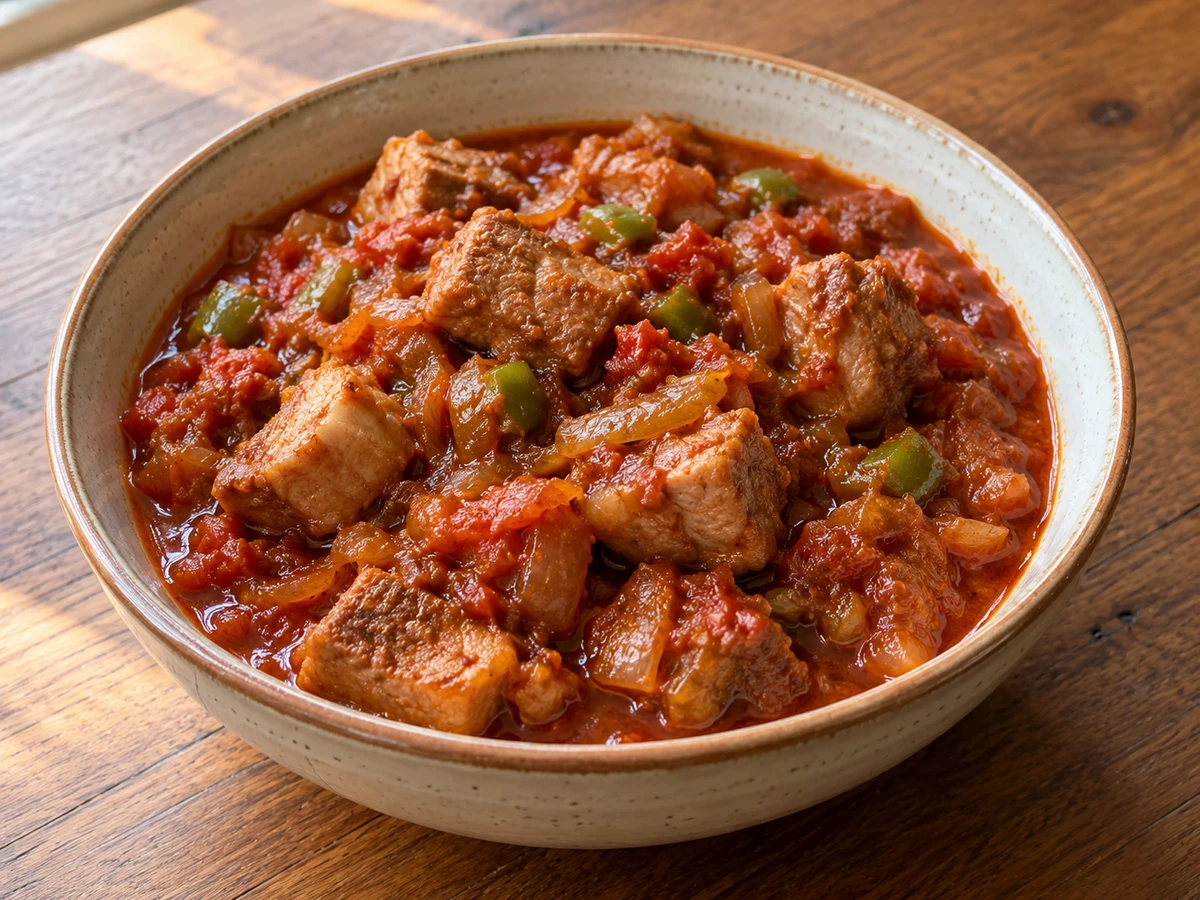
Ingredients
- 800 g boneless pork shoulder, cubed
- 400 g chopped tomatoes
- 180 g sliced onions
- 10 g chopped garlic
- 150 g bell pepper, chopped
- 20 ml vegetable oil
- 500 ml hot water
- 4 g salt
- 1 g black pepper
Preparation
Pat the pork dry and remove only large external pieces of excess fat. Heat the oil in a heavy pot.
Brown the cubes in two batches for 8 minutes in total, then set aside. Soften the onion in the same pot for 5 minutes.
Add garlic for 1 minute, then tomato and pepper. Reduce for 8 minutes, stirring.
Return the pork, add the water and a little salt, and bring to a simmer. Partially cover and cook gently for 55–70 minutes.
Check that the meat is fully cooked and tender, extending the cooking if necessary. Add small amounts of hot water if needed, then uncover to concentrate the sauce.
Add pepper and adjust salt. Divide into four portions; rice or potatoes are counted separately.
Introduction
Choose pork shoulder intended for stewing and cut into similar-sized pieces. The 800 g is raw boneless meat. Remove large external fat deposits, but do not substitute a very lean quick-cooking cut without changing the method. Brown in batches; if much fat is released, remove the excess before cooking the onions. Water is a starting quantity, not a fixed final sauce volume. Simmer gently until both fully cooked and tender. A safety temperature alone does not necessarily make shoulder tender.
Cultural context
This measured home-style recipe is an editorial adaptation for the Rwandan repertoire, without claiming exclusive origin. General context: MECS study. The source does not supply these exact quantities.
Tips
Use a clean food thermometer rather than judging safety by colour alone.
Skim excess floating fat if needed instead of reducing all the water away.
Keep enough liquid in the pot and add hot water gradually.
Share meat and sauce evenly between four portions.
Variations
Red bell pepper gives a sweeter variation. A leaner pork cut or oven method requires adjusted timing. Peanut paste, cream or commercial stock are not implicit ingredients; adding them changes allergens or salt.
Accompaniments
Serve with rice, ubugali or potatoes and a separate vegetable dish. Side dishes are not included in the recipe quantities or nutrition estimates. Divide meat and sauce evenly between four diners. Keep raw and cooked utensils separate. Refrigerate leftovers promptly in shallow containers, use within two days and reheat thoroughly.
Nutrition notes
Pork supplies protein and vitamin B1. Fat varies considerably with the cut and trimming. Estimates apply to the actual recipe divided into four, excluding side dishes. A stewed preparation is not automatically low in fat.