Baobab fruit drink
A water-based drink made with 60 g of baobab fruit pulp powder and 40 g of sugar. Gradual mixing followed by fifteen minutes of hydration produces a drink that can be stirred evenly and divided between four glasses.
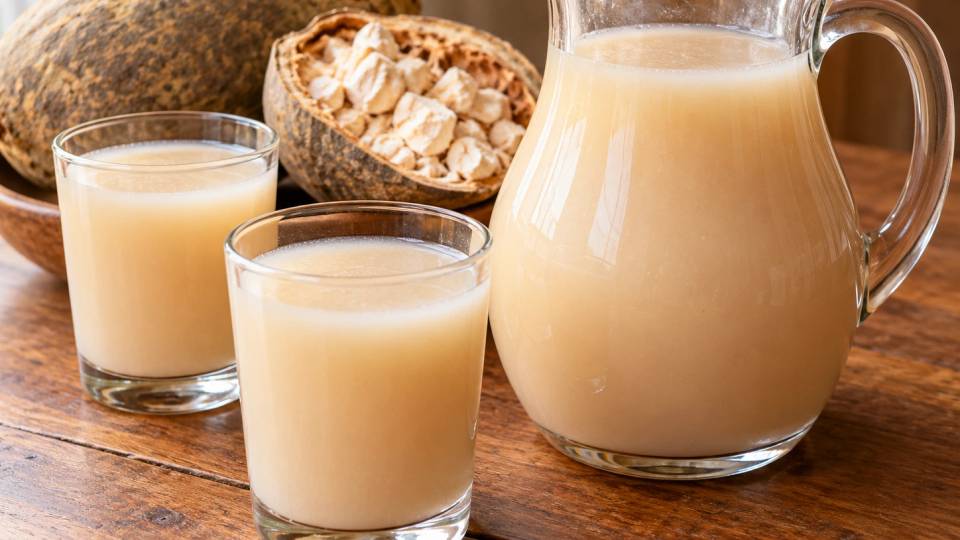
Ingredients
- 60 g — seedless food-grade baobab fruit pulp powder
- 1000 ml — drinking water
- 40 g — sugar
Preparation
Weigh 60 g of food-grade seedless baobab pulp powder. Measure 1,000 ml water, reserving 700 ml; use the other 300 ml slightly lukewarm.
Gradually whisk the 300 ml into the powder in a bowl, scraping the bottom to remove dry pockets.
Hydrate for 15 minutes, then stir. Use a fine strainer only if fibres or lumps interfere; do not try to remove all the pulp.
Add the reserved 700 ml water and 40 g sugar. Stir until the sugar dissolves; do not add milk to this version.
Stir before dividing into four servings. Serve chilled if preferred, allowing extra time for chilling. Keep covered in the refrigerator and use within 24 hours.
Introduction
A pulp drink without milk This baobab drink uses three ingredients: food-grade fruit pulp powder, water and sugar. It is neither fresh fruit to squeeze nor an infusion of leaves. The powder supplies the fruit material: it needs dispersing in water and resting before the final mixing. This explains the method and avoids treating it like lemonade or juice made in an extractor.
For four servings, measure 60 g of powder, one litre of water and 40 g of sugar. This powder quantity gives a clear starting point for repeating the dilution with the same product. Grinding fineness and remaining fibres can nevertheless affect mouthfeel. Aim for a fluid, slightly cloudy drink that pours easily, rather than a spoonable cream or a necessarily transparent liquid.
Identify the product before weighing Choose baobab pulp powder intended for food use. Read the ingredients: a presweetened blend or a product with other additions does not match this three-ingredient recipe. The 60 g refers only to the powder, excluding packaging. If your product comes as large pieces containing seeds, this method is not directly applicable: it was written for seedless pulp powder without shell fragments.
Put the weighed powder in a bowl wide enough to work with a whisk. Break up any small dry clumps with a clean spoon before adding water. A dry sieve can help disperse crumbly clumps. Do not force hard debris through its mesh: remove it and check the product's quality. Keep the remaining powder closed and follow its manufacturer's storage directions.
Begin with a little water Measure the litre of water first. Take 300 ml for the initial mixing and reserve the other 700 ml. Use this first portion slightly lukewarm, without bringing it to a boil. Whisk it into the powder in small additions instead of pouring in the entire litre at once. The bowl lets you press small powder lumps against its side and immediately see whether the mixture is even.
The initial mixture may seem thicker than the finished drink because most of the water has not yet been added. Scrape the bottom and corners, where dry powder may hide beneath the liquid. Flatten persistent lumps with the back of a spoon and mix again. Adding more water immediately could hide rather than solve the problem. This dispersing stage matters more than vigorous stirring at the very end.
Hydrate, then choose the texture Leave the mixture to rest for fifteen minutes. This is part of preparation even though it requires no continuous handling. Stir afterwards to assess the actual texture: the appearance immediately after mixing is not enough to judge dilution. Allow ten minutes of active work and fifteen minutes of resting, twenty-five minutes altogether. Optional chilling before serving is additional and depends on starting temperature and the container.
Straining is useful only if fibres or small lumps interfere with drinking. Place a fine strainer over another bowl and pass the mixture through, stirring gently. Do not aim for clear water by retaining all the pulp: that would remove some of the material that characterizes the drink. Finely milled powder may need only thorough mixing. Choose one texture for the entire jug.
Finish diluting and divide Add the reserved 700 ml of water and 40 g of sugar, then stir until no sugar grains remain perceptible. This version contains no milk. Water already used for mixing is part of the stated litre: do not add a second litre when filling the jug. Taste a little after the sugar dissolves. Pulp gives a different mouthfeel from a completely strained drink even with the same water quantity.
Divide the finished drink into four comparable servings rather than promising four glasses of an exact volume. Powder adds material and optional straining retains some liquid. Stir a jug that has been standing before serving, so the first glasses do not receive mostly water while the last receive most of the pulp. Serve chilled as preferred, with ice separately so each person can choose the dilution.
Cultural context
This water-based version appears in the Niger selection; that editorial placement does not mean the drink belongs exclusively to that country. The recipe describes a particular domestic preparation without claiming unique standard proportions. Baobab here means powdered fruit pulp, not leaves. The retained reference supplies general context on food preparations in Niger rather than validating these specific quantities. Reference: https://eujournal.org/index.php/esj/article/view/15646
Tips
First disperse the 60 g of powder in 300 ml taken from the litre; leave no dry pockets at the bottom.
Wait the fifteen minutes of hydration before deciding whether to strain.
Stir the whole jug before each division so glasses receive comparable amounts of pulp.
Planning
Have scales, a bowl, whisk, jug and optional fine strainer ready. Active work: about 10 minutes; hydration: 15 minutes. Optional chilling is outside the 25-minute total.
Serving
Stir before pouring and divide the actual yield between four glasses. Offer ice separately; melting ice dilutes both pulp and sugar.
Storage
Keep covered in the refrigerator and use within 24 hours. Stir before serving. This is a fresh drink, without a preservation process.
Variations
Compare a small strained sample with a simply stirred sample before processing the whole jug. A milk-based version would be a different recipe: milk is neither required nor included here. Record changes to sugar or water to repeat your result.
Accompaniments
Offer a mildly sweet biscuit or some roasted peanuts separately, depending on preferences and guests' allergies. These accompaniments are excluded from the ingredients and four drink servings.
Nutrition notes
The existing estimate of approximately 78 kcal per quarter remains indicative and has not been recalculated. It depends on the purchased powder, actual sugar and material retained by any straining. No verified vitamin or mineral quantities or therapeutic effects are claimed.