Tamarind drink
A tamarind drink made by hydrating 120 g food-grade seedless pulp, then diluting it with a litre of water and 40 g sugar. Straining removes fibres without any need to blend hard seeds.
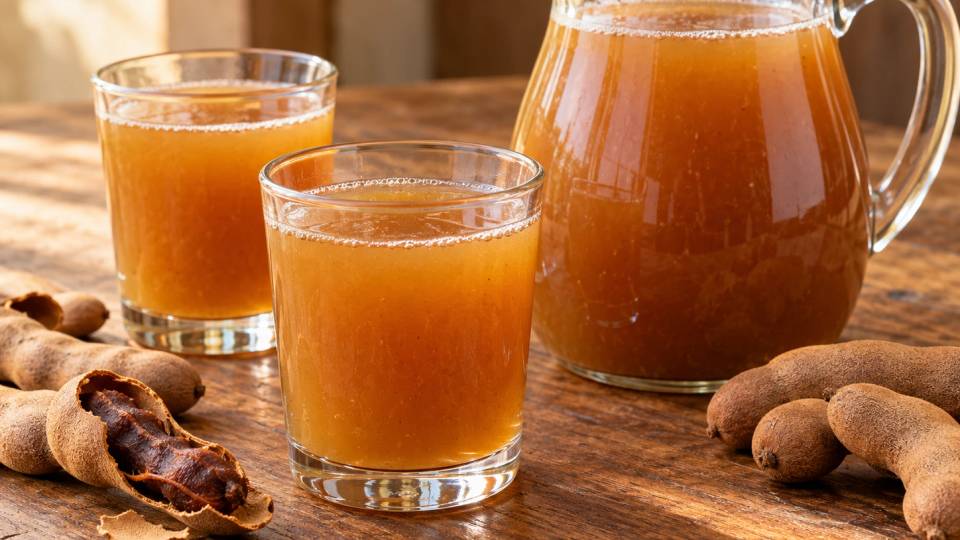
Ingredients
- 120 g — seedless food-grade tamarind pulp
- 1000 ml — drinking water
- 40 g — sugar
Preparation
Check that the 120 g food-grade tamarind pulp contains no seeds or shell fragments. Measure 1,000 ml drinking water and take 300 ml lukewarm to loosen the pulp with a spoon.
Hydrate the pulp for 15 minutes. Stir again to loosen soft lumps without grinding any overlooked hard seeds.
Strain if needed to remove fibres, gently pressing soft pulp with a spoon. Collect liquid in a clean container.
Add the remaining 700 ml water and 40 g sugar. Stir until dissolved. This formula contains no milk; do not add any to the base preparation.
After mixing and any chilling, divide the actual volume into four servings. Refrigerate covered and consume within 24 hours. Allow 10 minutes active work plus 15 minutes hydration, or 25 minutes overall excluding extra chilling.
Introduction
This tamarind drink depends on extracting pulp, not squeezing a juicy fruit. The 120 g food-grade seedless pulp first comes into contact with a small part of the water. This breaks up lumps and distributes fruit material before the drink is diluted. It explains why the tamarind method cannot be replaced with a simple instruction to squeeze lemons or blend a root.
Check the product before beginning. The formula describes food-grade tamarind pulp without seeds or shell fragments. A highly concentrated condiment, already sweetened or seasoned, is not necessarily a direct replacement at the same weight. Read its label to know what is entering the jug. The stated sugar amount is 40 g; it does not account for sugar already present in a different processed product.
Take 300 ml from the stated litre of water and use this portion lukewarm to loosen the pulp. This does not mean adding 300 ml to another full litre. Work with a spoon to loosen compact lumps, then hydrate for fifteen minutes. A wide enough bowl makes this easier without vigorous blending that could disperse unwanted fragments overlooked in the pulp.
Strain after hydration and another stir. A sieve retains longer fibres and particles that would interfere with serving. Press soft material gently with a spoon, without crushing hard seeds. Filter fineness affects the result: a coarse pass leaves more pulp, while a fine food-safe cloth makes a smoother drink and retains slightly more material. Choose this texture for the entire batch.
Then add the remaining 700 ml water and 40 g sugar, stirring until dissolved. The drink should have recognisable tamarind acidity and a fluid consistency. This formula contains no milk. Finally, allow for the fifteen-minute hydration in your preparation plan: it is additional to active work and included in the twenty-five-minute total.
Cultural context
The name 'tamarind juice' here describes a drink of diluted, strained pulp. Product and dilution are specified to distinguish drinking it from using tamarind paste to season a dish.
The recipe appears in the Niger selection without claiming a single national formula or exclusive origin. The retained reference on food habits in Niger provides context; it does not by itself validate these 120 g pulp, the litre of water or the sugar level selected for this home preparation.
Context reference: https://eujournal.org/index.php/esj/article/view/15646
Tips
Inspect pulp before loosening it. Remove any hard seed or shell fragment rather than trying to make it disappear in a blender. The formula begins with food-grade seedless pulp.
Add the first 300 ml gradually, working lumps with a spoon. A small amount of liquid makes remaining compact pieces visible, whereas a large, highly diluted bowl can hide them at the bottom.
Allow the full fifteen minutes of hydration before judging texture. A mixture observed immediately after wetting does not yet show how much pulp will disperse. Stir again before straining.
Set the strainer over a container large enough to collect liquid without overflowing. Work in small quantities if needed. A stable sieve lets you gently press fibres without spilling part of the drink.
Measure the result after straining if you want four comparable servings. The filter can retain liquid with fibres. Divide the actual amount obtained rather than adding water solely to restore a theoretical volume.
Planning
Allow about ten minutes of active work to measure, loosen pulp, strain and mix, plus fifteen minutes of hydration: twenty-five minutes overall, excluding extra chilling. No cooking is required; the initial water is merely lukewarm to help disperse the pulp.
Serving
After mixing and chilling, divide the finished volume into four servings. Stir before pouring if fine pulp has settled. Keep the jug covered in the refrigerator until serving and do not let sugar accumulate at the bottom.
Storage
Keep tamarind drink covered in the refrigerator and consume within 24 hours. Fruit acidity does not remove the need for clean containers. This freshly consumed drink is not intended for long storage.
Variations
More acidic tamarind or an already sweetened product may require adaptation, which should be identified as another formula. The described version remains based on 120 g food-grade seedless pulp and 40 g added sugar. An additional spice or aromatic produces a separate variation; none is necessary to extract the pulp successfully. A milk-based drink would have a different composition and should not automatically retain the same nutritional information. Replacing pulp with concentrate requires checking its recommended dilution rather than blindly using 120 g.
Accompaniments
Offer with a simple snack or a meal that is not already strongly acidic. A small serving lets people appreciate tamarind intensity without immediately diluting it. Accompaniments are separate and form no part of the litre of water, 120 g pulp or indicative calculation for four servings.
Nutrition notes
Displayed estimates refer to one quarter of the formula with the stated sugar. Purchased pulp composition and material retained by filtration can change the actual contents. The figures are not laboratory analysis of every glass.