Lemon drink
An uncooked lemon drink made with 150 ml fresh juice, 850 ml water and 40 g sugar. The lemons are squeezed and their seeds removed; the finished drink is light, with a clear lemon acidity.
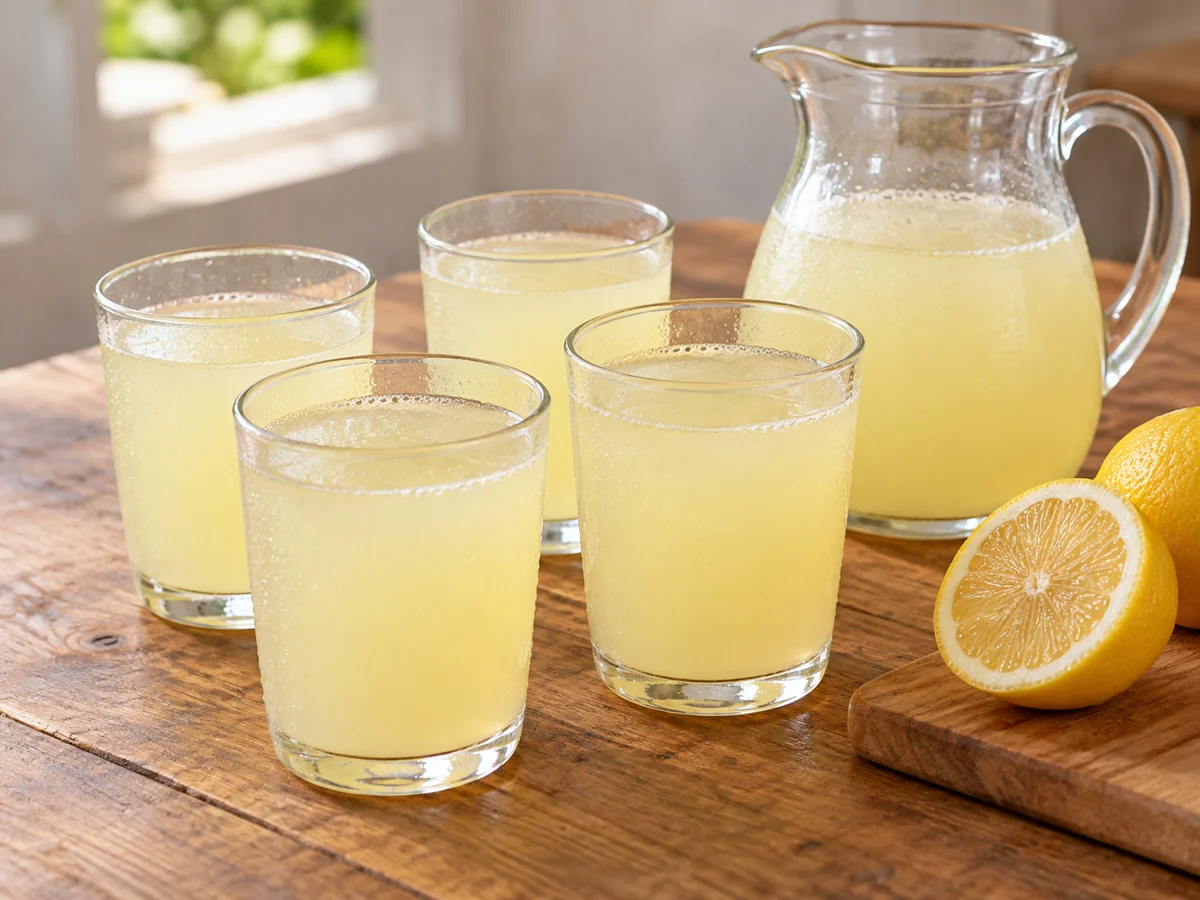
Ingredients
- 150 ml — freshly squeezed seedless lemon juice
- 850 ml — drinking water
- 40 g — sugar
Preparation
Wash whole lemons, cut and squeeze them. Strain out seeds, then measure 150 ml usable juice without adding peel or zest.
Measure 850 ml drinking water. Take 200 ml of it and stir in the 40 g sugar until completely dissolved, without cooking.
Combine lemon juice, sweetened water and the remaining 650 ml water in a jug. Stir again; do not count the water used for sugar twice.
Taste the mixed formula and divide the actual finished volume into four servings. If not cool enough for your preferred serving, refrigerate; this adds time to the 15 minutes of preparation.
Keep covered in the refrigerator, stir before serving and consume within 24 hours. This fresh drink is not a preserve.
Introduction
In this recipe, lemon juice means a diluted drink, rather than pure juice served undiluted. The 150 ml freshly squeezed juice is mixed with 850 ml water: lemon supplies acidity and aroma, while water provides the serving volume. The 40 g sugar rounds out that acidity without making a concentrated syrup. The finished preparation is divided into four servings.
The decisive work happens when squeezing the fruit. Wash the whole lemons before cutting, then squeeze until you have the required volume. There is no fixed number of fruits: a small, less juicy lemon and a large ripe one yield different amounts. Measuring juice in a graduated jug avoids arbitrarily replacing 150 ml with a fruit count that could greatly increase or reduce the acidity.
Remove seeds through a strainer. There is no need to remove all the fine pulp if you enjoy a slightly cloudy drink. Pieces of white pith and crushed seeds, however, do not belong in the jug. This preparation uses juice without added zest; squeezing crushed peel into the mixture would alter the flavour and would no longer match the formula described.
Sugar can dissolve directly in the recipe's water. There is no pan to boil or extra syrup to prepare. First mix some of the 850 ml water with the 40 g sugar, then combine the juice and remaining water in the jug. This keeps all quantities within the formula: water used to dissolve sugar is taken from the stated amount, not added on top.
Taste a small amount after stirring thoroughly. Lemon acidity varies between fruits; tasting helps you recognise the result of this formula before choosing an adaptation. If you subsequently add more sugar or water, record that addition and do not present the proportions or nutritional estimates as strictly unchanged. This base deliberately stays simple: lemon, drinking water and sugar.
Cultural context
This lemonade appears in the collection's Niger selection, but its three ingredients do not establish an exclusively national origin. The entry describes a precise home formula without assigning an undocumented regional name or ceremonial use.
The word 'juice' should be understood through the ingredients: this is a drink based on lemon juice, diluted with water and lightly sweetened. It is neither a peel decoction nor a lemon-leaf infusion. The reference below offers general context on food habits in Niger; it is not presented as validation of these particular proportions.
Context reference: https://eujournal.org/index.php/esj/article/view/15646
Tips
Strain the juice directly over a graduated container. Seeds are removed before measuring the usable 150 ml, without counting their volume or having to retrieve fragments from the finished jug.
Dissolve sugar before refrigerating the drink for a long time. Crystals left at the bottom would make the first glass barely sweet and the last much sweeter, whereas the recipe aims for four comparable servings.
Keep juice and water clearly separate. Any water used to rinse the citrus press also enters the drink if poured into the jug; it must then be included within the 850 ml.
For a clearer texture, let the strainer retain more pulp without crushing peel or seeds. Very fine filtering also removes a little liquid; divide the actual finished volume into four.
Stir the jug before filling glasses. A little pulp may settle, without requiring a stabiliser. Serve ice separately if you want the dilution to remain consistent from the first glass to the last.
Planning
Allow about 15 minutes to wash and squeeze lemons, measure liquids, dissolve sugar and mix. There is no cooking. Using already cool water allows quick serving; extra time in the refrigerator requires a separate allowance.
Serving
Divide the stirred drink into four servings according to the actual finished volume. Serve chilled in clean glasses, keeping the remaining jug covered in the refrigerator until needed.
Storage
Keep lemonade covered in the refrigerator and consume within 24 hours. Stir before serving. Lemon acidity does not turn this fresh drink into a preserve or replace clean containers.
Variations
A no-added-sugar drink is a possible variation, but it will taste sharper and its nutritional figures will differ. Mint, ginger or another citrus fruit changes the aroma; it is clearer to treat them as separate recipes rather than slipping them unannounced into this jug. A lighter version can be diluted with a measured amount at serving, increasing volume and reducing intensity per glass. Do not automatically replace 150 ml fresh juice with the same quantity of a concentrate of different strength.
Accompaniments
Serve with a savoury snack, roasted peanuts or small fritters. If the meal is already very lemony, offer water too so everyone can choose. Accompaniments are separate from the four drink servings and are not included in this entry's ingredients or estimates.
Nutrition notes
The estimates refer to one quarter of the preparation containing the stated 40 g sugar. Actual composition varies with the lemon juice and fruit used. Additional sugar or a different division of servings alters that estimate; no therapeutic property is attributed to the drink.