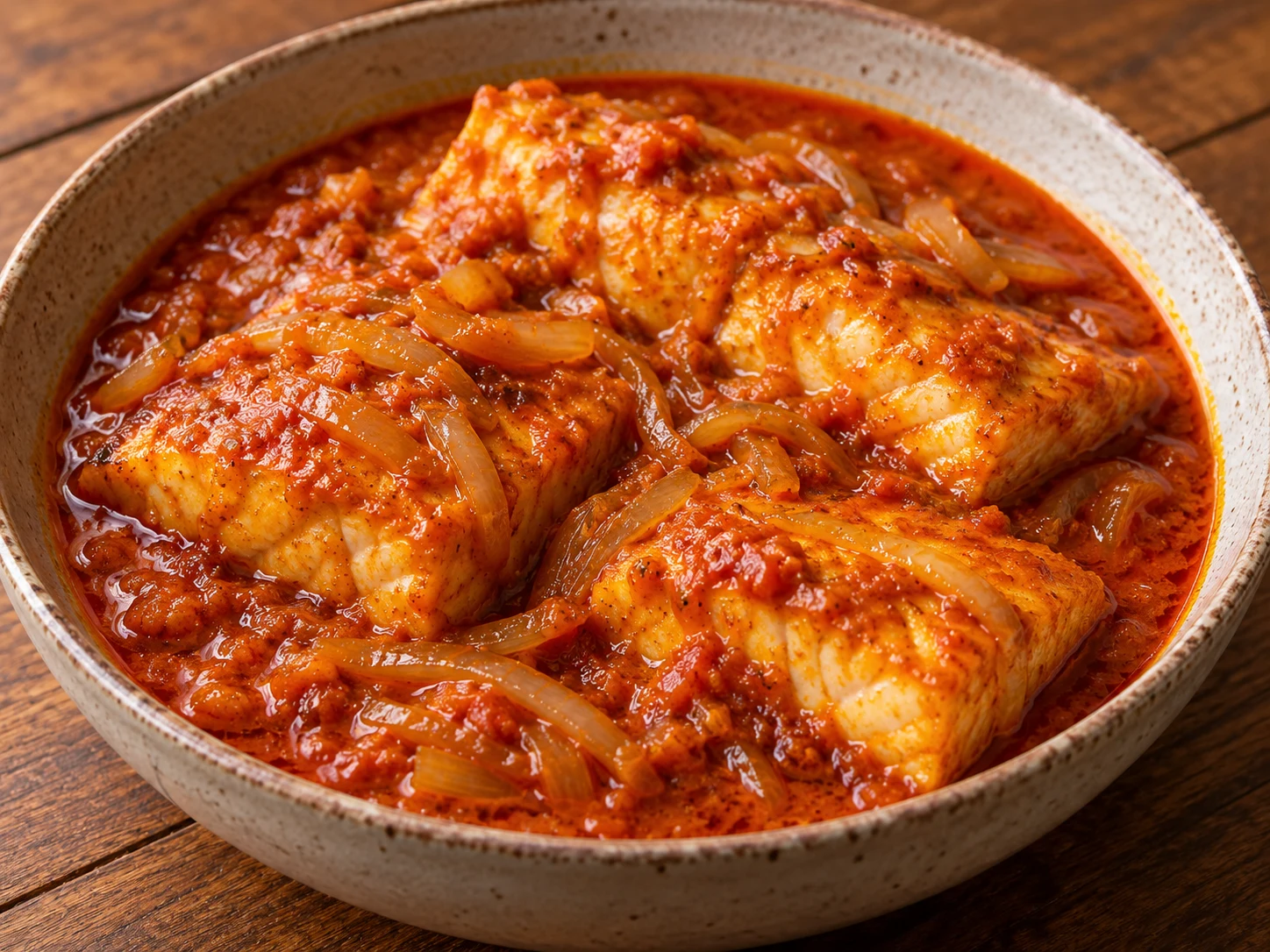
Fish in moambé sauce
🍲 Fish in moambé sauce is a home preparation for four people, based on thick fresh white-fish fillets with the bones removed, weighed net. The quantities are weighed before cooking and the sauce is made in the same pan with simple aromatics. This recipe explains product selection, heat control and the signs to look for at each stage. Side dishes remain separate, allowing a choice of rice, fufu or vegetables according to the meal and the diners’ appetites.
Ingredients
- 800 g thick fresh white-fish fillets, pin bones removed, net weight
- 150 g sliced onion
- 400 g chopped tomatoes
- 8 g minced garlic
- 10 g grated fresh ginger
- 20 ml neutral vegetable oil
- 450 ml drinking water
- 3 g salt maximum initially, adjust to taste
- 1 g ground black pepper
- 300 g canned food-grade unsweetened palm-fruit pulp, stones removed, not palm oil
Preparation
Prepare the onions, tomatoes, garlic and ginger on a clean board. Weigh all the ingredients and measure the water before starting. Keep the animal ingredient in the refrigerator, separate from the vegetables already prepared.
Check the fish portions and remove accessible bones with clean tweezers. Weigh them after this preparation and refrigerate until placing them in the sauce. This recipe uses evenly sized pieces; it does not give the cooking time for a thick whole fish.
Heat the 20 ml of oil in the casserole. Soften the onion for five minutes over moderate heat, then add the garlic and ginger for one minute. Stir with a clean spoon without letting the aromatics blacken.
Add the 400 g of tomatoes and the gram of pepper. Cook uncovered for eight to ten minutes, stirring regularly, until the base thickens. Gently scrape the bottom to incorporate the cooking juices without scraping in any burnt areas.
Mix the 300 g of food-grade palm-fruit pulp with the 450 ml of water, then pour into the casserole. Add the 3 g of salt and bring to a simmer, also following the can’s cooking directions. Oil cannot replace the pulp.
Lay the fish portions in the simmering sauce in a single layer. Cover and cook for about twelve to fifteen minutes depending on thickness, until the centre reaches 63 °C and the flesh flakes easily. Spoon sauce over the pieces instead of stirring vigorously to keep them intact.
Check the consistency and taste the sauce with a clean spoon. If it seems too thin, lift the cooked pieces onto a clean platter and reduce uncovered for a few minutes. If it needs loosening, add hot water in small quantities, then return the pieces and heat through.
Divide the dish and sauce into four portions and serve hot. Cool leftovers quickly in shallow boxes, then refrigerate at 4 °C or below within two hours of preparation. Consume within twenty-four hours of preparation; reheat only the portion needed, once, to at least 74 °C at the centre immediately before serving. Reheating does not restart this limit, and cooling and reheating cycles must not be repeated.
Introduction
Palm-fruit pulp gives this sauce its body. Choose an unsweetened food-grade canned pulp without kernels and read its directions before measuring the water. Red oil alone cannot replace the pulp: it supplies fat and colour without the same sauce-building solids. Commercial concentrations vary; aim for a coating sauce in which the fish can cook without sticking.
Evenly sized thick fillets are easier to serve than small fragile pieces. Remove accessible bones and refrigerate the fish while making the base. Have the sauce ready before adding it: extending fish cooking to reduce a watery sauce risks breaking the portions. Keep a broad spatula, lid and clean platter ready so cooked fish can be lifted out if a final reduction is needed.
Cultural context
🇨🇩 Congo Tourisme describes meals in Kinshasa combining starchy foods, vegetables, and fish or meat. Fish in moambé sauce is presented here as a measured home version developed for this collection. It claims neither an exclusively Congolese origin nor a traditional name belonging to a particular province. The quantities and timings below are editorial choices; they are not attributed to the contextual source.
Cooking practices vary with families, available products and equipment. The same aromatic base can therefore give several results without there being a single definitive formula. This recipe keeps a descriptive title to identify the main ingredient and sauce rather than inventing a vernacular name. The proposed variations remain explicitly separate from the reference preparation.
📚 Context: https://congo-tourisme.org/decouvrir/cuisine/
Cooking and storage references: https://www.foodsafety.gov/food-safety-charts/safe-minimum-internal-temperatures · https://www.fda.gov/food/buy-store-serve-safe-food/safe-food-handling
Tips
🔥 Adjust the heat according to what is happening in the pan. A slight movement of the sauce is enough for simmering; constant splashes or a sticking base indicate excessive heat. Lower the heat, loosen unburnt cooking juices with a little hot water and resume gently. Adding more spices will not repair a burnt sauce.
🥄 Adjust the liquid with small additions rather than all at once. It is easier to loosen an overly thick sauce than to remove a large excess of water at the end without damaging the pieces. The stated quantity is the starting point; evaporation depends on the lid, heat and actual diameter of the saucepan.
🔪 Cut portions evenly and use the specified type of product. A very thick piece needs longer at the centre than a thin one, even if their surfaces look equally cooked. Check the thickest pieces and clean the probe after contact. Tenderness and temperature answer two different questions.
🧂 Taste with a clean spoon once cooking is finished. The sauce gradually concentrates and may taste salty enough with less salt than expected, especially when a preserved product is included. Do not automatically add a stock cube: it would change the salt and flavour of the given formula.
🍲 Prepare side dishes during the stage requiring the least handling while staying near the heat. Keep a clean dish for cooked pieces and never reuse the plate that held the raw ingredient without washing it. Handle gently when serving to preserve the portions and distribute the sauce without crushing them.
Planning
🧼 Keep the animal ingredient chilled until use and use a board or utensils separate from those for vegetables ready to serve. Wiping hands does not replace thorough washing between handling different foods. Do not taste a sauce that has touched a raw ingredient before it has finished cooking. The aromatics must be sound and the water drinkable. A measured amount of seasoning makes final adjustments easier without making the entire casserole too salty. 🌴 Use canned food-grade palm-fruit pulp, not kernels or oil alone. Commercial products have different concentrations; follow their directions and adjust the water to obtain a coating sauce, without improvising the processing of raw fruits. 🐟 This recipe contains fish; check for bones again at serving, particularly for children. A thick sauce can conceal a bone left in a piece.
Serving
🍽️ First divide the pieces fairly, then add the sauce. The four portions refer to the recipe alone, without added starch. Needs vary with age, appetite and the rest of the meal. Presenting side dishes separately lets each diner assemble their plate. Offer very hot condiments in a small table dish rather than changing the whole preparation at the last moment.
Storage
❄️ Take leftovers with clean utensils and divide them quickly among shallow containers. Do not wait for a large casserole to cool completely on the worktop: this mass stays lukewarm for a long time. Refrigerate at 4 °C or below within two hours of preparation and consume within twenty-four hours of that preparation. Reheat only the amount that will be eaten, once, to at least 74 °C at the centre, immediately before serving. Reheating does not restart the twenty-four-hour limit. Without reliable refrigeration, prepare only the amount needed for immediate serving.
Variations
🔄 To change the aromatic character without changing the structure of the dish, consider replacing some of the ginger with a little clean lemon zest on another occasion. This suggestion is not part of the reference ingredient list and is not included in the estimates. Replacing the main ingredient with another meat, a whole fish or a plant-based preparation requires reviewing the timings and sometimes the liquid. Keeping the same cooking time merely because the weight is identical is not sufficient.
When doubling the quantities, choose a larger pan or two comparable pans. A deeper volume does not heat or evaporate in the same way. Keeping the pieces evenly sized and checking the centre remains more useful than automatically multiplying every cooking time. Water can be adjusted gradually according to the consistency observed, keeping a record of additions so the result can be reproduced.
Accompaniments
🥣 Plain rice, separately prepared fufu or a portion of plantain can accompany the sauce. The chosen side dish is not part of the main recipe and its ingredients must be added to the shopping list. If the meal already includes a starchy food, a simple cooked vegetable provides a contrasting texture without requiring a second sauce. Provide water at the table and let each person add the condiments they want.
For a neat presentation, use plates that are warm but safe to handle and wipe their rims before serving. Start with a ladle of sauce; the remainder can be offered in a separate dish. This arrangement avoids drowning the starch and helps preserve the pieces. Do not add a raw garnish solely for the photograph if it has not been washed or will not be eaten.
Nutrition notes
🥄 The stated values are estimates per quarter of the recipe, without sides. They depend on the cut purchased, the brand of products and the amount of sauce actually eaten. Protein comes mainly from the animal ingredient, vegetables contribute fibre and oil contributes fat. These figures are neither a laboratory analysis nor a dietary prescription. Vitamin and mineral contents can change with cooking; no precise value after cooking is claimed.