Liver and onions
Liver with onions is a household dish for four, made with fresh trimmed beef liver cut into 1 cm strips. Quantities are weighed before cooking and the cooking juices are prepared in the same pan with simple aromatics. This recipe explains product choice, heat control and the expected results at each stage. Side dishes stay separate, allowing rice, fufu or a vegetable to be chosen according to the meal and each diner’s appetite.
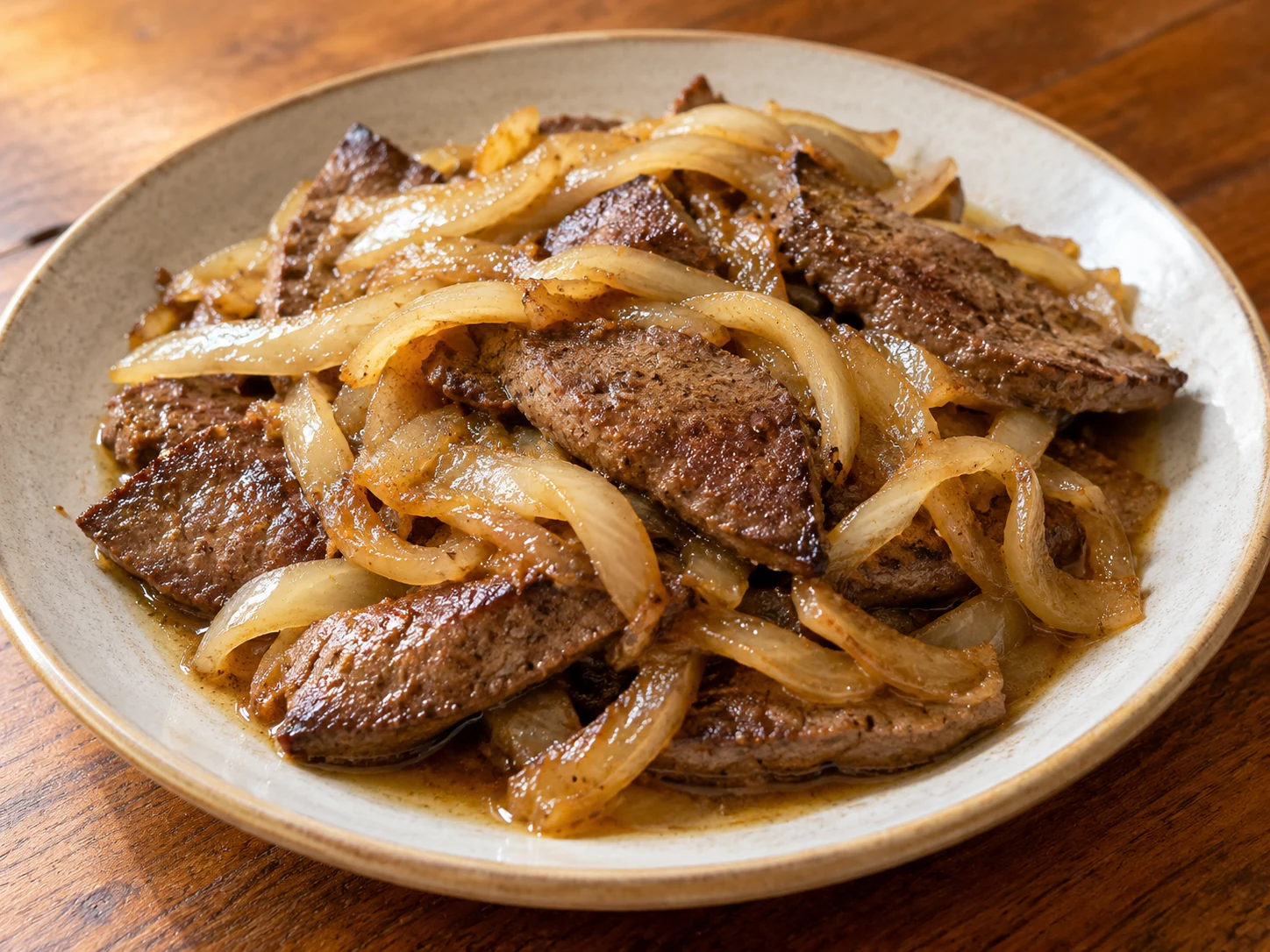
Ingredients
- 600 g fresh trimmed beef liver, in 1 cm strips
- 300 g sliced onion
- 8 g minced garlic
- 20 ml neutral vegetable oil
- 50 ml drinking water
- 15 ml lemon juice
- 3 g salt
- 1 g ground black pepper
Preparation
Slice 300 g onions and mince 8 g garlic. Separately cut trimmed liver into 1 cm strips without rinsing under running water; keep cold and clean surfaces. Clean the surfaces used before continuing.
Heat 10 ml oil. Cook onions 15–18 minutes over moderate heat, stirring; add the 50 ml water in two additions if needed to loosen juices without burning. Stir regularly so that the onions soften without burning.
Add garlic for one minute. Transfer cooked onions and all juices to a clean bowl, never one used for raw liver. Keep every drop of cooking juice; return this mixture only at the end and do not use the bowl for raw liver.
Pat liver dry. Heat remaining 10 ml oil and lay strips in one layer, working in two batches if needed. Avoid a build-up of liquid in an overcrowded pan.
Cook 6–8 minutes in total, turning, until completely cooked and 71 °C inside the thickest pieces; extend if needed. Do not rely only on the exterior colour.
Return onions and their juices. Add 3 g salt and 1 g pepper; stir gently for one minute over low heat until everything is hot. Avoid extending this stage unnecessarily.
Remove from heat and add 15 ml lemon juice. Divide liver, onions and juices into four portions; sides are additional. No extra sauce or side dish is included in the stated quantities.
Serve immediately. Cool leftovers quickly in a shallow container and refrigerate at 4 °C or below within two hours of preparation. Consume within twenty-four hours of preparation; reheat the required portion only once, just before serving, to 74 °C at the centre, then eat immediately. Reheating does not reset the storage period.
Introduction
Liver and onions need different cooking times. Soften the onions first, transfer them to a clean bowl, then cook the liver separately and reunite them briefly. Cooking both together from the outset would leave the liver waiting while the onions soften. The result is a pan dish with a little cooking juice, rather than a stew submerged in sauce.
Ask the butcher for trimmed beef liver and cut even 1 cm strips. A thin probe checks the thickest pieces: browned surfaces do not establish doneness at the centre. Have the plates and side dish ready before the final stage. Serve the liver as soon as it is fully cooked, since a long hot hold makes it tough.
Cultural context
Congo Tourisme describes Kinshasa meals combining starches, vegetables and fish or meat. This measured household adaptation claims no exclusive Congolese origin or provincial traditional name. Quantities and timings are original editorial choices, not taken from the context source. Context: https://congo-tourisme.org/decouvrir/cuisine/
Cooking practices vary between families, available products and equipment. The same aromatic base can therefore give different results without one final universal formula. This recipe keeps a descriptive title identifying the main ingredient and cooking juices, instead of inventing a vernacular name. Proposed variations remain explicitly separate from the reference preparation.
Cooking and storage references: https://www.foodsafety.gov/food-safety-charts/safe-minimum-internal-temperatures · https://www.fda.gov/food/buy-store-serve-safe-food/safe-food-handling · https://ask.fsis.usda.gov/article/To-what-temperature-should-I-cook-beef
Tips
Onions need moderate heat and gradual softening, while liver needs a sufficiently hot pan without stacking. Preparing onions first avoids extending liver cooking while waiting for them. Once the liver is cooked through, combine briefly and serve: prolonged hot holding makes it tough.
Use the 50 ml water to soften onions and loosen their browned juices, in two small additions if necessary. Keep their juices when transferring. Avoid pouring much water over liver: the strips would boil and reducing the liquid would unnecessarily extend their cooking.
Cut even 1 cm strips. Check the thickest with a thin probe, not merely their brown surfaces. Clean the probe after contact with a piece that is not yet fully cooked; verify 71 °C at the centre before combining liver and onions.
Taste with a clean spoon after complete cooking. The reference quantities are 3 g salt and 1 g pepper; do not automatically add a stock cube. Add the 15 ml lemon juice off the heat to preserve the intended finish without extending liver cooking.
Prepare the side dish and plates before the final cooking stage. Reserve onions in a clean bowl that will not receive raw liver. Never return cooked liver to an unwashed raw-liver plate; combine the components gently and serve immediately.
Planning
Keep the liver refrigerated until use and use a board or utensils separate from those for vegetables ready to serve. Wiping hands does not replace thorough washing between tasks. Do not taste juices that have touched raw liver before cooking is complete. Use sound aromatics and drinking water. Measured seasoning makes final adjustments easier without oversalting the whole dish.
Serving
Divide the liver pieces fairly first, then add the onions and juices. Four servings refers to this recipe alone, without added starch. Needs vary with age, appetite and the rest of the meal. Separate serving dishes let everyone build their own plate. Put very hot condiments in a small table bowl instead of changing the entire dish at the last moment.
Storage
Take leftovers with clean utensils and divide promptly into shallow containers. Do not wait for a large mass to cool completely on the counter. Refrigerate at 4 °C or below within two hours of preparation and consume within twenty-four hours of that preparation. Reheat the required portion only once, just before serving, to 74 °C at the centre, then eat immediately. Reheating does not restart the storage period. Without reliable refrigeration, prepare only what will be eaten immediately.
Variations
For a less tart finish, omit the lemon rather than adding a large amount of water that would boil the strips. Offer chilli separately if wanted. Ginger is not included. To double the recipe, cook the liver in several small batches and combine it with the onions at the last moment. Poultry liver requires a different method and doneness guidance; it is not an automatic equal-weight replacement for beef liver.
Accompaniments
Plain rice, separately prepared fufu or a portion of plantain can accompany the cooking juices. The side dish is outside the main recipe and its ingredients must be added to the shopping list. If the meal already contains starch, a simply cooked vegetable adds contrasting texture without requiring a second sauce. Provide water and let diners add their preferred condiments.
For careful presentation, use warm plates that can still be handled safely and wipe the rims before serving. Start with a little cooking juice and offer the remainder separately. This avoids drowning the starch and preserves the liver pieces. Do not add raw garnish solely for a photograph if it is unwashed or will not be eaten.
Nutrition notes
The stated values are estimates per quarter of the recipe, without sides. They depend on the cut purchased, product brands and the amount of cooking juice eaten. Protein comes mainly from the liver, vegetables contribute fibre and oil contributes fat. These figures are neither laboratory analysis nor a dietary prescription. Vitamin and mineral levels can change with cooking; no precise cooked amounts are claimed. Liver is a concentrated source of preformed vitamin A: this dish must not be presented as an everyday food or a treatment for deficiency.