Goat in tomato sauce
🍲 Goat in tomato sauce is a household preparation for four people, built around boneless stewing goat cut into 3 cm cubes. Quantities are weighed before cooking, and the sauce is made in the same pot with simple aromatics. This recipe explains product selection, heat control and the signs to look for at each stage. Accompaniments remain separate so that rice, fufu or vegetables can be chosen according to the meal and the diners’ appetites.
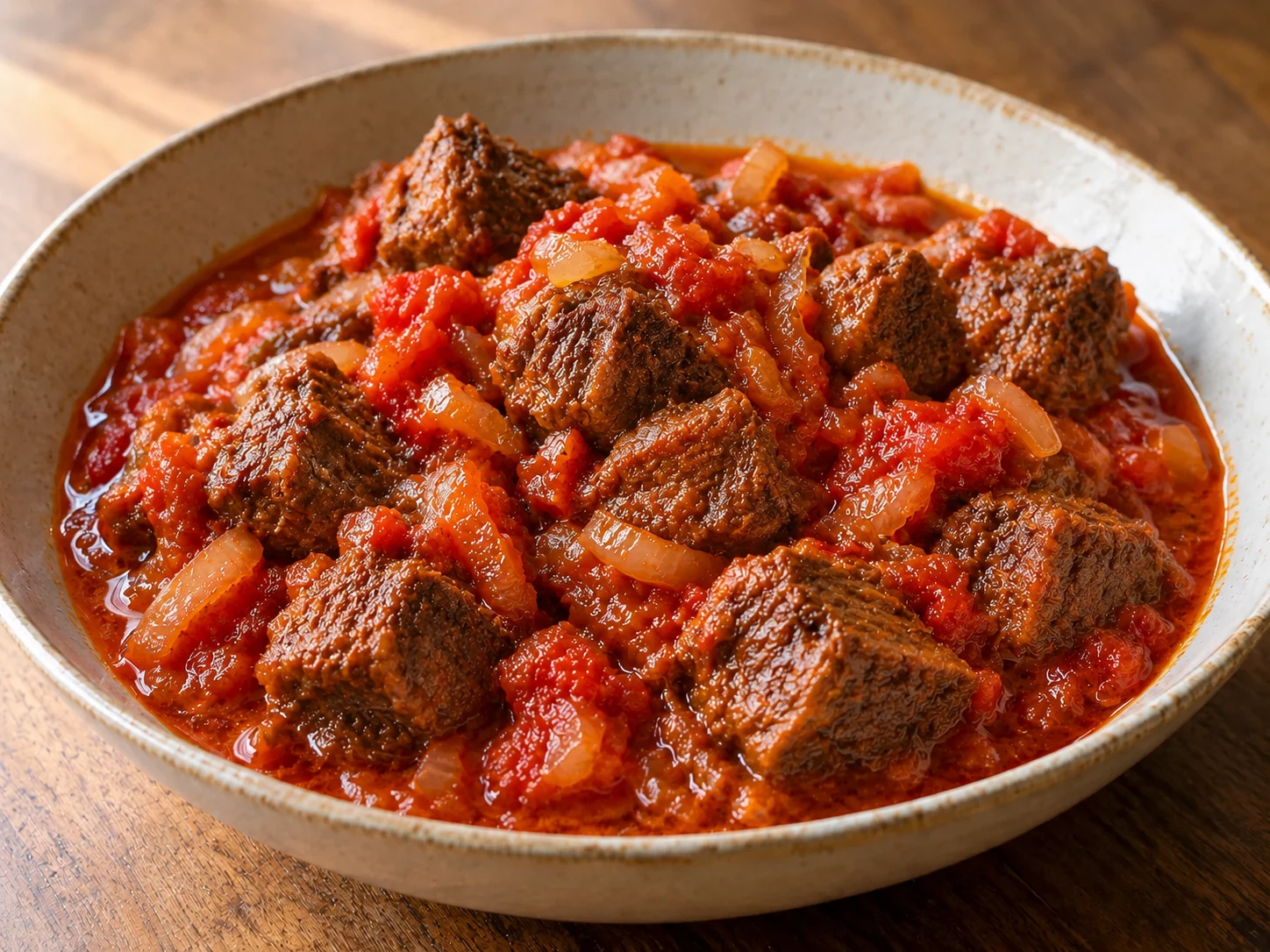
Ingredients
- 800 g boneless stewing goat, in 3 cm cubes
- 150 g sliced onion
- 400 g chopped tomatoes
- 8 g chopped garlic
- 10 g grated fresh ginger
- 20 ml neutral vegetable oil
- 800 ml drinking water
- Up to 3 g salt initially, adjusted to taste
- 1 g ground black pepper
Preparation
Prepare onions, tomatoes, garlic and ginger on a clean board. Weigh all ingredients and measure the water before starting. Keep the animal ingredient refrigerated, separate from the prepared vegetables.
Pat the meat cubes dry. Heat 10 ml oil in a casserole and brown them in two batches, about eight minutes in total. Remove to a plate; browning is not complete cooking of the meat.
Heat the remaining 10 ml oil in the casserole. Soften onion over moderate heat for five minutes, then add garlic and ginger for one minute. Stir with a clean spoon without letting the aromatics blacken.
Add the 400 g tomatoes and the gram of pepper. Cook uncovered for eight to ten minutes, stirring regularly, until the base thickens. Gently scrape the base to incorporate cooking juices without scraping in any burnt areas.
Pour the 800 ml drinking water into the tomato base and add no more than the planned 3 g salt. Bring to a gentle simmer.
Return meat and its juices to the casserole. Partly cover and simmer over low heat for 90 to 110 minutes, until the cubes are fork-tender. Stir and check the base every twenty minutes; if liquid is running short, add a little extra hot water and extend cooking as the meat requires.
Check consistency and taste sauce with a clean spoon. If it seems too thin, remove cooked pieces to a clean dish and reduce uncovered for a few minutes. If it needs loosening, add hot water in small amounts, then return the pieces and heat through.
Divide dish and sauce into four portions and serve hot. Cool leftovers quickly in shallow containers, then refrigerate at 4 °C or below within two hours of preparation. Eat within twenty-four hours of preparation. Reheat quickly only once, just before serving, only the required portion, until thoroughly hot at the centre.
Introduction
This stew uses boneless goat intended for slow cooking. Ask for meat suited to long cooking rather than very lean pieces intended for quick cooking. The 3 cm cubes keep the pieces even and make their tenderness easy to check. The 800 g weight is net: a bone-in cut would require a different quantity and alter the yield.
Initial browning creates cooking juices, but the main work happens afterwards in the partly covered casserole. Tomato, onion, garlic and ginger form a simple sauce; neither peanut paste nor palm fruit pulp is added. Liquid must remain present while the meat becomes tender, and can then be reduced at the end. A stated time does not replace a fork test: the cut and the animal’s age may require longer simmering.
Cultural context
🇨🇩 Congo Tourisme describes meals in Kinshasa combining starches, vegetables and fish or meat. Goat in tomato sauce is a measured household version composed for this collection. It claims neither an exclusively Congolese origin nor a traditional name specific to a province. The quantities and timings below are editorial choices; they are not attributed to the context source.
Cooking methods vary between families, available products and equipment. The same aromatic base can therefore produce several results without there being one definitive formula. This recipe keeps a descriptive title to distinguish the main ingredient and sauce, instead of inventing a vernacular name. The suggested variations remain explicitly separate from the reference preparation.
📚 Context: https://congo-tourisme.org/decouvrir/cuisine/
Cooking and storage guidance: https://www.foodsafety.gov/food-safety-charts/safe-minimum-internal-temperatures · https://www.fda.gov/food/buy-store-serve-safe-food/safe-food-handling
Tips
🔥 Adjust the heat to what happens in the pot. Slight movement in the sauce is enough for simmering; constant splashing or a sticking base indicates excessive heat. Lower the heat, loosen unburnt cooking juices with a little hot water and resume gently. Adding more spices cannot repair burnt sauce.
🥄 Adjust liquid in small additions rather than all at once. Loosening an overly thick sauce is easier than removing a large excess of water at the end without damaging the pieces. The stated quantity is a starting point; evaporation depends on the lid, heat and actual diameter of the pan.
🔪 Cut portions evenly and respect the specified product type. A very thick piece needs more time at the centre than a thin one, even if their surfaces look equally cooked. Choose the thickest pieces to check and clean the probe after contact. Tenderness and temperature answer two different questions.
🧂 Taste with a clean spoon when cooking is finished. The sauce gradually concentrates and may taste salty enough with less than expected, especially if a preserved product is included. Do not automatically add a stock cube: it would change the salt and flavour of the given formula.
🍲 Prepare accompaniments during the stage requiring the least handling, while staying near the heat. Keep a clean container for cooked pieces and never reuse the dish that held the raw product without washing it. Gentle handling at service preserves portions and distributes sauce without crushing them.
Planning
🧼 Keep the animal ingredient chilled until use and use a board or utensils separate from those for ready-to-serve vegetables. Wiping hands does not replace thorough washing between tasks. Do not taste sauce that has been in contact with a raw product before it has finished cooking. Aromatics must be sound and water potable. Measuring seasonings makes final adjustments easier without making the whole casserole too salty.
Serving
🍽️ First divide the pieces evenly, then add sauce. The four portions refer to the recipe alone, without added starch. Needs vary with age, appetite and the rest of the meal. Presenting accompaniments in separate dishes lets everyone build their own plate. Keep very hot condiments in a small table dish rather than changing the entire preparation at the last moment.
Storage
❄️ Take leftovers with clean utensils and promptly divide them among shallow containers. Do not wait for a large casserole to cool completely on the worktop: its mass remains lukewarm for a long time. Refrigerate at 4 °C or below within two hours of preparation and eat within twenty-four hours of preparation. Reheat quickly only once, just before serving, only the amount that will be eaten, until thoroughly hot at the centre. Without reliable refrigeration, prepare the amount needed for immediate service.
Variations
🔄 To change the aromatic character without changing the dish’s structure, replacing part of the ginger with a little clean lemon zest may be considered for another preparation. This suggestion is not part of the reference ingredient list and is not included in the estimates. Replacing the main ingredient with another meat, a whole fish or a plant-based preparation requires reviewing timings and sometimes the liquid. Keeping the same time simply because the weight is identical is insufficient.
When doubling quantities, choose a larger pot or two comparable pots. A deeper volume does not heat or evaporate in the same way. Keeping pieces even and checking cooking at their centre remains more useful than automatically multiplying all timings. Water can be adjusted gradually to the observed consistency, recording additions so the result can be reproduced.
Accompaniments
🥣 Plain rice, separately prepared fufu or a portion of plantain can accompany the sauce. The accompaniment is not part of the main recipe and its ingredients must be added to the shopping list. If the meal already includes starch, a simple cooked vegetable provides contrasting texture without imposing a second sauce. Offer water at the table and let everyone add their preferred condiments.
For a neat presentation, use warm plates that can be handled safely and wipe their rims before serving. Start with a ladleful of sauce; offer the remainder in a separate container. This arrangement avoids drowning the starch and helps preserve the pieces. Do not add a raw garnish only for the photograph if it is unwashed or will not be eaten.
Nutrition notes
🥄 The stated values are estimates per quarter of the recipe, without accompaniments. They depend on the cut purchased, product brands and the amount of sauce actually eaten. Protein comes mainly from the animal ingredient, vegetables contribute fibre and oil contributes fat. These figures are neither a laboratory analysis nor a dietary prescription. Vitamin and mineral contents can change during cooking; no precise value after cooking is claimed.