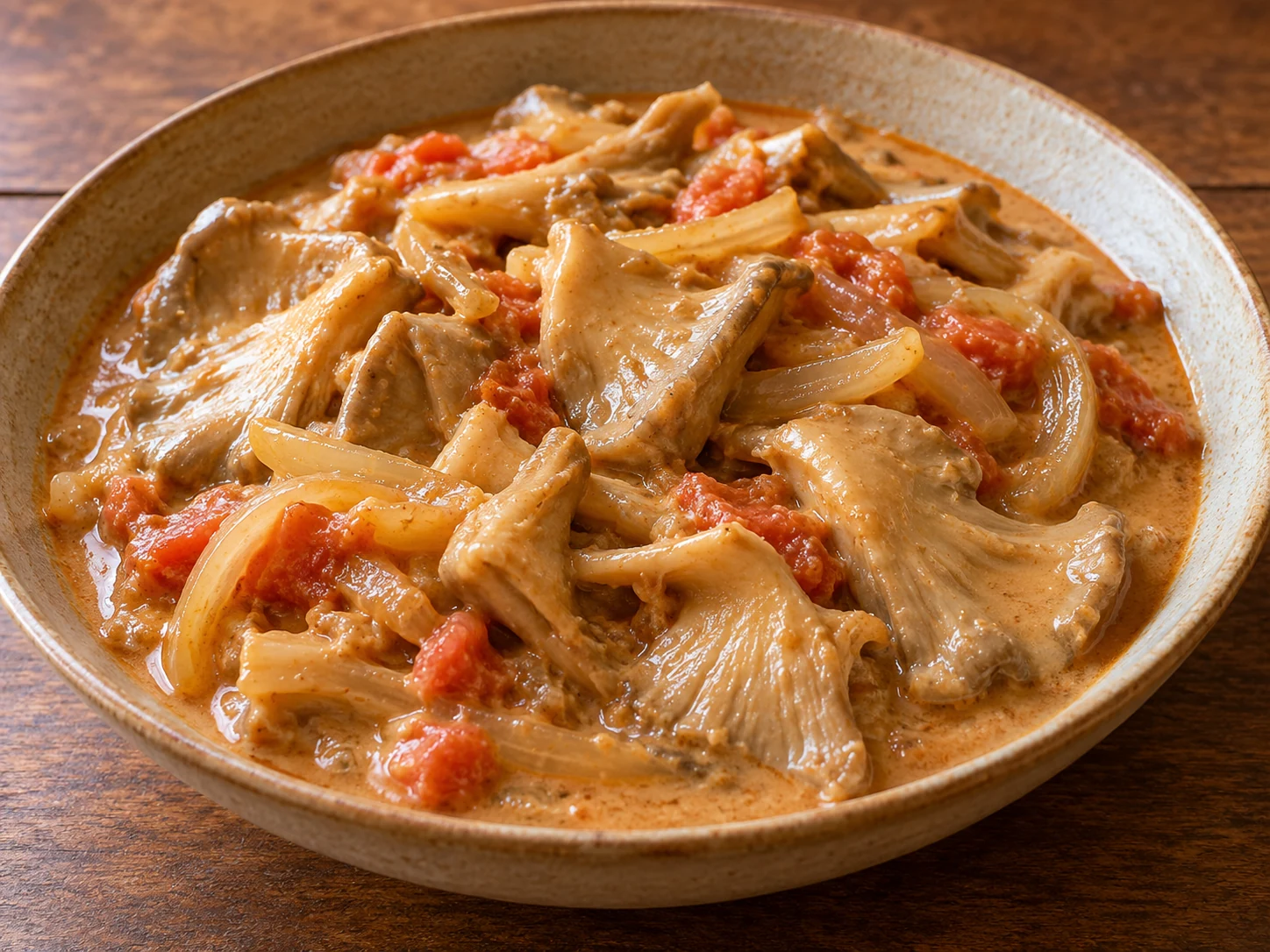
Mushrooms in peanut sauce
Cultivated oyster mushrooms simmer in a tomato and peanut sauce. The dish remains plant-based, without smoked fish or a stock cube. The six hundred grams of mushrooms are weighed after cleaning; they release some of their water during cooking. Peanut butter then binds the sauce, which is divided into four portions. Rice or fufu is prepared separately and is not included in this recipe’s nutritional values.
Ingredients
- 600 g fresh cleaned cultivated oyster mushrooms
- 300 g ripe diced tomatoes
- 120 g finely sliced onion
- 8 g chopped garlic
- 10 g grated fresh ginger
- 100 g pure roasted peanut butter with no added sugar
- 15 ml neutral vegetable oil
- 400 ml drinking water, including 100 ml to dilute peanut butter when used
- 2 g salt, optional and adjustable
- 1/4 teaspoon black pepper
Preparation
Weigh all ingredients before starting. Wash the tomatoes and prepare the 120 g onion, 8 g garlic and 10 g ginger on a clean board. Have one spoon for the sauce and another for tasting.
Clean the 600 g cultivated oyster mushrooms, remove tough bases and tear larger caps into thick strips. Avoid prolonged soaking. Prepare a deep pan wide enough to mix them without crushing.
Heat the 15 ml oil in a saucepan or deep pan. Soften the onion for five minutes over moderate heat without burning it. Add garlic and ginger, then stir for one minute to distribute them through the base.
Add the 300 g tomatoes, quarter teaspoon of pepper and only some of the 2 g salt. Cook for about eight minutes, stirring, until the tomatoes break down and form a soft base.
Add the mushrooms to the tomato base and cook for eight minutes, stirring. Meanwhile dilute the 100 g peanut butter in 100 ml taken from the 400 ml water; reserve the remaining 300 ml.
Pour in the peanut mixture and remaining water. Simmer for fifteen minutes over low heat, stirring regularly, until the mushrooms are tender and the sauce binds.
Check that the main ingredient is cooked and hot. Taste a small amount with a clean spoon and adjust salt without unnecessarily exceeding the proposed 2 g. If the sauce is too thin, cook briefly uncovered while watching it.
Divide into four portions and serve hot. Cool leftovers quickly in clean, shallow containers, then refrigerate within two hours at 4 °C or below. Eat within twenty-four hours of preparation, or sooner if a label sets a shorter limit. Reheat thoroughly only once, immediately before eating; reheating does not restart the storage period.
Introduction
Choose fresh, clearly identified cultivated oyster mushrooms. Do not use wild mushrooms whose edibility is uncertain. Remove tough bases, clean briefly and tear larger caps into thick strips. Choose pure roasted peanut butter without sugar, and without pieces if you want a smooth sauce. A fairly wide, deep pan helps evaporation before the water is added.
Cultural context
This recipe is a plant-based home adaptation for the DR Congo collection, built around a tomato and peanut base. It must not be presented as a specifically named traditional speciality or as originating in a particular province. It allows common cultivated mushrooms to be used without equating them with forest species eaten locally.
📚 Sources: https://www.fao.org/4/y5489e/y5489e00.htm
Tips
🥄 Stir while gently scraping the bottom, especially when the sauce contains peanut. A thickened sauce can catch before its surface looks dry; lowering the heat is preferable to vigorous stirring.
💧 Add water using a measuring jug. If the sauce reduces too quickly, check the heat and lid first. A small amount of hot water can help without drowning the tomato flavour.
🍅 Choose ripe tomatoes and cut them small enough to break down. If they are not very juicy, watch the pan particularly carefully during the first minutes to prevent the onion from burning.
🧂 Taste at the end of cooking with a clean spoon before adding the remaining salt. A canned or prepared product may supply some; the proposed two grams are a starting ceiling, not an obligation.
⚖️ Distribute pieces of the main ingredient among the four plates before pouring over the remaining sauce. This gives more even portions than serving four large ladlefuls in succession without mixing.
Planning
🥜 Contains peanuts. 🥘 Prepare the vegetables, weigh the main ingredient and measure the water before heating the pan. A tomato base benefits from enough cooking to lose its raw appearance, but must not dry out until it burns. A heavy-bottomed pan helps maintain a steady simmer. The main ingredient’s weight refers to the precise form specified in the ingredient list; replacing a dry weight with a drained weight would substantially change the final quantity.
Serving
🍽️ Divide the sauce into four portions and offer the accompaniment separately. Stir one last time before serving to distribute pieces and sauce comparably. Thick bowls retain heat well; warn diners when the dish has just left the stove. For a buffet, serving small amounts replenished as needed is easier to manage than a large container left for a long time in a warm kitchen.
Storage
❄️ Quickly transfer leftovers to clean, shallow containers, then refrigerate within two hours at 4 °C or below. Eat within twenty-four hours of preparation, observing any shorter limit on a package. Reheat thoroughly only once, immediately before eating; reheating does not restart the storage period. Avoid returning an already served portion to the pan. If the sauce has stood for a long time without appropriate hot holding or cooling, its appearance or smell cannot guarantee its safety.
Variations
🔄 This recipe fixes one main ingredient and a vegetable base to keep quantities and times consistent. Replacing that ingredient with raw meat, a whole fish or a dried ingredient requires different preparation and a check of its doneness. Chilli may be offered separately rather than imposed on all diners. Adding a stock cube is unnecessary for the method and would increase salt; it is therefore not included in the ingredients.
Accompaniments
🥬 A portion of sauce can accompany rice, fufu or vegetables, prepared separately according to the meal’s habits. Their quantities are not included here. A thick sauce does not necessarily need a large helping to flavour the plate; starting with a reasonable amount helps distribute the pieces better. Provide drinking water and offer condiments in separate small containers with their own serving spoons.
Nutrition notes
📊 The estimates concern one quarter of the pan, without a starchy accompaniment or drink. They depend on the brand, species, drained weight and, where applicable, the peanut butter’s composition. Vitamin and mineral values after cooking have not been analysed: a qualitative mention is not a guaranteed intake. This recipe is not offered to prevent or treat disease; it belongs within a varied diet suited to each person.