Pili-pili
🌶️ This cooked pili-pili combines chilli, red sweet pepper, tomato, onion and garlic. It yields about 300 g of condiment, or twenty indicative 15 g portions. Sweet pepper provides bulk; heat mainly depends on the chilli chosen. Serve the sauce separately from the main dish.
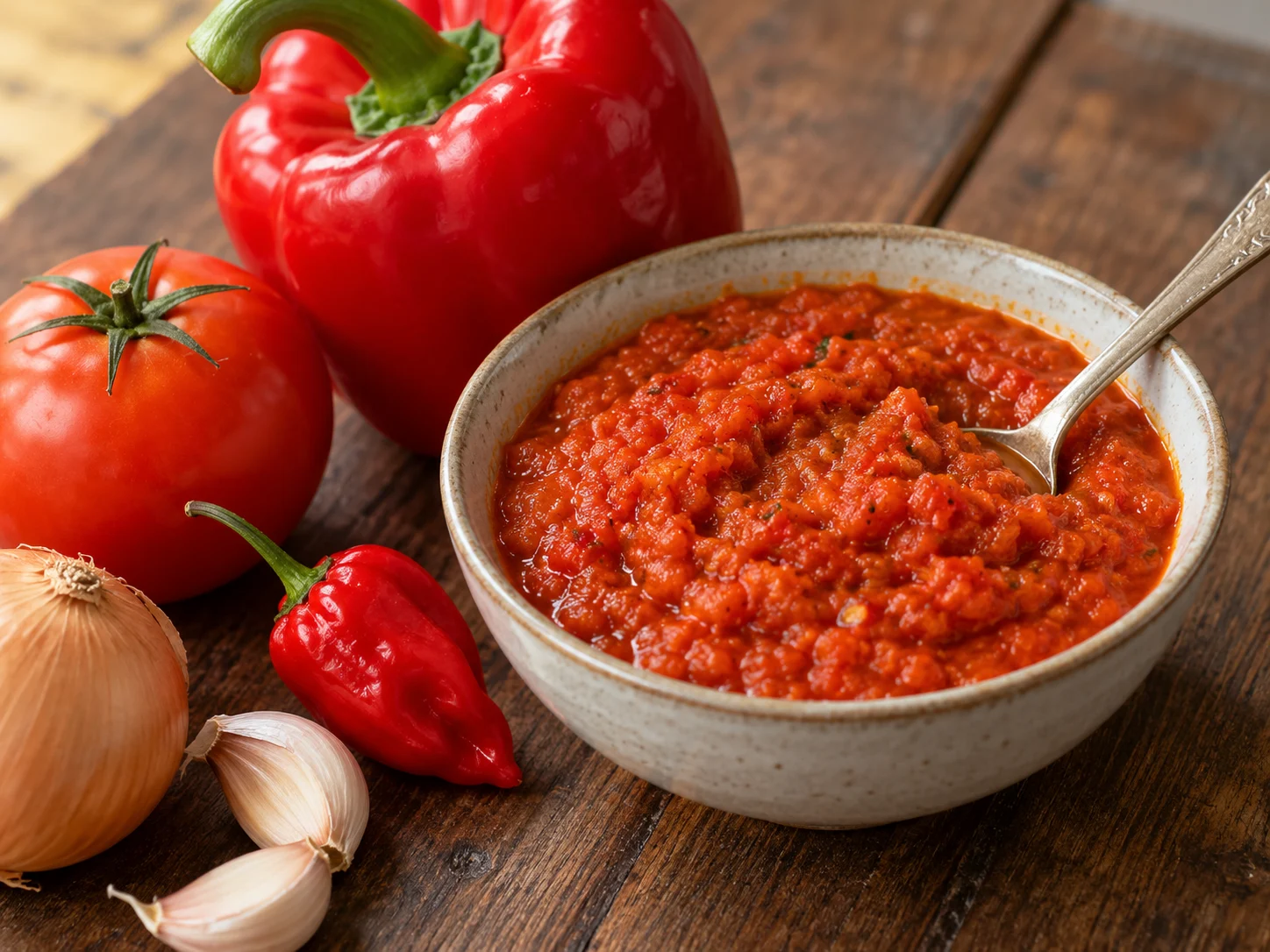
Ingredients
- 200 g red sweet pepper, weighed after removing stalk and seeds
- 100 g fresh tomato, diced small
- 80 g sliced onion
- 10 g chopped garlic
- 5–20 g fresh food-grade red chilli, according to desired heat
- 20 ml neutral oil
- 50 ml drinking water, plus a few spoonfuls if needed
- 30 ml freshly squeezed lemon juice
- Up to 2 g salt
Preparation
Heat the 20 ml oil moderately in a small saucepan. Add onion and soften for 5 minutes, stirring. Add garlic during the last minute of this step. Avoid heavy browning, which would give bitterness that is difficult to correct.
Add sweet-pepper dice, tomato, 5 g chilli to start and the 50 ml water. Mix, cover partly and simmer for 12 minutes. Stir several times. Sweet-pepper pieces should crush easily under a spoon; cook a little longer if their skins remain firm.
Remove from heat and let cool enough to use the blender according to its instructions. Pulse to make a slightly grainy purée. With an immersion blender, keep the head submerged to limit splashes. Do not open or lean your face immediately over a still-hot, very spicy mixture.
Return the purée to the pan. Add the 30 ml lemon juice and up to 2 g salt, then simmer gently for 3 minutes, stirring. Add a spoonful of water if it catches, or cook slightly longer uncovered if too thin. The stated time is for the basic version.
Let a small spoonful cool before tasting. Assess heat with a bite of a neutral accompaniment rather than a large spoonful of sauce alone. For a hotter version, add a little reserved chilli, finely chopped, then cook for a few more minutes before blending again if needed.
Transfer to the shallow container to cool quickly, then refrigerate within two hours. Weigh the finished sauce: about 300 g is indicative and depends on reduction. Serve a small quantity in a separate bowl using a clean utensil.
Introduction
Pili-pili seasons a bite or plate; it is not a large helping of sauce to eat on its own. This recipe uses sweet red pepper and tomato to create a soft purée with chilli evenly distributed through it. It is cooked, cooled and refrigerated. It is neither a shelf-stable preserve nor a sauce whose storage life is guaranteed by lemon juice.
Chillies vary considerably in heat. Two fruits of the same size can produce very different results, and removing seeds does not make a hot chilli mild. For a first batch, start with 5 g fresh food-grade chilli out of the maximum suggested 20 g and reserve the rest. For a nearly mild sauce, use a higher sweet-pepper proportion in a later batch instead of randomly correcting a mixture that is already too hot.
Have food-handling gloves, a stable board, a small blender and a saucepan ready. Avoid touching your face or eyes while working. Afterwards, clean utensils and surfaces before handling other food. Blend carefully too: let the sauce cool to warm and follow the appliance instructions rather than sealing a container full of boiling-hot liquid.
Cultural context
🇨🇩 Pili-pili belongs among Congolese table condiments; Gift of Hospitality describes a family transmission connected with DR Congo. This reference documents the condiment, not this cooked sweet-pepper version’s proportions.
The quantities, vegetables and cooking method below are an editorial proposal by RecettesAfricaines.com. They do not establish a single formula or claim that the sauce belongs exclusively to one country. A raw chilli-and-garlic mixture is a different method with different texture and storage management.
Tips
Sweet pepper and chilli have different roles. The former provides flesh and mild flavour; the latter largely determines heat. Replacing one with the other at equal weight may make the sauce far hotter than intended.
Start with little chilli and record its weight. Increase heat by adding a small quantity and heating again; do not add all the reserved chilli at once. The recipe cannot promise identical heat from one purchase to the next.
An overly hot sauce can be combined with a new cooked sweet-pepper-and-tomato base without chilli. This increases yield and changes proportions, so record the adjustment. Adding more salt, lemon or oil does not remove chilli heat.
Lemon contributes acidity of flavour but does not validate long storage. Do not store the sauce at room temperature or simply cover it with oil and claim it is protected.
For a shared meal, offer the bowl separately and label it as spicy. Use a dedicated small spoon and avoid dipping cutlery already used for eating. Do not add the entire batch to the family pot.
Planning
Wash the vegetables in drinking water and drain. Remove damaged areas. Weigh sweet pepper after opening it and removing seeds; whole-fruit weight is not usable-flesh weight. Dice it small so it softens within the stated time. Prepare tomato, onion and garlic before cutting chilli.
Handle chilli using the prepared gloves and equipment. Remove the stalk and weigh the starting quantity. Keep the surplus separate and away from children. Prepare a clean shallow cooling container and a small serving spoon. A clean jar is not a sterilising device or a guarantee of room-temperature storage.
Serving
About 300 g corresponds to twenty indicative 15 g portions, not twenty large helpings. Weigh the result for precise division. Start with less than one portion to discover its heat. Put the amount needed into a small bowl and keep the rest chilled rather than leaving the whole jar on the table.
Storage
Cool quickly in a shallow container and refrigerate within two hours at 4 °C or below. Eat within 48 hours. For larger batches, freeze small cooled, dated portions. Thaw in the refrigerator and use promptly. Do not keep a jar for weeks on the basis of this recipe, and do not use a container whose condition or contents appear abnormal.
Variations
Make a less-hot sauce with the minimum chilli quantity, or omit chilli for a sweet-pepper purée and describe it accordingly. Weight alone cannot determine heat when the variety changes. A long mild chilli and a small very hot one are not equivalent.
For a rustic texture, blend briefly and retain small pieces of fully cooked vegetables. For a smoother purée, blend longer once cooled to warm. Herbs or ginger may be added in another version, but declare them rather than implying they are in this ingredient list.
Accompaniments
Offer a small spoonful with grilled fish or meat, beans or rice. The condiment should accompany the bite without masking the dish. Anyone who does not want chilli may keep their plate plain; serving separately makes that possible.
Nutrition notes
The values are rounded estimates per 15 g portion if the final yield is 300 g. They depend on chilli and evaporation; larger portions provide more oil and salt. This condiment has no promised therapeutic benefits. Vegetable vitamins and minerals have not been measured in the finished product.