Chicken with mbika
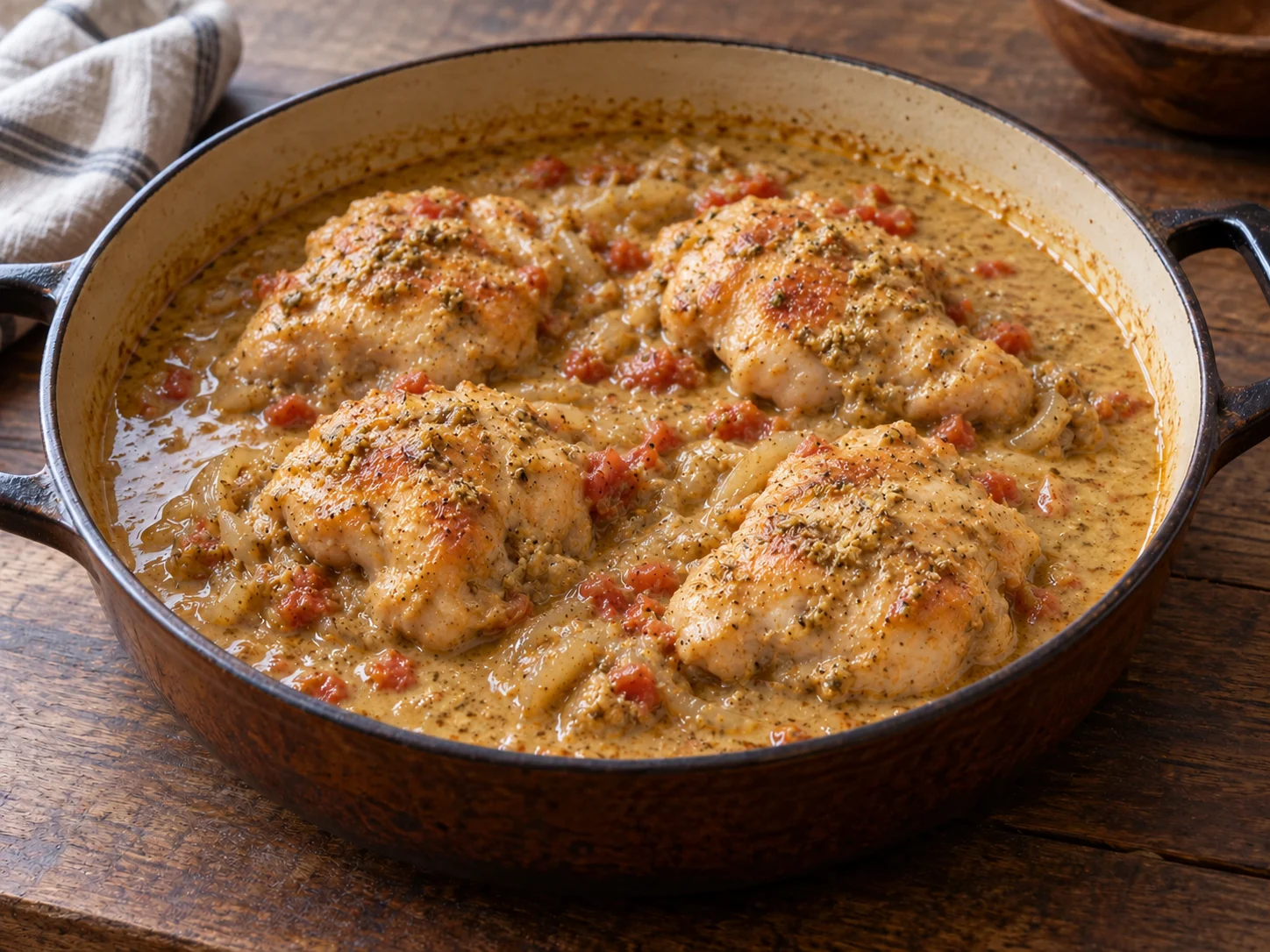
🍗 Chicken with mbika combines poultry pieces with a sauce thickened by finely ground pumpkin seeds. This simmered version contains no peanuts or fish and makes four portions. Tomato adds a lightly red base, while the seeds give a thick sauce to serve with a separately prepared accompaniment.
Ingredients
- 800 g boneless, skinless chicken thigh meat, in four even pieces
- 150 g shelled, plain, unsalted food-grade pumpkin seeds
- 300 g fresh tomatoes, diced small
- 150 g finely sliced onion
- 8 g chopped garlic
- 10 ml neutral oil
- 450 ml drinking water: 300 ml for simmering and 150 ml for mixing the seeds
- Up to 100 ml hot water in reserve, depending on the sauce
- Up to 3 g salt, adjusted to taste
- 1/4 teaspoon ground black pepper
- 1 small pinch ground nutmeg, optional
Preparation
Heat the 10 ml oil in a heavy pot over moderate heat. Add chicken and brown lightly for about 8 minutes, turning it. Work in two batches if needed to avoid crowding. Transfer to a plate reserved for this purpose; the chicken is not yet cooked through.
Add onion and two spoonfuls taken from the 300 ml simmering water to the same pot. Soften for 5 minutes, loosening cooking juices without burning them. Add garlic and stir for 2 minutes. Do not scrape any carbonised deposits into the sauce.
Add the 300 g tomatoes. Cook over moderate heat for 5 minutes, stirring, to soften and form a moist base. Pour in the rest of the 300 ml simmering water. Mix and return chicken with its plate juices.
Cover and simmer gently for 20 minutes. Turn pieces halfway and check that the base is not drying out. Keep a small simmer rather than a rolling boil. During the final minutes, mix the seed meal with its 150 ml water into a soft paste.
Stir a small ladleful of hot cooking liquid into the seed paste, then pour it into the pot, stirring around the chicken. Simmer for another 10 minutes, partly covered. Scrape the base gently and add reserve water in small amounts if the sauce thickens too much.
Check that the thickest part of the chicken reaches at least 74 °C, without pressing the probe against the pan base. Cook longer if needed. Add pepper and optional nutmeg, then taste before adding salt, keeping within the 3 g allowance. Serve hot in four portions with the chosen accompaniment.
Introduction
Here the seeds are not shaped into dumplings: their meal is stirred directly into the sauce. This produces an even stew in which the chicken remains recognisable and the thickening surrounds the pieces. The result should be loose enough to coat, without a dense mass at the bottom. Adjust water gradually rather than making one large addition at the end.
Buy shelled, plain, unsalted food-grade pumpkin seeds intended for cooking. Garden seed, shells and seasoned snack mixes are unsuitable. Grinding freshly in a clean appliance lets you detect an abnormal smell or rancid taste before starting. If buying ready-ground mbika, check its composition and follow the supplier’s directions.
This recipe uses 800 g boneless, skinless chicken thigh meat. This avoids confusing the purchased weight with the weight of bones or skin. Choose four pieces of similar thickness, optionally halved for easier serving. A firmer free-range bird or bone-in pieces may need different cooking: they cannot automatically replace this quantity for the same time.
Cultural context
🇨🇩 Chicken and pumpkin seeds called mbika are combined in Congolese cooking; a preparation is described by JessCookWithYou. The quantities and smooth-sauce method here are an editorial proposal by RecettesAfricaines.com.
This is different from mbika with smoked fish: it uses fresh poultry and thickening dispersed directly into the cooking juices. It does not represent every family version. The word mbika should not lead to substituting peanut paste, which changes the flavour and introduces a different ingredient.
Tips
Mix the meal with water before adding it to hot juices. Pouring a large amount of dry meal directly onto the sauce encourages lumps; a bowl and ladle help distribute it evenly.
The base catches more readily after adding seeds. Lower the heat, stir with a spatula and add small amounts of water. More oil does not correct an overly dense sauce.
Colour depends on the seeds and tomatoes. Shelled green pumpkin seeds may give a greener sauce than some mbika meals; do not add colouring to imitate another variety.
Keep the plate used for partially cooked poultry separate from serving dishes. After cooking is complete, use a clean dish. Do not reuse a raw-poultry utensil without cleaning it.
To double the recipe, choose a wider pot and brown in batches. Double the ingredients but continue adjusting water gradually. Check the centre temperature even if the usual cooking time has elapsed.
Planning
Prepare vegetables before handling chicken, then use a board and utensils reserved for raw poultry. Do not wash it under the tap: splashes can spread contamination over the worktop. Pat dry if needed with disposable paper, then wash hands and clean used surfaces.
Grind the seeds in pulses into fine meal, letting the appliance cool if it heats up. Coarse meal gives a grainier sauce. Prepare a bowl large enough to mix it just before use and keep a little hot water in reserve. Have a clean food thermometer ready to check the chicken.
Serving
Divide chicken and sauce evenly between four plates. Stir the pot gently before serving so the thickening is not left at the bottom. Declare the pumpkin seeds and check the label of purchased meal, particularly when diners mention an allergy.
Storage
Divide leftovers among small shallow containers and refrigerate within two hours at 4 °C or below. Eat within 48 hours. Reheat only the portion needed until very hot throughout, stirring and adding a little water if thickened. To freeze, use closed, dated portions and thaw in the refrigerator.
Variations
Fish calls for another recipe: its cooking time and bone handling differ from poultry. The catalogue’s mbika entry already shows another use for the seeds. Keep fish out of this chicken version rather than combining every protein.
Offer chilli at the table without adding it to the whole pot. For bone-in chicken, adjust weight and extend simmering until fully cooked; the stated 50 minutes concerns the boneless meat in the ingredient list. Peanut paste is not a neutral replacement for mbika.
Accompaniments
Serve with white rice, fufu or cooked plantains. Their quantities and cooking time are not included. Separately prepared leafy vegetables may complete the plate without changing the sauce. Choosing a single starch makes serving and dividing the juices easier.
Nutrition notes
Chicken supplies protein; seeds contribute fats, plant protein and fibre. The figures are rounded estimates per quarter of the recipe, without an accompaniment, using skinless thigh and assuming all the sauce is eaten. They vary with the chicken and seeds and are not an analysis of the finished dish. Vitamins and minerals are described qualitatively, without therapeutic promises.