Ngai-ngai ya musaka
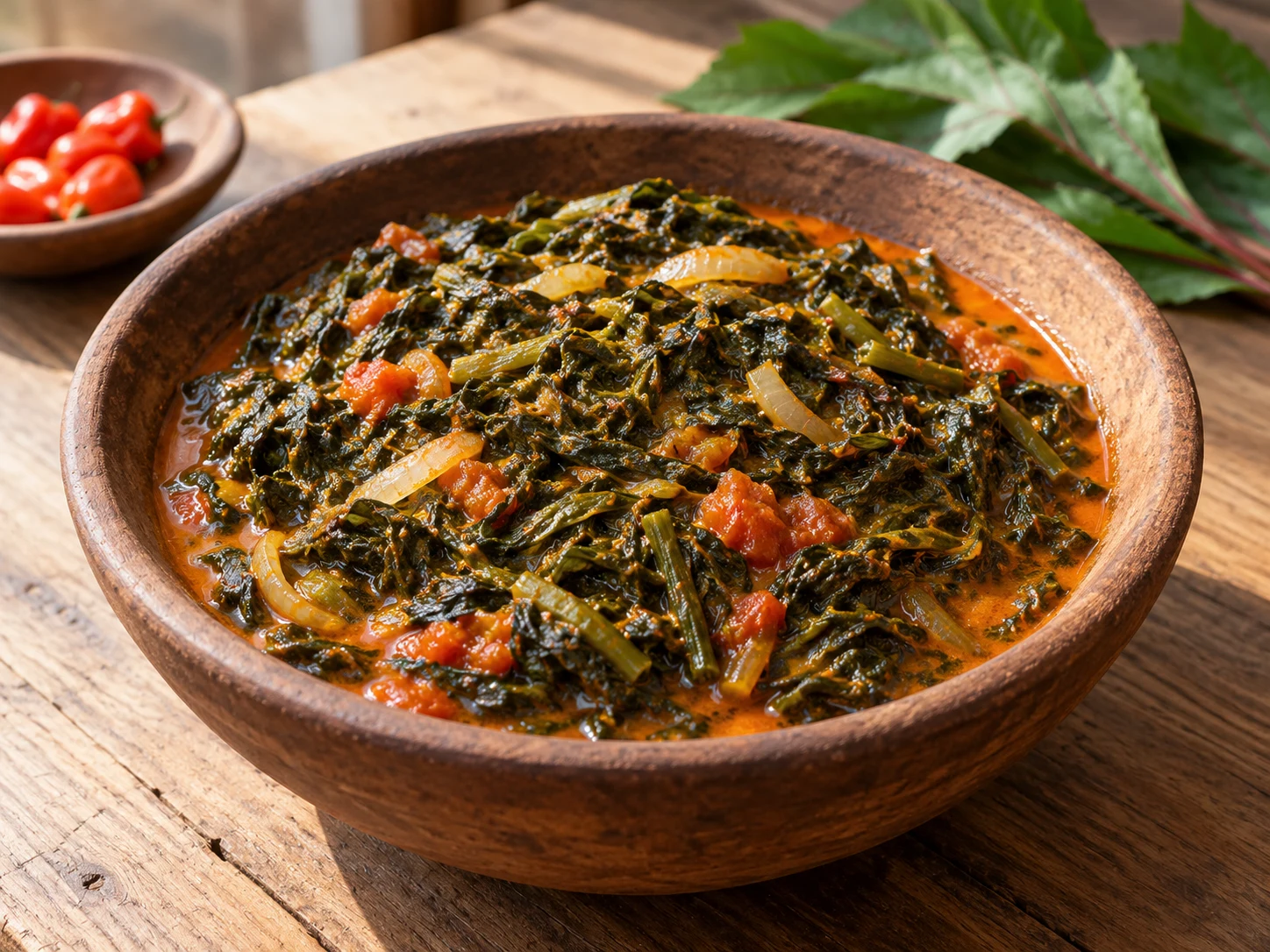
🌿 Slightly tart roselle leaves simmer in a sauce made from oil-palm fruit pulp. This plant-based version of ngai-ngai ya musaka contains neither fish nor peanuts. It makes four portions of vegetable sauce, to serve with a separately prepared accompaniment.
Ingredients
- 500 g fresh food-grade roselle leaves, weighed after removing tough stems
- 250 g canned food-grade oil-palm fruit pulp, stirred until homogeneous
- 150 g finely sliced onion
- 200 g fresh tomato, cut into small dice
- 8 g finely chopped garlic
- 350 ml drinking water, plus up to 150 ml hot water for adjustment
- Up to 2 g salt, reduced according to the canned product
- 1/4 teaspoon ground black pepper
- 1 small fresh chilli, optional, offered separately
Preparation
Pour 100 ml of the 350 ml water into the pot. Add onion and garlic. Heat moderately, cover and soften for about 8 minutes, stirring once or twice. Keep the base moist: add a spoonful of water if needed, without browning the aromatics.
Add the 200 g diced tomato. Cook for 7 minutes, partially covered, until the pieces begin to collapse. Crush lightly with the spatula. Do not reduce to a dry concentrate: retain a moist base for the palm pulp.
Mix the 250 g stirred palm pulp with the remaining 250 ml water in a bowl. Pour into the pot and combine well. Bring to a gentle simmer and cook for 5 minutes. Scrape the base to check that no thick layer is sticking.
Add the roselle leaves by handfuls, stirring them in as they wilt. Cover and simmer gently for 12 minutes. Stir several times to distribute leaves and sauce. Add hot water in small amounts if the mixture becomes too dense.
Add pepper, taste and add only the necessary salt, keeping within the initial 2 g allowance. Cook uncovered for about 3 minutes to adjust consistency. Check that leaves and onion pieces are tender. Extend cooking slightly if needed rather than serving fibrous leaves.
Turn off the heat and stir gently before dividing among four deep plates. The sauce should remain loose without a large separate pool of water. Prepare the chilli separately for those who want it. Serve hot with separately prepared fufu, cooked plantains or rice.
Introduction
This preparation balances two qualities: the tartness of the leaves and the richness of the palm fruit sauce. Roselle provides a bright flavour, while the fruit pulp thickens the liquid and gives it an orange colour. Onion, tomato and garlic form a restrained base. There is no need to add plenty of oil: the palm pulp already contains some, in amounts that vary between products.
Choose food-grade roselle leaves, Hibiscus sabdariffa, from a shop or producer that identifies them as edible. The dried red calyces used for bissap are not a substitute: they are different parts of the plant and give a different result. An ornamental plant simply called hibiscus is not an equivalent ingredient either. This recipe requires no foraging or personal botanical identification.
The second choice concerns the musaka. Use canned oil-palm fruit pulp intended for cooking, sometimes sold as palm fruit sauce or moambé. Read its ingredients: bottled palm oil, a palm-kernel product and peanut paste cannot replace this pulp interchangeably. Stir the can before weighing the required quantity to distribute its fatty and thicker parts.
Cultural context
🇨🇩 Roselle leaves combined with palm fruit sauce are documented in a Congolese recipe published by Makusa ya Congo. The quantities and plant-based method below are an editorial proposal by RecettesAfricaines.com.
This recipe differs from the roselle-and-aubergine dish already in the catalogue: palm pulp forms the sauce base here and there are no aubergines. It does not claim to describe every family version. Adding smoked fish would create a fish-containing variation; fish is not a hidden ingredient in the preparation described.
Tips
Taste before trying to correct the tartness. Roselle naturally has a sour flavour that belongs in this preparation. Adding sugar to hide it changes the dish; a little sauce on a neutral accompaniment often provides a better balance.
Canned palm products vary in texture. Start with the specified water and keep the reserve for small adjustments. If the sauce is too thin, simmer uncovered for a few minutes; do not automatically add flour or starch.
An orange film may rise during simmering. Stir and assess consistency before adding anything. Extra oil will not help an already fatty sauce bind. If desired, lift off a little surface fat with a spoon.
Cook the leaves until tender rather than repeatedly washing them after cooking. Draining and squeezing a finished sauce would lose the pulp and aromatics. This method does not use cassava leaves and must not be applied to them as a substitution.
For eight portions, double the ingredients in a wider pot and add the leaves in stages. Allow a little longer to regain a simmer. Tender leaves and even heat throughout remain the final checks.
Planning
Wash the leaves in several changes of water to remove soil, then drain. Remove overly fibrous stems and damaged leaves. Weigh 500 g after trimming, not before: a bunch containing many stems yields fewer usable leaves. Cut into strips two to three centimetres wide for easier mixing and serving.
Prepare a heavy pot, spatula, measuring jug and a reserve of hot water. Slice the onion finely enough to soften in the stated time. Dice the tomato before starting. Open the can with a clean tool, check its condition and read the storage instructions for the opened product.
Serving
Divide the leaves and sauce evenly between four portions. Stir gently at the bottom of the pot before serving, as the mixture may separate slightly while resting. Put chilli in a separate small bowl. Check the canned product’s ingredients for anyone with an allergy or dietary restriction.
Storage
Divide leftovers among small shallow containers and refrigerate within two hours at 4 °C or below. Eat within 48 hours. Reheat only the required portion until thoroughly hot, stirring and adding a little water if it has thickened. Portions may be frozen and dated; thaw in the refrigerator and avoid repeated reheating.
Variations
For a smoked-fish version, add 150 g commercially prepared food-grade fish flesh, carefully deboned, when adding the leaves. Follow the supplier’s directions for any preliminary preparation. Reduce salt and declare the fish allergen. This variation is no longer plant-based.
If fresh leaves are unavailable, a food-grade frozen roselle product may be used according to its manufacturer’s directions, adjusting water for the liquid it releases. The fresh version’s timings do not transfer automatically. Do not replace leaves with bissap tea or the pulp with oil alone.
Accompaniments
Choose fufu, white rice or cooked plantains to accompany the sauce. These are not included in this recipe’s quantities or total time. Prepare them alongside it if everything is to be served hot. Fish or beans prepared separately may complete the meal according to preference.
Nutrition notes
The leaves and tomato diversify the vegetables in the meal. Palm pulp supplies a substantial share of the fat, but its composition varies considerably between products. Without the can’s precise nutritional information and a weighed final yield, a numerical calorie value would be unreliable. Vitamins and minerals have not been measured in this recipe; no therapeutic benefit is promised.