Minced beef with butter
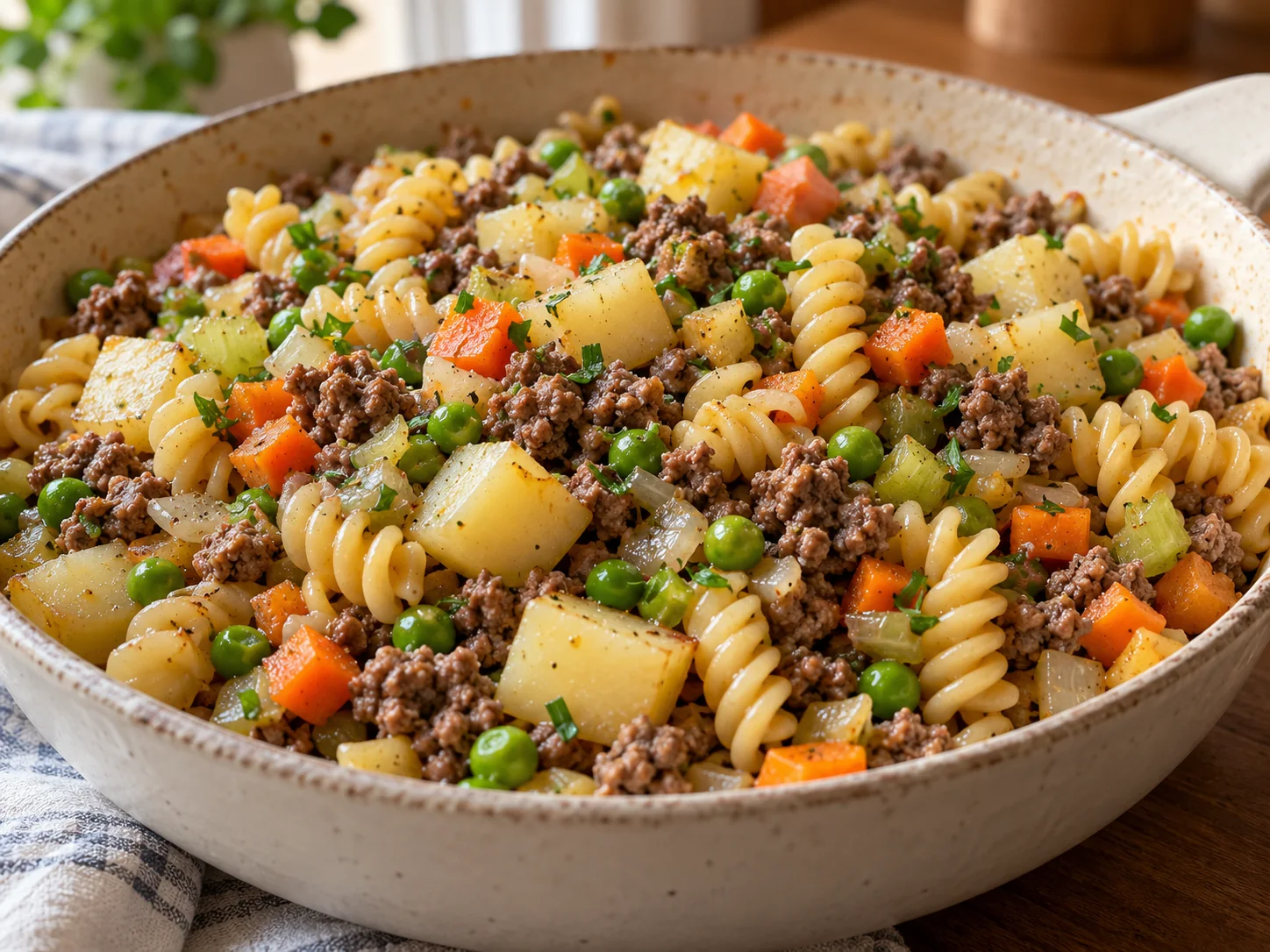
🥘 Crumbled beef, pasta spirals, potatoes, carrots and peas form a family meal finished with measured butter. This adaptation of a Radio Okapi recipe makes four complete portions. Cook the mince thoroughly before assembly; vegetables and starches should remain recognisable.
Ingredients
- 500 g minced beef with approximately 10–15% fat
- 160 g dry wheat pasta spirals
- 400 g peeled potatoes, 2 cm cubes
- 150 g peeled carrots, 1 cm dice
- 150 g plain frozen peas
- 150 g sliced onion
- 60 g washed celery stalk, finely sliced
- 20 g washed and snipped chives
- 30 g unsalted butter, in small pieces
- 10 ml neutral vegetable oil
- 3 litres drinking water for separate cooking, reserving up to 100 ml pasta water
- Up to 3 g salt for the finished dish
- 1/4 teaspoon black pepper
Preparation
Boil approximately 1.5 litres water in the first pan. Gently cook potatoes and carrots about 12–15 minutes until a knife enters but cubes retain shape. Add frozen peas for the last 4 minutes, or longer if their packet requires. Drain thoroughly and keep briefly covered off the heat.
Meanwhile boil the remaining 1.5 litres water in another pan. Cook spirals according to their packet until still firm. Reserve up to 100 ml water before draining. Do not rinse: remaining starch helps butter coat them. Water can remain unsalted because seasoning comes at the end.
Heat 10 ml oil in the wide sauté pan. Soften onion and celery 5 minutes over moderate heat, then add mince. Crumble with a spatula and cook about 8–10 minutes, stirring to expose all parts to heat. Do not add water initially; meat releases its own juices.
Use the thermometer to reach at least 71 °C at the centre of a gathered mound of beef. Take several readings without touching hot metal and continue if necessary. Loss of pink colour is insufficient. If considerable fat collects, carefully spoon some off before assembly.
Add drained pasta, potatoes and vegetables to cooked beef. Fold in 30 g butter over low heat for 3–5 minutes, just to warm and coat. Add reserved pasta water in small amounts if dry; all 100 ml may not be needed. Do not cook twenty more minutes after adding butter: starches would become unnecessarily soft.
Add chives and pepper, taste with a clean spoon and adjust salt up to 3 g for the whole dish. Divide between four plates and serve immediately. Thirty-five minutes assumes parallel cooking; a single burner takes longer. Meat temperature and cube texture are the main guides.
Introduction
Several elements cook in parallel instead of simmering together for a long time. Weigh dry pasta and peeled potatoes: these weights are not interchangeable with cooked products. The starch allowance is shared between two ingredients; another substantial accompaniment is unnecessary.
Choose minced beef with approximately ten to fifteen percent fat, keep refrigerated and respect its use-by date. Beef is the reference meat; any minced pork substitution must be announced and cooked carefully too. Keep mince chilled while preparing vegetables. Brown colour alone cannot establish its safe centre temperature.
Butter contains milk, wheat pasta contains gluten and sometimes egg, and celery is also an allergen. Read labels. Unsalted butter helps control salt; stock cubes are unnecessary. Prepare a wide sauté pan, two saucepans and a clean food thermometer. A small pan makes assembly difficult and crushes potatoes.
Cultural context
🇨🇩 This measured adaptation draws on a family recipe published by Radio Okapi, without claiming an exclusively national origin. Recipe and temperature references: Radio Okapi. FoodSafety.gov.
Tips
The 160 g pasta weight is dry. Substituting 160 g cooked leftovers would reduce the starch amount and alter the balance.
Use a wide pan and fold rather than crush. If overcrowded, assemble in a large clean saucepan over low heat once beef is properly cooked.
Butter should melt and coat, not brown strongly after assembly. Low heat and a little pasta water give a supple finish without a large sauce.
Gather crumbled meat into a small mound to place the probe in its centre. Check several areas and clean after contact with undercooked meat.
Canned peas may replace frozen peas at equal drained weight, but add at the end because already cooked. Rinsing may remove some brine salt without a quantified reduction.
Planning
Dice carrots smaller than potatoes so they soften promptly. Remove green potato patches and discard very green or deteriorated tubers. Weigh after trimming. Keep peas frozen until needed rather than thawing on the worktop.
Cooking overlaps: start potatoes and carrots as pasta water heats, then cook beef in the sauté pan. Follow the pasta packet’s timing. Reserve a cup of its water before draining to loosen the mixture without extra butter. Do not leave the cooked starches cooling for a long time while waiting for meat.
Serving
Distribute ingredients evenly rather than making one plate mainly pasta and another mainly beef. A shared serving dish helps portioning but should not remain lukewarm on the table. The finish should be glossy and supple, with intact spirals and visible potato cubes.
Storage
Quickly transfer leftovers to shallow containers and refrigerate within two hours at 4 °C or below. Use within 48 hours. Reheat only the required portion with a little water to 74 °C at the centre, gently lifting the mixture. Freeze sealed dated portions if necessary; potatoes may become more crumbly. Thaw in the refrigerator.
Variations
Minced pork can replace beef at equal weight if clearly announced; retain the 71 °C check. Poultry mince requires 74 °C, so do not automatically use beef temperature. Nutrition refers to the reference beef.
Gluten-free pasta may be used if its label and all other ingredients suit diners, with adjusted cooking. It does not remove milk or celery. A vegetable fat changes both the name and flavour: label it as a variation rather than butter.
Accompaniments
Meat, vegetables, pasta and potatoes are already included. Serve alone, optionally with separately prepared raw vegetables. Do not automatically add bread or rice; neither is in the nutrition estimate. Offer drinking water.
Nutrition notes
Beef supplies protein; starches and vegetables contribute energy and fibre. Butter and oil are measured, but meat fat affects the result. Per-portion figures are estimates for four portions without accompaniments. Pasta, fat percentage and any skimmed fat change them; vitamins and minerals were not measured.