Trois pièces
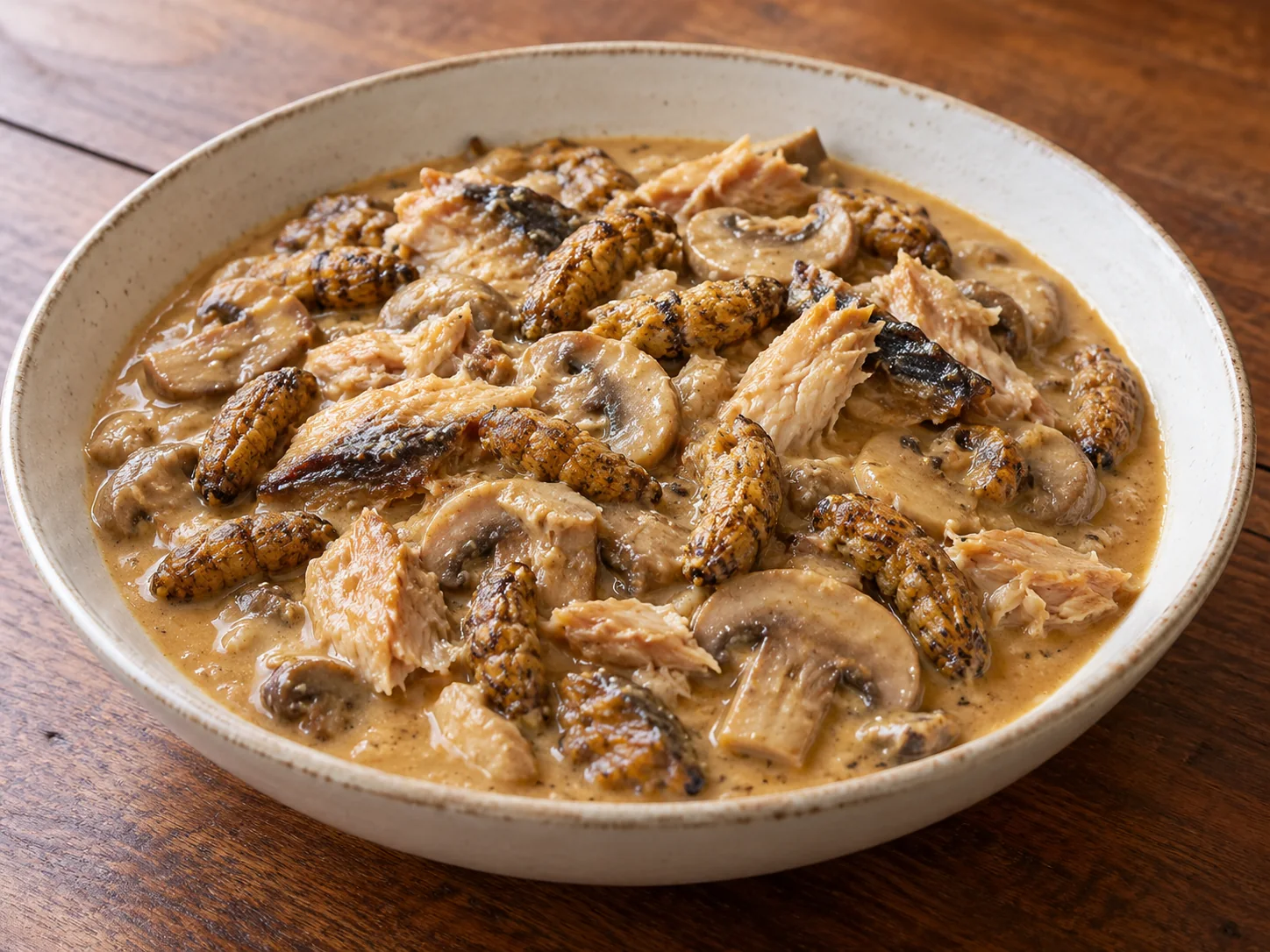
🥜 Trois pièces brings together edible caterpillars, mushrooms and smoked fish in peanut sauce. This adaptation uses identified commercial caterpillars that have been cleaned, fully cooked and then dried, explicitly labelled ready to eat, as well as cultivated mushrooms. It makes four portions. It is not a method for making unidentified wild insects or unknown simply dried insects edible.
Ingredients
- 100 g identified commercial edible caterpillars, cleaned and fully cooked then dried, explicitly labelled ready to eat
- 300 g cultivated button or oyster mushrooms, cleaned and cut
- 200 g carefully deboned food-grade smoked fish flesh, ready to cook
- 150 g smooth pure unsweetened peanut paste
- 150 g sliced onion
- 8 g chopped garlic
- 15 ml neutral vegetable oil
- 600 ml drinking water for the sauce, plus up to 200 ml hot water if needed
- Drinking water for rehydrating caterpillars, discarded after draining
- 1/4 teaspoon black pepper
- Up to 1 g added salt, according to the fish and peanut paste
- Optional chilli, served separately
Preparation
Organise ingredients. Confirm that caterpillars are fully cooked and ready to eat, then rehydrate according to the notes and supplier instructions. Meanwhile prepare mushrooms, onion and garlic. Weigh 200 g usable fish flesh after deboning and loosen peanut paste with part of the measured water.
Soften onion for 7 minutes. Heat 15 ml oil over moderate heat in the pot. Add onion and stir until softened without heavy browning. Add garlic during the final minute. Avoid a very dark fried base, which would give noticeable bitterness in the peanut sauce.
Cook mushrooms for 8 minutes. Add to the onion and heat, stirring gently. They release some water before softening. Do not seek strong browning; this stage prepares their texture and shows how much liquid is already present before adding sauce.
Simmer sauce for 15 minutes. Pour in the loosened peanut paste and remaining 400 ml water, then mix. Add rehydrated, drained caterpillars. Bring to a gentle simmer and cook partly covered. Stir regularly across the base, adding small amounts of hot water if the sauce thickens too quickly.
Add fish and cook for another 15 minutes. Gently incorporate smoked flesh and pepper. Maintain a moderate simmer to heat fish through without breaking every piece. Taste before salting; the stated gram can be reduced or omitted according to the products. The sauce should coat while staying supple.
Check and serve. Make sure mushrooms are tender and the entire pot is thoroughly hot. Check a caterpillar’s texture with a spoon, without treating this as proof of safety for an unidentified product. Share all three components and sauce among four plates, clearly telling diners what the dish contains.
Introduction
The name refers to the three components that should remain present on the plate. Mushrooms contribute tenderness, smoked fish flavours the sauce and caterpillars retain their particular bite. Peanut combines them without needing palm-fruit sauce. The intended colour is that of diluted, simmered peanut paste, with recognisable ingredients rather than a uniform purée.
Product selection precedes cooking. Buy caterpillars intended for human food with the species, supplier and preparation identified. For this recipe they must already be cleaned, fully cooked and then dried, with a clear indication that they can be eaten without further mandatory cooking. A product merely described as “dried” does not meet that requirement. Do not use this recipe for personal foraging or a poorly identified species.
Choose smooth pure unsweetened peanut paste and food-grade smoked fish stored as directed. Cultivated button or oyster mushrooms make preparation easier to reproduce; their choice is an explicit adaptation to available products. Have a heavy pot and a reserve of hot water to control sauce thickness.
Cultural context
🇨🇩 ACP describes a Kinshasa dish named trois pièces, combining caterpillars, mushrooms and smoked fish in peanut sauce.
This version retains the three components while specifying commercial products and home quantities. Cultivated mushrooms replace unspecified local mushrooms without claiming an identical flavour. The method applies only to the fully cooked, ready-to-eat caterpillars specified here; it does not replace the expertise needed for preparing other products.
📚 Reference: ACP, 28 August 2025.
Tips
Loosen thick peanut paste before adding it to the pot. Large lumps would need vigorous mixing that could break the fish. The hot-water reserve adjusts gradually rather than turning the dish into soup.
Product origin and preparation remain essential. Long home cooking does not justify using unknown insects. Do not substitute caterpillars found in a garden or bought without enough information.
Cultivated mushrooms release variable amounts of water. Allow their first cooking before deciding on further reduction. Separated greasy sauce or sticking calls mainly for lower heat and regular stirring, not another splash of oil.
Smoked fish may be very salty. Taste only after adding it and simmering for a few minutes. Avoid additional fish cubes and powders, which complicate seasoning and may add undeclared ingredients.
For more people, use a wider pot and handle gently. Double the main products but add adjustment water gradually. Share the three components during serving, rather than giving the first plates all the fish and the last mainly sauce.
Planning
Check every label before starting. The dish contains peanuts, fish and insects. Insects may cause reactions in some people allergic to crustaceans or dust mites; do not offer them the dish without appropriate advice. Reference: EFSA.
Rehydrate the fully cooked caterpillars in drinking water for about twenty minutes in the refrigerator if the packaging allows this. Follow the supplier’s rehydration instructions first, then drain and discard that water. If the label requires preliminary safety cooking or product status is unclear, choose another product meeting the ingredient description rather than improvising treatment.
Carefully remove fish bones. Wipe mushrooms or briefly rinse if needed, then cut them large enough to remain visible. Blend peanut paste with 200 ml taken from the measured 600 ml water to make it easy to incorporate. The twenty-minute rehydration is included in the twenty-five-minute preparation time; prepare the other ingredients during that wait.
Serving
Use a broad spoon to lift pieces without crushing. Visually check the distribution of fish, mushrooms and caterpillars between portions. Explain ingredients before serving rather than after the first bite. Do not describe this dish as plant-based or allergen-free.
Storage
Divide leftovers into shallow containers and refrigerate promptly within two hours of preparation. Store at 4 °C or below and eat within 48 hours, following any shorter period specified for the products. Reheat the required portion until thoroughly hot throughout, using 74 °C at the centre as a guide for reheated leftovers. Add a little water to loosen sauce. Do not keep the pot lukewarm until the next day.
Variations
Cultivated oyster mushrooms give a different texture from button mushrooms while retaining the same 300 g quantity. This is not foraging advice. Without suitable identified caterpillars, make a separate mushroom-and-smoked-fish peanut stew and name it accordingly instead of claiming it is the same three-component dish. Chilli is optional and can be added to a reserved small portion.
Accompaniments
Serve separately cooked white rice, fufu or plantain, choosing one main accompaniment. Peanut sauce is already substantial; a simple garnish lets the three ingredients remain recognisable. A small tomato salad may complete the table if prepared with clean equipment that has not touched fish before cooking.
Nutrition notes
Peanuts supply much of the energy and fat; fish and caterpillars contribute protein. Insect composition varies with species and processing, while fish varies with the smoked product. Figures are therefore broad estimates per portion without accompaniment, to compare with product labels. They are neither a finished-dish analysis nor a guarantee of particular micronutrient levels.