Tripe in tomato sauce
🍅 Fully cooked beef tripe simmers in tomato, onion and pepper sauce with a little mustard and nutmeg. This household adaptation makes four servings. It uses food-grade tripe prepared by a professional; its cooking time is unsuitable for raw or merely blanched tripe. Prepare fufu, rice or chikwangue separately.
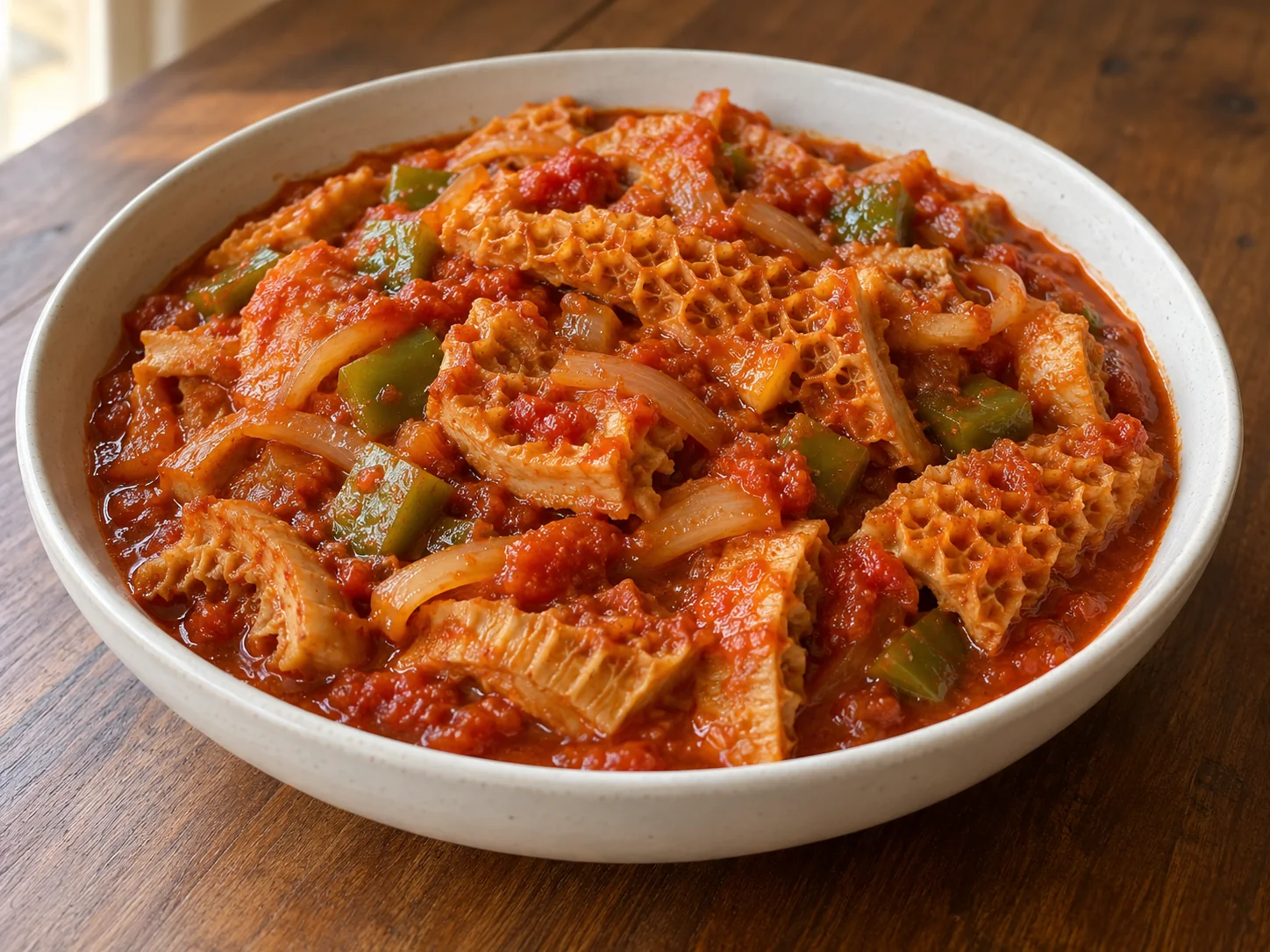
Ingredients
- 800 g food-grade beef tripe, professionally cleaned and fully cooked, ready to reheat
- 400 g canned peeled tomatoes with their juice
- 150 g sliced onion
- 150 g deseeded green pepper, in short strips
- 40 g washed celery stalk, finely chopped
- 8 g chopped garlic
- 10 g mild mustard
- 20 ml neutral vegetable oil
- 350 ml drinking water, plus up to 150 ml hot water if needed
- 1 bay leaf
- 1 small pinch ground nutmeg
- 1/4 teaspoon white pepper
- Up to 2 g added salt, according to the tripe and mustard
- 10 g washed, chopped chives
Preparation
Prepare the vegetables and tripe. Confirm that the offal is fully cooked and ready to reheat, then weigh 800 g usable tripe. Cut the pieces and return their container to the refrigerator. Prepare onion, pepper, celery, garlic, tomatoes and chives separately to follow the order of additions.
Soften the vegetables for 10 minutes. Warm 20 ml oil over moderate heat, add onion and celery and stir until softened. Add pepper after five minutes and garlic during the final minute. The base must not blacken: the vegetables should soften without a burnt fried flavour.
Build the sauce for 10 minutes. Add tomatoes and all their juice, bay leaf, pepper and the small pinch of nutmeg. Simmer uncovered, stirring occasionally. The tomatoes break down and begin to make a sauce. Do not automatically add sugar to disguise acidity.
Simmer with the tripe for 35 minutes. Add the pieces, mustard and 350 ml water. Mix thoroughly, bring to a gentle simmer and partially cover. Stir several times, passing the spoon over the base. Add hot water a little at a time only if the sauce thickens before the pieces are thoroughly hot and tender.
Adjust during the last 5 minutes. Uncover and reduce if clear liquid still surrounds the pieces. Alternatively, add a spoonful of water if the base sticks. Taste before salting because prepared tripe and mustard may already contain salt. Remove the bay leaf.
Finish and serve. Add chives and mix gently. Check that a piece cuts easily and the entire pot is thoroughly hot. If the supplier requires a longer additional cooking time, follow those directions and change the total time accordingly. Share the tripe and sauce evenly between four plates with a separately prepared accompaniment.
Introduction
Two textures determine success: tripe that is tender but still recognisable, and a reduced sauce that surrounds the pieces without drowning them. Tomato provides fruitiness, pepper remains visible and mustard blends into the juices. Celery and nutmeg are measured so that they do not overpower the offal.
Ask the butcher for cleaned beef tripe that is fully cooked and ready to reheat. Some packs labelled “precooked” contain only blanched tripe that still needs lengthy cooking: that is not the product used here. Check the label and supplier’s directions before starting. Buy plain tripe rather than an already seasoned dish to control the sauce.
Have a three-litre pot, board, knife and spoon for gently scraping the base. The 800 g is usable weight after any draining. Keep the tripe refrigerated while preparing the vegetables. There is no need for prolonged soaking or lemon treatment to replace the professional’s preparation.
Cultural context
🇨🇩 Radio Okapi published tripe in tomato sauce on 31 July 2016. This documents a recipe presented in DR Congo without establishing an exclusive origin.
This version uses less oil and starts with fully cooked tripe. Quantities and cooking directions have been rewritten for four portions. It is a measured editorial adaptation, not a literal reproduction or a single method for every Congolese table.
📚 Reference: Radio Okapi, 31 July 2016.
Tips
Correct a watery sauce by removing the lid rather than immediately adding flour. Reduction also concentrates salt: season at the end, especially if the tripe was prepared in salted broth.
If the sauce sticks, lower the heat and add a little water around the side. If a layer has burnt, gently transfer the food above it into another pot without scraping the blackened base. Extra oil will not remove bitterness.
Tenderness depends on the initial preparation of the tripe. Pieces that remain very tough after the stated time often indicate a different product from the one specified. Cook gently for longer with enough liquid rather than serving tough offal or boiling the tomato vigorously.
For a larger table, double the ingredients in a wider pot. Still add adjustment water gradually. A larger volume takes longer to heat; stir through the centre and check several pieces before serving.
Keep the sauce supple. Cooled tripe may feel firmer and its juices thicken. A little water and gentle stirring during reheating restore the consistency without excessive further reduction.
Planning
Cut large pieces of tripe into strips three to four centimetres long. Similar sizes reheat evenly. Remove only easily detached clumps of fat; trying to make every piece perfectly white or thin wastes food without improving the sauce.
Roughly crush the tomatoes in their juice. Cut pepper strips short enough to fit on a spoon. Measure the initial water and keep the adjustment separate: canned tomatoes and tripe release different amounts of liquid. Read the mustard label if managing an allergy; mustard is an ingredient in this version.
Serving
Serve in warm deep plates, sharing the pieces first and then the sauce. The garnish should support the tripe rather than fill the whole plate. If serving is delayed briefly, keep the preparation hot using suitable serving equipment; do not leave the pot to cool slowly on a switched-off hob.
Storage
Divide leftovers into small shallow containers and refrigerate promptly within two hours of cooking. Store at 4 °C or below and eat within 48 hours. Reheat only the portion needed, stirring until thoroughly hot throughout; 74 °C at the centre is a guide for reheated leftovers. Freeze in closed, dated portions if needed and thaw in the refrigerator.
Variations
Red pepper can replace green at the same weight for a sweeter flavour. Offer a little chilli separately rather than making the whole pot very hot. Mustard may be omitted if necessary; check other seasonings for the allergen as well. Smoked fish would change this preparation and add another allergen: it is not part of the base recipe.
Accompaniments
Choose white rice, fufu or chikwangue to carry the sauce and prepare just one accompaniment. Cooked leafy vegetables contrast with the tomato. Their cooking is not included in the hour specified here. Serve chilli separately and offer water rather than assuming an alcoholic drink must accompany the dish.
Nutrition notes
Tripe contributes protein. Fat content varies with the purchased product and trimming. Tomato, pepper and aromatics add variety, but sauce alone does not replace every other component of a meal. Estimates below are per portion without rice, fufu or chikwangue; salt particularly depends on the supplier and mustard.