Fish and plantain rolls
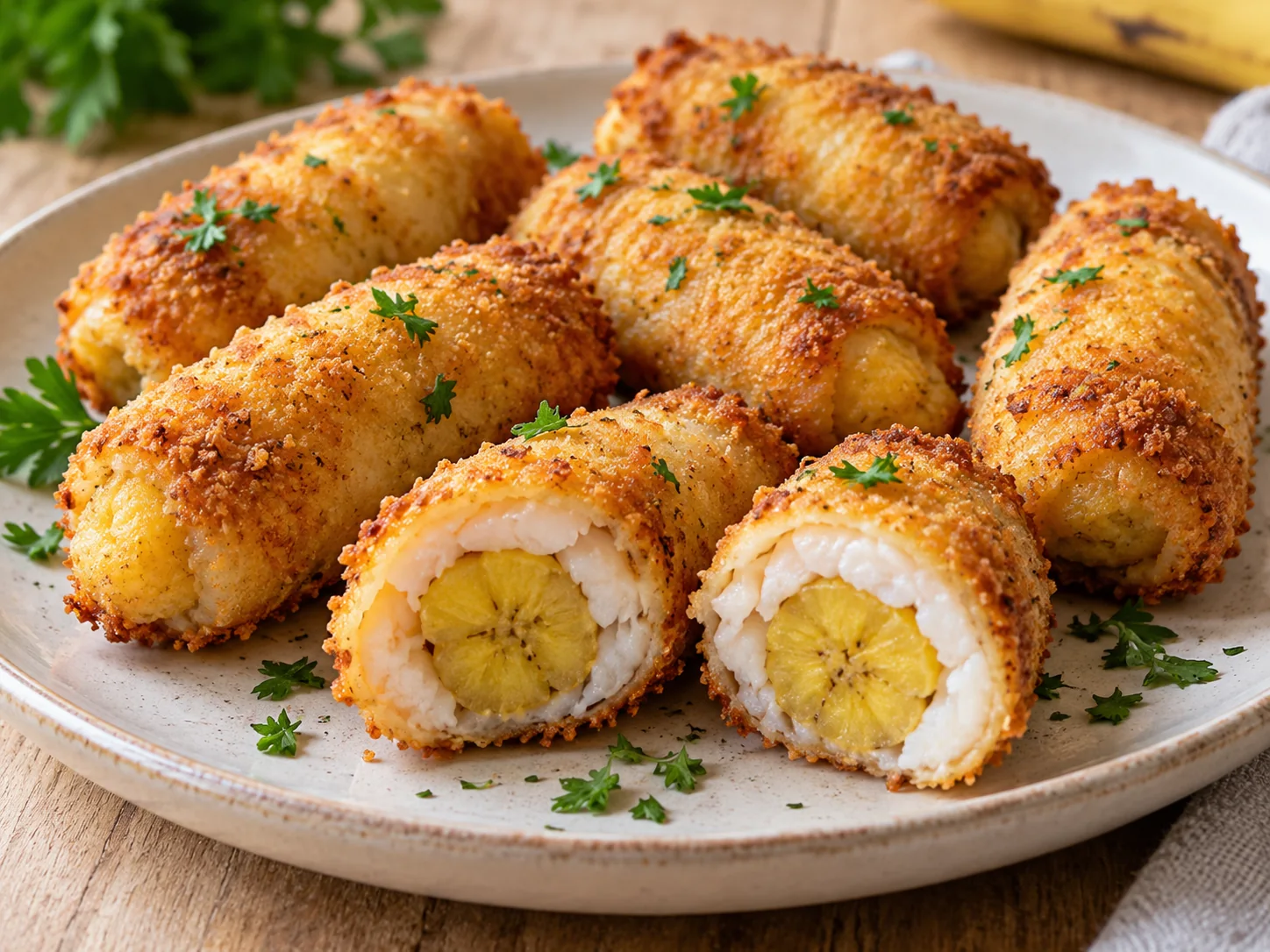
🐟 A thin strip of white fish surrounds a baton of already cooked plantain. The roll is dipped in egg, coated in breadcrumbs and cooked in oil. This adaptation makes eight small rolls, two per person. Aim for a golden outside, opaque fish and a tender plantain centre. Small size and precooking the fruit make cooking more consistent.
Ingredients
- 600 g thin skinless, boneless white fish fillets, divided into 8 flexible strips
- 300 g peeled plantain, yellow but still firm, in 8 batons
- 1 egg weighing about 50 g, beaten
- 100 g fine breadcrumbs
- 1 litre oil suitable for frying, not all consumed
- 3 g salt at most, to distribute
- 1/2 teaspoon mild paprika
- 1/4 teaspoon white pepper
- 1 pinch ground nutmeg
- 5 g washed chopped parsley to serve
- Enough drinking water to precook the plantain, drained afterwards
Preparation
Precook plantain for about ten minutes. Put the 8 batons in simmering water until a knife point passes through while they retain their shape. Drain, spread out and let steam escape. Their surface must be dry before assembly.
Prepare fish and seasonings. Check for bones and form 8 thin strips able to surround the batons. Distribute salt, paprika, pepper and nutmeg on both sides without crushing the flesh. Refrigerate during short pauses.
Roll and coat. Wrap each fish strip around a cooked plantain baton. Secure if necessary with a counted wooden pick. Dip each roll in beaten egg, then breadcrumbs, gently coating the entire surface without compressing the filling.
Heat oil to about 170 °C. Use a deep pan filled no more than halfway. Lower a few rolls at a time with tongs without splashing. Maintain steady heat; an overloaded bath cools and produces greasy coating.
Cook about five to seven minutes per small batch, turning carefully. Time depends on thickness. Check at least 63 °C in the thickest fish portion with a clean probe, rather than measuring only the plantain. Fish must be opaque and coating golden. If browning too quickly, lower heat and continue cooking as required.
Drain and serve. Place rolls on a rack. Remove and recount every pick before presenting them. Scatter over 5 g parsley. Give two rolls per person, cutting one to display the plantain centre if desired. Serve immediately with separately prepared accompaniment.
Introduction
Prepare the plantain filling before assembly. A large raw piece enclosed in fish could remain firm while the outside becomes deeply coloured. Therefore cook the plantain separately first. It should become tender while remaining firm enough to handle. Drain, let steam escape and dry the surface before rolling.
Choose white fish fillets thin and flexible enough to wrap around the fruit without breaking. A thick fillet intended for another cooking method is not automatically suitable. Ask the fishmonger for appropriate portions and carefully check for bones. Make small regular cylinders rather than large pieces difficult to cook at the centre.
Prepare a saucepan, stable deep sauté pan, tongs, rack and cooking thermometer. Wooden picks are only supports if needed. Count them before and after cooking, then remove every one before serving.
Cultural context
🇨🇩 Radio Okapi publishes a recipe combining fish fillet, plantain and a breadcrumb coating. This reference documents its presence in a contemporary culinary repertoire shared in DR Congo. It does not justify presenting the rolls as an ancient speciality of all Congolese communities.
This version retains fish rolled around plantain but specifies precooking the fruit, modest dimensions and checking fish temperature. Quantities and seasonings are adapted for four people. No seasoning cube is required for a flavourful coating.
📚 Culinary reference: Radio Okapi, 18 July 2021.
Tips
Overripe plantain collapses during assembly; very green fruit may require longer precooking. Look for yellow, still-firm fruit and judge actual tenderness rather than applying one time to every fruit.
Fish strips should be thin but intact. If they tear, make smaller rolls instead of adding several layers. A piece that will not close properly can be cooked separately instead of secured with many picks.
Coating protects the surface but does not prove the fish is cooked. A brown crust can hide an insufficiently heated centre. Check a thick piece in each batch and adjust heat according to browning.
Drying plantain and fish reduces moisture trapped under breadcrumbs. Avoid assembling far in advance: fish juices would soak the coating. Organise the table and accompaniments before beginning frying.
Keep space around the oil bath and never pour water into it. Use dry utensils. After cooking, let oil cool completely before handling and follow local disposal guidance instead of pouring it into the sink.
Planning
Refrigerate fish until assembly. Keep the raw-fish board separate from the board for ready-to-eat foods. Pat fish dry with disposable paper to help the coating stick. Do not make long strips by overlapping several layers: this creates unevenly cooked areas.
Prepare two plates, one for egg and one for breadcrumbs. Discard any remainder that touched raw fish after assembly. Keep a clean plate for cooked rolls. The oil quantity is the bath needed in a small pan, not the amount absorbed by the food.
Serving
Present rolls as soon as drained to retain the contrast between crust and filling. Declare fish, egg and gluten-containing cereals according to the breadcrumbs used. Even deboned fish deserves a final check when serving children.
Storage
Quality is best immediately. Refrigerate leftovers within two hours in a shallow container at 4 °C or below and consume within twenty-four hours. Reheat to at least 74 °C in the centre; coating will be less crisp. Do not keep egg or breadcrumb remnants contaminated by raw fish, or return served rolls to the clean reserve.
Variations
Fish can vary with availability, provided it is sold as edible white fish, skinless, deboned and thin enough for this assembly. Do not substitute a thick steak without adapting the process. Add a little chilli to a separate sauce rather than every roll.
Oven cooking would produce a different coating and oil absorption. Its timings are not covered here. Nutmeg remains a small seasoning pinch, with no benefit from greatly increasing its amount.
Accompaniments
Serve with cooked vegetables or a carefully washed salad. Plantain is already included in the rolls; additional starch is a meal choice, not a requirement. Offer a small lemon-based sauce alongside, without soaking rolls before serving.
Nutrition notes
Fish provides protein and plantain carbohydrate. Oil absorption depends on the bath, temperature and draining, so figures are estimates excluding sauce and accompaniment. They do not count the entire litre of oil as consumed. Fish cooking reference: FoodSafety.gov.