Chicken and basil fried rice
🍚 This fried rice combines long grains, small chicken pieces, green beans, red pepper and basil added at the end. The two seasoning sauces are measured so that they do not soak the rice. It makes four complete meals: rice and chicken are cooked separately before being brought together in a large frying pan.
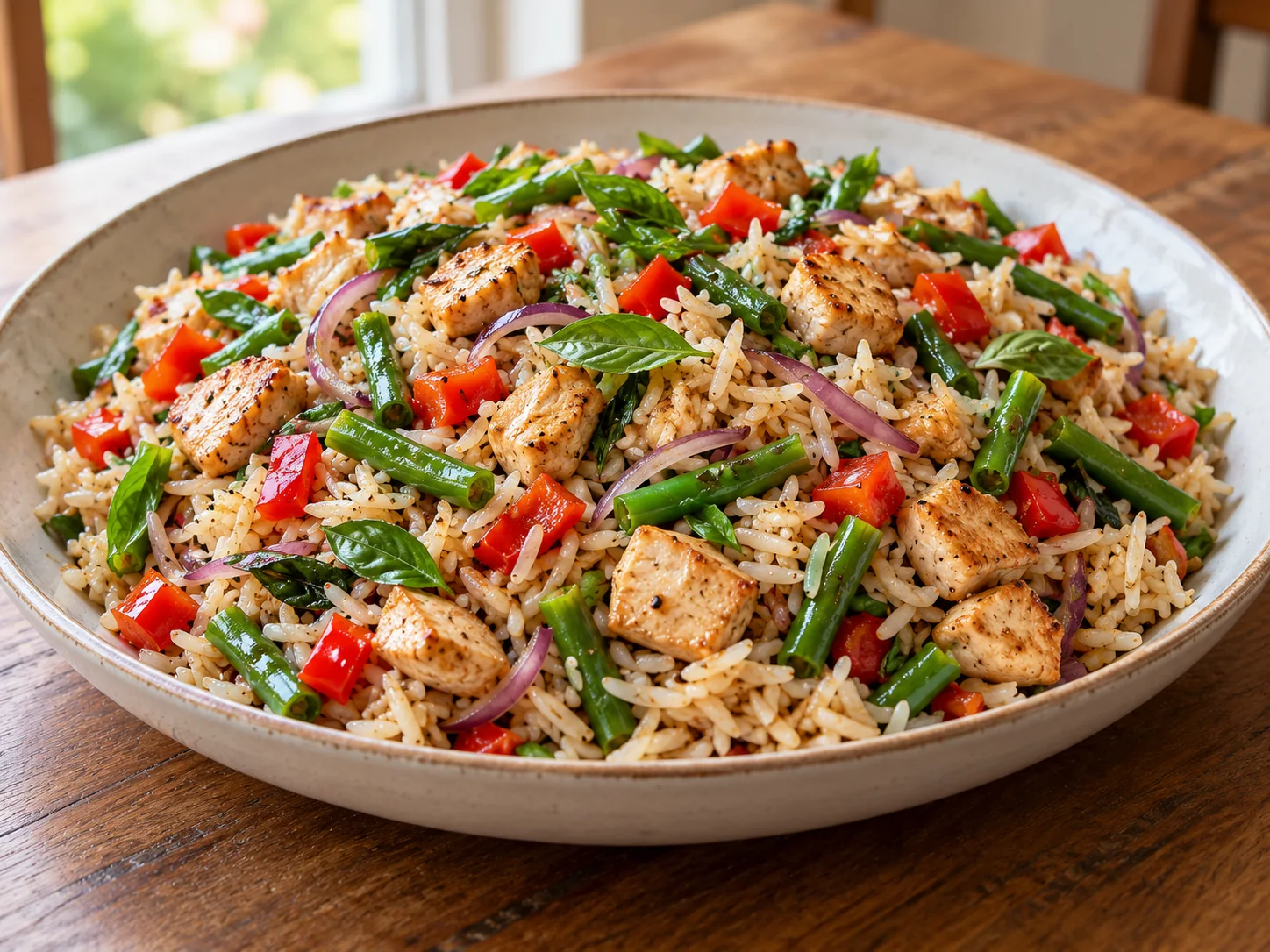
Ingredients
- 300 g dry white long-grain rice
- 500 g boneless skinless chicken breast, cut into 2 cm cubes
- 200 g fresh or frozen green beans, trimmed and cut into short lengths
- 150 g deseeded red pepper, diced small
- 100 g sliced red onion
- 8 g chopped garlic
- 20 g fresh basil leaves, washed and dried
- 30 ml neutral vegetable oil, divided between cooking stages
- 10 ml fish sauce
- 10 ml soy sauce
- 450 ml drinking water for the rice, plus up to 150 ml according to its packaging
- 1 litre drinking water to blanch the beans, discarded after draining
- 1/4 teaspoon black pepper
- Salt only if needed after tasting; none added initially
Preparation
Cook the rice. Rinse it if its packaging recommends this, then put it in a saucepan with 450 ml water. Bring to a simmer, cover and cook over very low heat according to the packet, usually 12–15 minutes. Add only the extra water needed. Switch off and leave covered for 10 minutes: grains should be cooked but hold their shape.
Prepare the beans while the rice cooks. Bring the litre of water to the boil and cook the bean pieces for 5–7 minutes, or according to frozen-product instructions. They should be tender without falling apart. Drain thoroughly: water retained by vegetables would boil rather than fry the rice.
Cook chicken in a large frying pan with 15 ml oil over medium to moderately high heat. Spread cubes without crowding, working in two batches if needed. Brown for about 5 minutes, turn and cook another 4–6 minutes. Check for 74 °C at the centre of one of the thickest pieces using a clean thermometer. Cook longer if necessary, then transfer to a clean plate.
In the same pan, add the remaining 15 ml oil, onion and pepper. Cook over medium heat for about 6 minutes, stirring, until softened. Add garlic during the final minute. If the pan base darkens too much, lower the heat; do not let the aromatics burn while waiting for rice.
Separate the rice grains with a fork and add to vegetables with the thoroughly drained beans. Stir-fry for 3–4 minutes, gently lifting grains with a spatula. Add cooked chicken and the mixed sauces, then heat for about 2 more minutes. Everything should be thoroughly hot, with sauces evenly distributed and no pool of liquid underneath.
Switch off, add roughly torn basil and pepper, then mix once more. Taste before considering salt, as both sauces already provide it. Divide immediately between four plates. Cooking stages overlap because beans and chicken can be prepared during the cooking and resting of the rice.
Introduction
Good fried rice does not necessarily need much oil: it needs grains cooked without excess water and a sufficiently wide pan. Chicken must also be properly cooked rather than hidden in a mixture of wet rice. Preparing these two elements separately lets you control their textures before quickly combining them with the vegetables.
Choose white long-grain rice and read its packaging. The suggested 450 ml water is for absorption cooking of the 300 g rice in this version; some brands require more. The possible adjustment is included in the ingredients, rather than imposing a universal amount on every rice. Use fresh basil leaves and remove large, tough stems. Its aroma should remain noticeable when served.
Cultural context
🇨🇩 Radio Okapi published a chicken and basil rice recipe on 5 March 2016. This documents a place in a contemporary cooking repertoire presented in DR Congo; it does not prove an exclusively Congolese origin. Fried rice and fish or soy sauces are used across many cuisines.
This editorial adaptation measures the oil and sauces, dices the pepper for even cooking and explains separate chicken cooking. Source: Radio Okapi.
Tips
Use a wide pan or combine the ingredients in two batches. A small pan filled to the brim traps steam and encourages clumps. Split ingredients and sauces equally between batches, rather than leaving the first unseasoned and putting all the salt in the second.
If rice is still hard once water has been absorbed, add a little hot water and continue covered. If already too soft, prolonged frying will not make it firm. Handle it as little as possible and accept softer grains; do not add flour in an attempt to separate them.
Basil quickly loses its aroma during prolonged cooking. Drying it after washing also avoids adding water at the end. Reserve a few small leaves per plate if desired; they are part of the stated 20 g, not extra.
Oil is neither a marinade nor an indicator of chicken doneness. Cube size and actual pan temperature affect cooking time. Do not rely only on outside browning: check the centre temperature and clean the probe after use.
This recipe uses freshly cooked rice without prolonged room-temperature waiting. If using leftovers exceptionally, they must have been cooled and refrigerated promptly and kept cold. Never use a pot of rice left out since the previous day.
Planning
Fish sauce contains fish; soy sauce usually contains soy and wheat. Read labels, especially for an allergy or coeliac disease. A sauce labelled gluten-free can replace regular soy sauce, but that does not automatically make every other ingredient suitable.
Prepare vegetables before handling raw chicken. Then use a separate board and knife, or thoroughly wash equipment and hands before returning to ready-to-serve foods. Do not wash chicken under the tap. Keep pieces refrigerated until cooking. Mix both sauces in a small cup so that they can be poured in together at the right stage.
Chicken temperature reference: FoodSafety.gov.
Serving
Stir down to the bottom of the pan before dividing, to share chicken cubes and vegetables evenly. Serve as soon as basil is added. Chilli prepared separately lets each diner choose heat without masking the fresh aroma of the whole dish.
Storage
Serve promptly. Divide leftovers into small shallow containers to cool them as quickly as possible, ideally within one hour, then refrigerate. Keep at 4 °C or below and eat within 24 hours. Reheat only once and only the portion needed, until steaming hot throughout, stirring. Never leave a large pot of rice cooling overnight at room temperature. Reference: Food Standards Scotland.
Variations
For a fish-free variation, replace the 10 ml fish sauce with 10 ml water and adjust seasoning at the end; the flavour will be milder. A plant-based version can use 400 g firm tofu instead of chicken, but it then contains soy and needs cooking instructions appropriate to tofu. The 74 °C guidance above concerns chicken.
Replace pepper with the same weight of finely diced carrot if desired, cooking it until tender before adding rice. Do not replace green beans with dry beans in this quick recipe. Major sauce changes also affect estimated salt content.
Accompaniments
Rice, chicken and vegetables are already included. Serve alone or with a separately prepared cucumber and tomato salad. Bread or plantains can be added according to appetite, but they are not required components and need not be added automatically to every serving.
Nutrition notes
Rice mainly supplies carbohydrate; chicken provides protein, while green beans and pepper diversify the vegetables. Fish and soy sauces contribute salt even without adding it from a salt shaker. Figures are estimates per serving of the entire recipe without an accompaniment and vary with sauce brands and the amount of oil actually retained.