Rice with paprika sauce
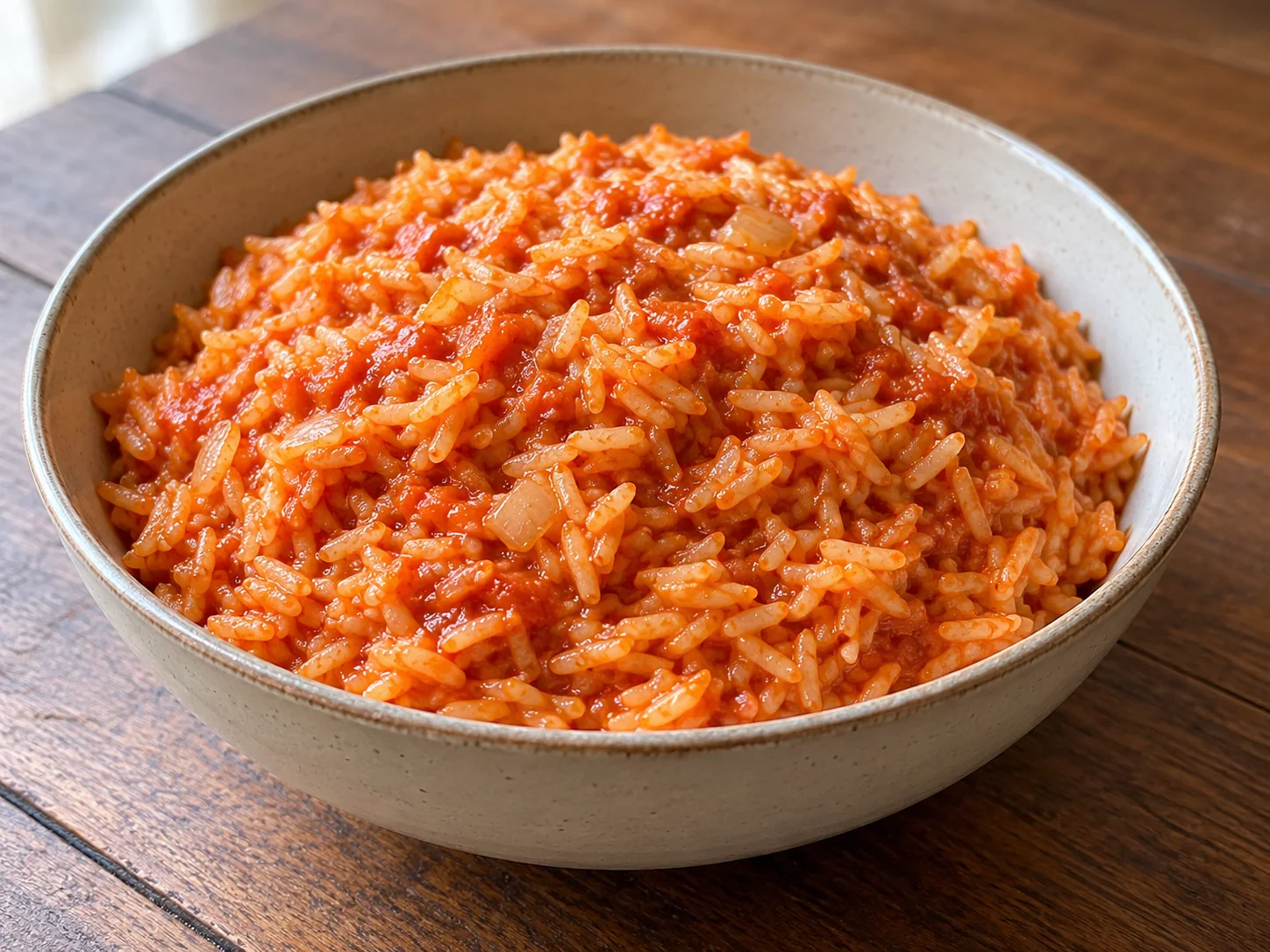
🍚 A sauce of sweet paprika, tomato and onion coats separately cooked long-grain rice. A little flour thickens the sauce and a small amount of cream gives it a soft finish. The recipe makes four side-dish portions, with no meat or fish in the base version. The paprika is neither smoked nor hot.
Ingredients
- 300 g dry white long-grain rice
- 450 ml drinking water for rice, plus up to 150 ml according to the packaging
- 100 g finely chopped onion
- 20 g unsalted butter
- 30 g tomato paste
- 6 g sweet paprika, neither smoked nor hot
- 10 g wheat flour
- 350 ml drinking water for sauce, with 50 ml reserved cold
- 40 ml pasteurised pouring cream, about 30% fat
- Up to 2 g salt for the entire recipe, adjusted to taste
- 1/4 teaspoon black pepper
Preparation
Cook the rice. Follow its packaging for rinsing, then place 300 g rice in a pan with 450 ml water. Bring to a gentle simmer, cover and cook over very low heat, usually 12–15 minutes. Use extra water only if the packet requires it. Rest covered off the heat for 10 minutes.
Meanwhile, melt the butter in another pan over moderate heat. Add onion and soften for about 5 minutes, stirring. It should turn translucent without browning. Stir in tomato paste for 2 minutes to distribute it through the butter and onion.
Lower the heat slightly and add the 6 g paprika. Stir for about 30 seconds, then pour in the unreserved 300 ml sauce water. Paprika should not remain in a dry, very hot pan for long, as it would turn bitter. Bring the sauce to a steady simmer.
Stir the flour mixed with 50 ml cold water again, then pour in a thin stream while whisking the sauce. Simmer gently for 5 minutes, stirring down to the base. It should thicken slightly and lose its raw-flour taste without turning into a stiff paste.
Add cream, pepper and some of the allotted salt. Warm gently for another 2 minutes without vigorous boiling, then taste. Separate the rice grains with a fork. First add three quarters of the sauce to the rice and fold gently, then add the remainder according to the desired consistency.
Warm the mixture over low heat for about 2 minutes if needed, then serve. Share evenly between four plates. The pans cook in parallel: the stated 30 minutes includes rice resting and final combining, rather than artificially adding every pan time together.
Introduction
The challenge is balancing a sauce that coats the grains with rice that holds its shape. Cooking sauce and rice in separate pans allows each to be stopped at the right moment. The sauce can then be added gradually rather than pouring a large volume of liquid onto already soft rice.
Choose fresh sweet paprika stored away from moisture and light. Stale powder may still colour the sauce but contributes little aroma. Tomato paste gives depth without requiring a long reduction. Cream goes in towards the end: it softens the mixture but should not erase the paprika and onion flavour.
Cultural context
🇨🇩 Radio Okapi presented rice with paprika sauce on 12 December 2015. This documents a recipe in a contemporary repertoire broadcast in DR Congo, without attributing an exclusively Congolese origin. The quantities and method below are a measured editorial adaptation for home cooking. Source: Radio Okapi.
Tips
Paprika does not need several minutes of frying to become aromatic. Brief warming followed by water is enough here. If the spice has blackened and smells burnt, remake the small sauce base rather than trying to hide its bitterness under more cream.
Use genuinely cold water for the flour and keep whisking as it is poured in to avoid lumps. If some remain, pass the sauce through a fine sieve before adding it to rice; do not blend the rice with the sauce.
The sauce continues to thicken slightly as it stands. If too stiff, add hot water a spoonful at a time. If too runny, simmer gently for longer before adding cream. Do not sprinkle dry flour directly over the finished dish.
Very soft rice does not withstand repeated stirring. Lift it with a spatula and minimise movements. To serve distinct grains, controlling the initial water and resting time is better than looking for a rescue after overcooking.
Sauce can be made ahead if cooled and refrigerated promptly. Cooking rice just before serving remains simplest. Avoid planning the meal around a pan of lukewarm rice left waiting a long time for guests.
Planning
Take the 50 ml cold water from the 350 ml allocated to the sauce, not from the rice water. Stir flour into these 50 ml with a small spoon until no dry pockets remain. Keep the mixture nearby and stir again immediately before using it, because the flour settles while standing.
Chop the onion finely enough to blend into the sauce. Have a small whisk for thickening and a flexible spatula for combining with rice. Butter and cream introduce milk, and flour introduces wheat. A meat-free recipe is therefore not automatically suitable for every allergy.
Serving
The rice should be soft, orange and lightly glossy, without a pool of sauce on the plate. Serve hot as soon as the consistency is right. Keep any reserved sauce hot for immediate serving rather than leaving it on the table.
Storage
Divide leftover rice into small shallow containers to cool as quickly as possible, ideally within one hour, then refrigerate. Keep at 4 °C or below and use within 24 hours. Reheat only once until thoroughly hot throughout, stirring. Never leave rice cooling overnight in its pan. Reference: Food Standards Scotland.
Variations
For a wheat-free thickener, replace 10 g flour with 8 g cornflour, also mixed into the 50 ml cold water. The texture will be slightly smoother and glossier; check all labels if gluten must be avoided. This variation still contains milk.
Replace butter with 20 ml neutral oil and cream with 40 ml unsweetened plant-based cooking cream if desired. Its flavour and allergens depend on the selected product. Using stock instead of water changes seasoning: reduce added salt, and do not automatically call the dish vegetarian if the stock contains meat or fish.
Accompaniments
Serve with green vegetables, cooked beans or a separately prepared protein according to the meal. This paprika rice is a side dish: no extra meat is included in the quantities or nutritional estimates.
Nutrition notes
Rice mainly provides carbohydrate. Butter and cream supply most added fat, while onion and tomato paste contribute flavour with modest vegetable quantities. Estimates below concern one portion of this side dish alone: they do not describe a complete meal and change with variations, brands and any stock added.