Mashed potatoes
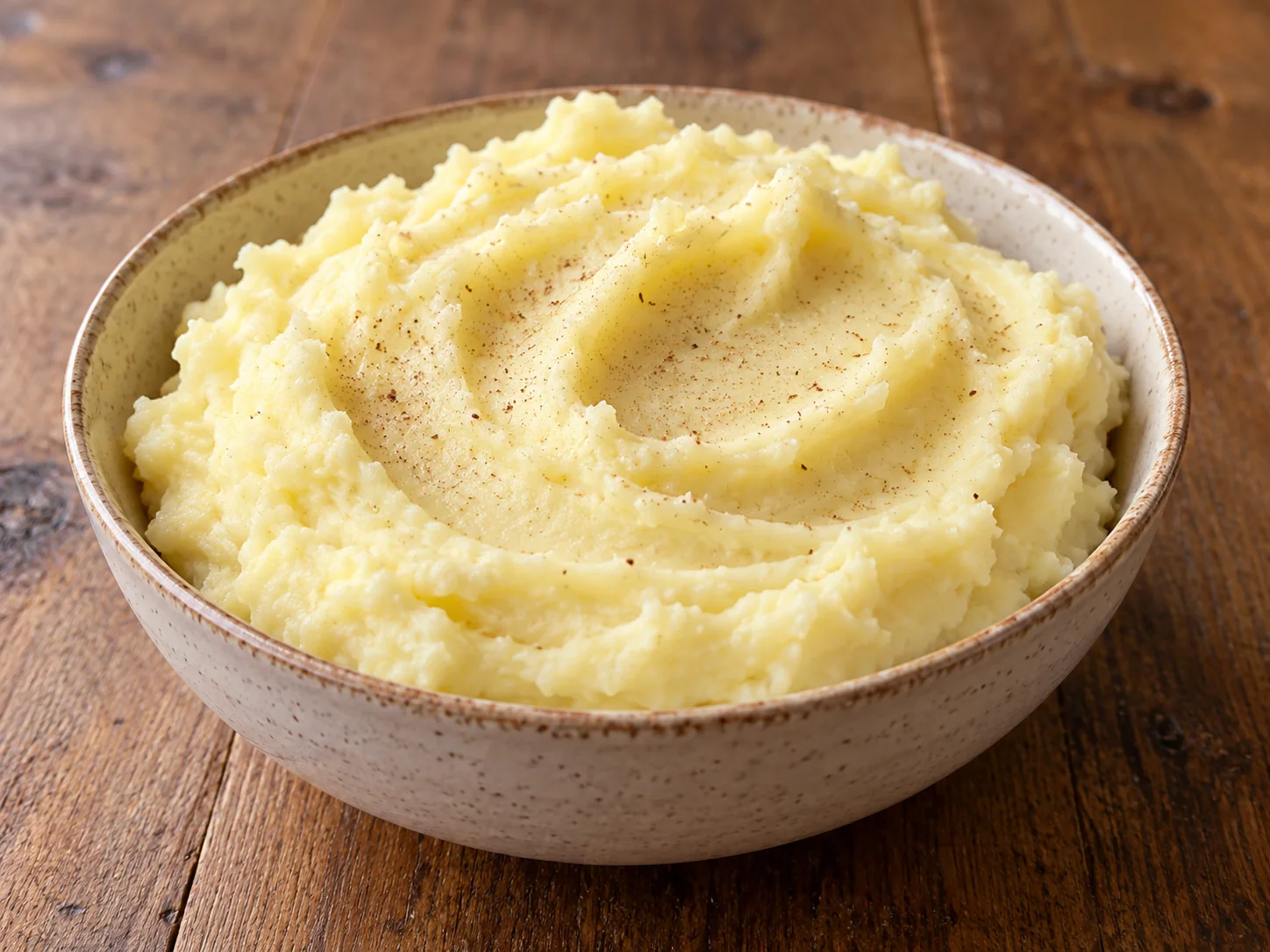
🥔 Floury potatoes, hot milk and butter make soft mash to serve with a sauced dish or vegetables. The recipe provides four side-dish portions, with precise weights and milk added gradually. It contains no cheese, cream or garlic: the flavour remains that of straightforward mashed potatoes.
Ingredients
- 800 g floury potatoes, peeled, raw weight
- 200 ml pasteurised whole milk, plus up to 50 ml optionally according to texture
- 40 g unsalted butter in small cubes
- Up to 2 g salt, adjusted to taste
- 1/4 teaspoon white pepper
- 0.1 g ground nutmeg, optional
- Enough drinking water for cooking, discarded after draining
Preparation
Cut peeled potatoes into pieces around 3 cm. Put in a pan, cover with drinking water and bring to the boil. Reduce to a steady simmer and cook for about 20 minutes. Test several pieces with a knife tip: it should enter without resistance to the centre. Cook slightly longer if the core remains firm.
Drain thoroughly. Return pieces to the empty pan over low heat for 1–2 minutes, stirring gently to evaporate surface water. They should not fry or brown. This brief stage helps mash receive milk without becoming watery.
Towards the end of cooking, heat the 200 ml milk in the small pan until hot, without letting it boil over. Keep warm over very low heat. Have butter cut small so that it incorporates quickly without requiring prolonged working of the mash.
Pass the potatoes through a masher or food mill while still hot. Add butter and stir with a spatula just enough to melt it. Add hot milk in three or four stages, lifting the mixture. Wait for each addition to be absorbed before the next and stop when the desired texture is reached.
Add pepper, optional nutmeg and some of the allotted salt. Taste and adjust rather than automatically using all 2 g. If mash remains too stiff, heat some extra milk and incorporate by spoonfuls. Do not pour in the additional 50 ml all at once out of habit.
Warm very gently for 2–3 minutes if necessary, stirring down to the base to prevent sticking. Serve hot on four plates or in a serving dish. It should form a soft spoonful with slight ridges, neither spreading like soup nor breaking into dry blocks.
Introduction
Successful mash depends less on how vigorously it is worked than on potato choice and cooking. A potato still firm inside leaves lumps; a waterlogged potato needs more drying. Choose a floury variety or one labelled for mash, then weigh 800 g after peeling to maintain the right ratio to milk.
Have a hand masher or food mill rather than a blender. These tools crush without excessively changing the texture. Milk is heated separately and gradually added: firm mash can always be loosened, whereas milk already poured in is hard to remove. The additional amount therefore remains optional.
Cultural context
🇨🇩 Radio Okapi published mashed potatoes on 21 February 2017. Its presence in a DR Congo media outlet documents a contemporary side dish, not an exclusively Congolese origin for mash with milk and butter. This recipe gives measured amounts and a detailed home method. Source: Radio Okapi.
Tips
Evenly sized pieces matter more than a rolling boil. Vigorous boiling breaks the outside before the centre becomes tender. Test several pieces to identify uneven cutting rather than unnecessarily extending cooking for the whole pan.
Do not wait for potatoes to become cold before mashing. They are easier to work while hot. If cooked ahead and refrigerated, reheat properly before continuing rather than trying to smooth them cold with lots of milk.
A blender or stick blender can make mash gluey. If already elastic, more beating will not improve it. For the next batch, change tools and reduce mechanical working after crushing.
Do not correct runny mash with raw flour. It can be dried gently for a few minutes while stirring and avoiding burning, but preventing excess milk initially is better. The optional milk is not a compulsory amount.
For eight people, double the main ingredients and use a suitable pan. Heat some milk separately and keep additions gradual. A large mass of mash takes longer to heat at the centre and should not remain lukewarm for long while waiting to serve.
Planning
Choose firm potatoes without green areas or extensive sprouting. Wash before peeling so the knife does not carry soil onto the flesh. Peel, rinse briefly if needed and cut into similarly sized pieces. Do not soak peeled potatoes for a long time when preparing the recipe immediately.
Milk and butter introduce dairy allergens. Have one pan for potatoes and a small one for milk. Take out only the butter needed. Keep extra milk separate from the initial 200 ml so it is not automatically poured in; different potatoes need different amounts of liquid.
Serving
Spoon mash onto warm plates or into a serving dish and make a few ridges with a spoon, without complicated decoration. If serving sauce with the meal, offer it beside the mash or in a small amount rather than completely hiding the texture.
Storage
Cool leftovers promptly in small shallow containers and refrigerate within two hours at 4 °C or below. Eat within 48 hours. Reheat only the required portion until thoroughly hot in the centre, adding a little milk or water if thickened and stirring to distribute heat. Do not leave a large pot of mash at room temperature until the next meal. Storage advice: Food Standards Scotland.
Variations
For a milk-free version, use an unsweetened plant-based cooking drink instead of milk and 30 ml neutral oil instead of butter. Flavour and allergens change with the selected product; removing butter alone does not eliminate dairy if milk remains.
Nutmeg can be omitted. A little snipped chive can be added when serving for an aromatic variation, without counting it as part of the base recipe. Replacing all potatoes with sweet potato makes a different preparation, with a different flavour and liquid requirements.
Accompaniments
Serve with fish in sauce, vegetable stew or cooked beans according to the meal. Prepare other components separately so they are ready together. Nutritional values do not include any extra meat, sauce or garnish.
Nutrition notes
Potato mainly supplies carbohydrate and contributes potassium. Milk adds some protein and calcium; butter supplies most added fat. Estimates are per side-dish portion using the initial 200 ml milk. Extra milk, a plant-based variation or a sauce served alongside changes these figures.