Chicken with mushrooms and mustard
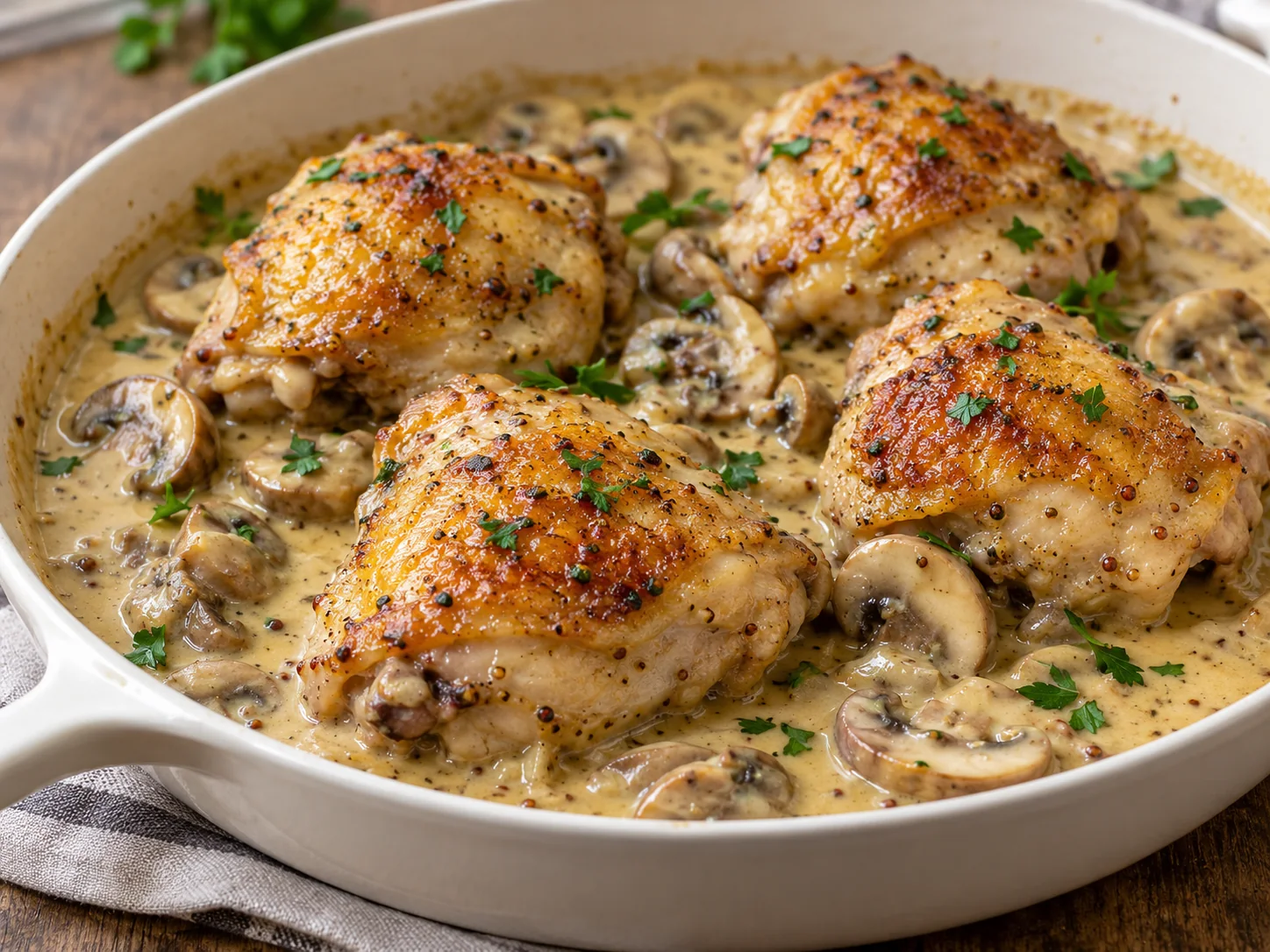
🍗 Roast chicken thighs are served with a button mushroom, milk and mustard sauce. The dish makes four servings, excluding accompaniment. Skin becomes golden in the oven while the sauce remains pale and loose. This adaptation uses a combination published by Radio Okapi under the name daube sauce, without identifying it as a wine-based daube.
Ingredients
- 1 kg raw bone-in, skin-on chicken thighs, about 4 pieces
- 250 g sliced fresh button mushrooms
- 150 g sliced onion
- 8 g chopped garlic
- 200 ml pasteurised milk
- 30 g Dijon mustard
- 20 ml neutral vegetable oil, divided into 10 ml for chicken and 10 ml for sauce
- 100 ml hot drinking water, added according to reduction
- 3 g salt at most, to divide
- 1/2 teaspoon mild paprika
- 1/4 teaspoon white pepper
- 1/2 teaspoon crumbled dried rosemary
- 10 g washed chopped parsley
Preparation
Season. Place the 4 pieces in the roasting dish. Distribute the 10 ml oil intended for chicken, paprika, rosemary, half the garlic and about 2 g salt. Mix using suitable utensils, then arrange skin-side up without crowding.
Roast for about forty-five to fifty minutes at 200 °C. Verify at least 74 °C inside pieces without touching bone. If skin colours too fast, lightly cover the top while continuing cooking. Time is indicative; check especially the thickest piece.
Begin sauce during the final twenty minutes of roasting. Heat the remaining 10 ml oil in the sauté pan. Soften onion about five minutes without burning, then add mushrooms and cook about eight minutes, stirring to evaporate their water.
Add remaining garlic, then 30 g mustard. Stir one minute over low heat. Pour in 200 ml milk and some of the 100 ml hot water. Stir into a uniform sauce. Maintain a gentle simmer without vigorous boiling.
Adjust sauce for about five minutes. Add pepper and half the parsley. If too thick, gradually add remaining water; if watery, gently cook uncovered longer. Taste before adding salt within the specified limit.
Serve together. Once chicken is cooked through, rest it five minutes in a clean place. Give one piece per person and spoon over hot mushroom sauce. Finish with remaining parsley. Prepare accompaniment separately and mention bones.
Introduction
Cook chicken and sauce separately to control each more easily. Chicken must reach a verified internal temperature in the thickest part without touching bone. Golden skin alone does not prove the meat is sufficiently cooked. Prepare sauce towards the end of roasting so both arrive hot together.
Mushrooms must lose some water before milk is added. Otherwise a sauce that initially looks creamy can become watery when served. Mustard brings strength but also salt; measure it and adjust the rest of the seasoning after reduction. This recipe contains no cream, flour or seasoning cube.
Choose four similarly sized bone-in thighs. Prepare a roasting dish, sauté pan and cooking probe. The oven temperature refers to a conventional oven; adjust slightly to your appliance while retaining the internal-temperature check.
Cultural context
🇨🇩 In November 2015 Radio Okapi shared a preparation called roast chicken with daube sauce. The described sauce includes mushrooms, mustard and milk. That term belongs to the publication and should not be confused with meat slowly braised in wine.
This version chooses a descriptive title and reduces quantities for four people. Oven roasting replaces the source’s short preliminary cooking followed by frying. Aromatics are measured, and glutamate and industrial seasoning blends omitted. It is a contemporary adaptation of a recipe published in DR Congo, without claiming regional antiquity.
📚 Culinary reference: Radio Okapi, 30 November 2015.
Tips
A larger piece may need longer even when others are ready. Remove cooked pieces to a clean dish and continue cooking others instead of serving the whole batch according to the first temperature reading.
Fresh mushrooms shrink considerably. Browning and evaporating their water concentrate flavour without extra stock cubes. Use a wide enough pan; in a narrow crowded vessel they release water without really sautéing.
Mustard varies between brands. Check salt and ingredients before completing seasoning. A very strong mustard gives a different sauce from a mild one, even at equal weight.
Milk can separate when boiled excessively, especially with mustard acidity. Stir over low heat. Slight separation is neither a safety test nor a reason to improvise flour; first adjust heat and liquid.
Avoid covering chicken in sauce long before serving if you want golden skin. Present some sauce around or alongside and let each person add more. Bones and cartilage should remain visible or be removed carefully.
Planning
Do not wash raw chicken under running water. Keep it refrigerated, pat dry with disposable paper and clean hands and surfaces that touched meat. Clean mushrooms quickly and dry them; avoid soaking. Measure mustard before handling chicken to prevent contaminating the jar.
Preheat oven to 200 °C. Keep clean parsley and serving utensils away from the raw-meat dish. Roasting juices are not needed in this adaptation’s sauce, which uses water to adjust consistency. This avoids transferring insufficiently cooked juices.
Serving
Serve chicken and sauce thoroughly hot. Declare milk and mustard allergens and any additional ingredients in chosen products. Divide mushrooms between plates rather than leaving the final servings with only liquid.
Storage
Cool leftovers in shallow containers and refrigerate within two hours at 4 °C or below. Consume within forty-eight hours. Keep chicken and sauce separate if possible for more even reheating. Reheat only the required portion to at least 74 °C in the centre, stirring sauce. Do not return plate leftovers to the reserve.
Variations
Boneless pieces require different timing: do not automatically apply the bone-in thigh time. Temperature checks remain necessary. Well-drained canned mushrooms can replace fresh at the same drained weight; they need less time to lose water.
Milk is part of this version. A plant-based substitution changes flavour, texture and allergens and needs a specific formulation. Having no cream does not make the dish milk-free. Paprika is mild; offer a hot condiment separately.
Accompaniments
Rice, cooked potatoes or plantain can accompany chicken. Choose a portion suited to the whole meal and add vegetables as needed. Sauce mushrooms do not necessarily replace a vegetable accompaniment for four people. Nutritional figures exclude these additions.
Nutrition notes
Chicken supplies protein; fat depends on skin eaten. Mushrooms and onion diversify the sauce. Figures estimate an edible portion of meat and sauce, excluding bones and accompaniment, rather than analysing the finished dish. Poultry cooking reference: FoodSafety.gov.