Chicken with garlic and rosemary
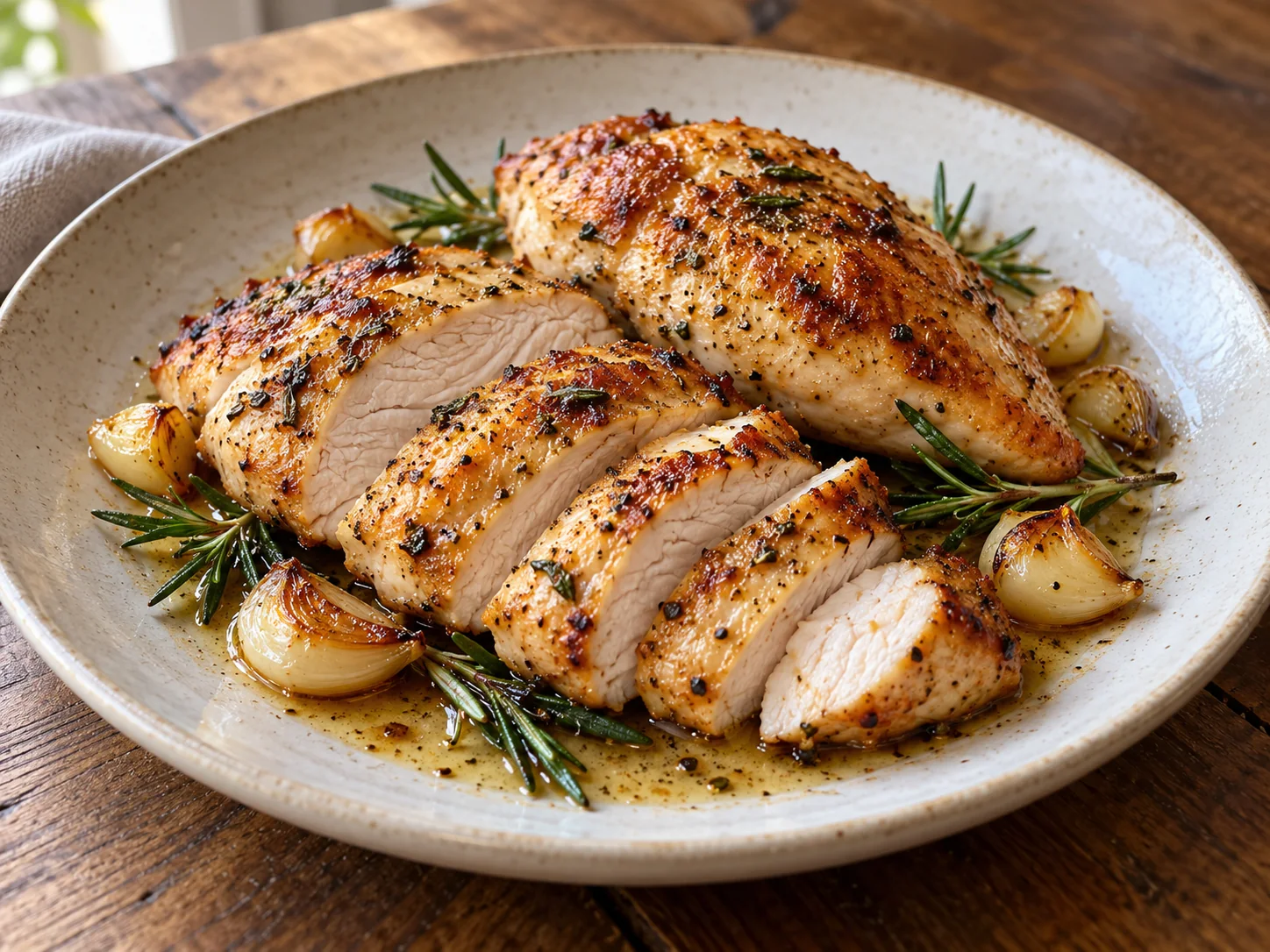
🍗 Four chicken breast portions brown in a pan before finishing gently with garlic and rosemary. A little water releases the cooking juices to make a small amount of pan sauce, without cream or flour. This contemporary preparation relies on even thickness and careful cooking: breasts stay whole during cooking and may be sliced for serving.
Ingredients
- 800 g skinless, boneless chicken breasts: 4 portions of about 200 g, close to 2 cm thick
- 16 g peeled garlic, in lightly crushed cloves
- 2 small washed fresh rosemary sprigs, about 3 g in total
- 25 ml neutral vegetable oil
- 100 ml drinking water for the pan juices, plus a small spoonful if needed
- 1/2 teaspoon ground black pepper
- Up to 3 g added salt, adjusted
Preparation
Prepare portions during the planned 15 minutes. Check for remaining bone or cartilage fragments. Flatten only distinctly thick areas towards two centimetres. Pat dry, then spread pepper and about half the salt on both sides. Have the lid and clean plate ready before turning on the heat.
Brown the first side for about 5 minutes. Heat 25 ml oil in the pan over medium-high heat without smoking. Add breasts in one layer with some space between them. Let them colour without moving constantly. If the pan is too small, work in two batches rather than stacking.
Turn and flavour for about 3 minutes. Turn breasts with tongs, reduce to medium and add garlic cloves and rosemary around them. Move garlic gently so it colours lightly without blackening. If the cooking juices become very dark, reduce heat immediately.
Finish gently for about 10 minutes. Pour 100 ml water onto the base, avoiding splashing hot oil. Loosen unburnt cooking juices with a spatula, partially cover and maintain a gentle simmer. Check after 6 minutes: remaining time depends on thickness. Each breast must reach at least 74°C at the centre; measure in the thickest part without touching the pan.
Rest and adjust the juices. Transfer cooked breasts to the clean plate and rest for 5 minutes. Meanwhile remove rosemary sprigs and reduce the juices uncovered for about 2 minutes if necessary. Mash one garlic clove into them if desired, then taste before adding any remaining salt.
Serve without extending cooking. Keep breasts whole or slice diagonally after resting, retaining their juices. Divide the small amount of sauce and garlic cloves among four portions. If a breast reaches 74°C before the others, remove it first rather than drying it out to follow a fixed stated time.
Introduction
Chicken breast is easy to find, but its low fat content requires attention during cooking. A breast very thick in the centre and thin at its tip may dry at one end before the other is adequately cooked. Making comparable portions is therefore more helpful than automatically extending time in the pan.
Use four skinless, boneless portions of about 200 g. If one area is clearly thicker than two centimetres, gently flatten between two sheets of baking paper with a rolling pin, without tearing the meat. Do not aim for a very thin escalope: the breasts should retain some thickness. A wide lidded frying pan allows browning followed by a gentler finish.
Garlic stays in lightly crushed cloves to flavour the juices without burning as quickly as finely chopped garlic. Use rosemary sparingly: two small sprigs suffice for four portions. Prepare a clean plate for cooked chicken and a kitchen thermometer, so the centre is checked rather than relying on surface colour.
Cultural context
🇨🇩 Radio Okapi published chicken with garlic and rosemary on 30 November 2022. This documents a contemporary culinary suggestion circulated in DR Congo, without establishing exclusively Congolese origins.
This recipe develops only the chicken and its pan juices. The pesto pasta and green beans in the published menu are excluded from its ingredients and nutrition calculations. Quantities, portion thickness and gentle finishing are specified here for repeatable home cooking. Rosemary is a choice for this recipe, without claiming to represent the country’s cuisines on its own.
📚 Reference: Radio Okapi, 30 November 2022.
Tips
An overcrowded pan mainly boils breasts in their released moisture. Choose a wide pan or brown in two batches; reunite all four portions only if they actually fit in one layer.
Blackened garlic makes bitter juices. Add cloves after cooking the first side and lower heat after turning chicken. Light golden colour suffices; rosemary should not scorch dry either.
A thermometer checks the centre and avoids repeatedly cutting breasts to inspect colour. Clean the probe after measuring undercooked meat before using it again on a ready portion.
Rest chicken on a clean plate, never the plate that held raw meat. This also allows finishing the juices without exposing chicken to a reduction that could dry it out.
Pan juices are not a thick sauce. The 100 ml water release cooking juices before being served in small amounts. If the bottom burned, do not scrape it into the sauce: change pans and restart with a little clean water.
Planning
Peel garlic and prepare rosemary before touching raw chicken. Simply crush each clove with the flat of a knife without making a paste. Measure 100 ml water so the breasts are not flooded at the end. Keep clean tongs and a clean serving plate separate from anything that has touched raw poultry.
Do not rinse breasts under the tap. Pat with disposable paper and adjust thickness if needed. Clean hands and equipment afterwards. Keep meat refrigerated until actual preparation, without a long wait at room temperature. No marinade is required.
Serving
Serve hot with the browned surface visible. If slicing, allocate all slices from one breast to one portion and spoon over a little juice immediately before serving. Offer cooked garlic cloves alongside. Remove rosemary stems rather than asking diners to discard them on their plates.
Storage
Put leftovers in small shallow containers and refrigerate within two hours. Store at 4°C or below and eat within 48 hours. Reheat one portion at a time, covered with a small spoonful of water, to 74°C at the centre. Breast meat becomes firmer during this second heating. Do not rely on exterior browning to assess reheating.
Variations
If only dried rosemary is available, use a small half-teaspoon instead of sprigs and strain if its texture is bothersome. Boneless thighs give another texture and cooking time: monitor separately, always checking 74°C for poultry. Do not retain breast timings without checking thickness. No butter is needed in these pan juices.
Accompaniments
Serve with steamed potatoes or rice and vegetables cooked separately. Green beans work if available; their preparation is outside this recipe. Pesto added at the table changes allergens and fat content, particularly if it contains nuts or cheese. Stated values cover only chicken and pan juices.
Nutrition notes
Chicken breast mainly supplies protein. Oil supplies most added fat; some may remain in the pan, making the figures necessarily approximate. Estimates are for one quarter of the recipe without accompaniments. They are not laboratory analyses and imply no medical effect of rosemary or garlic.