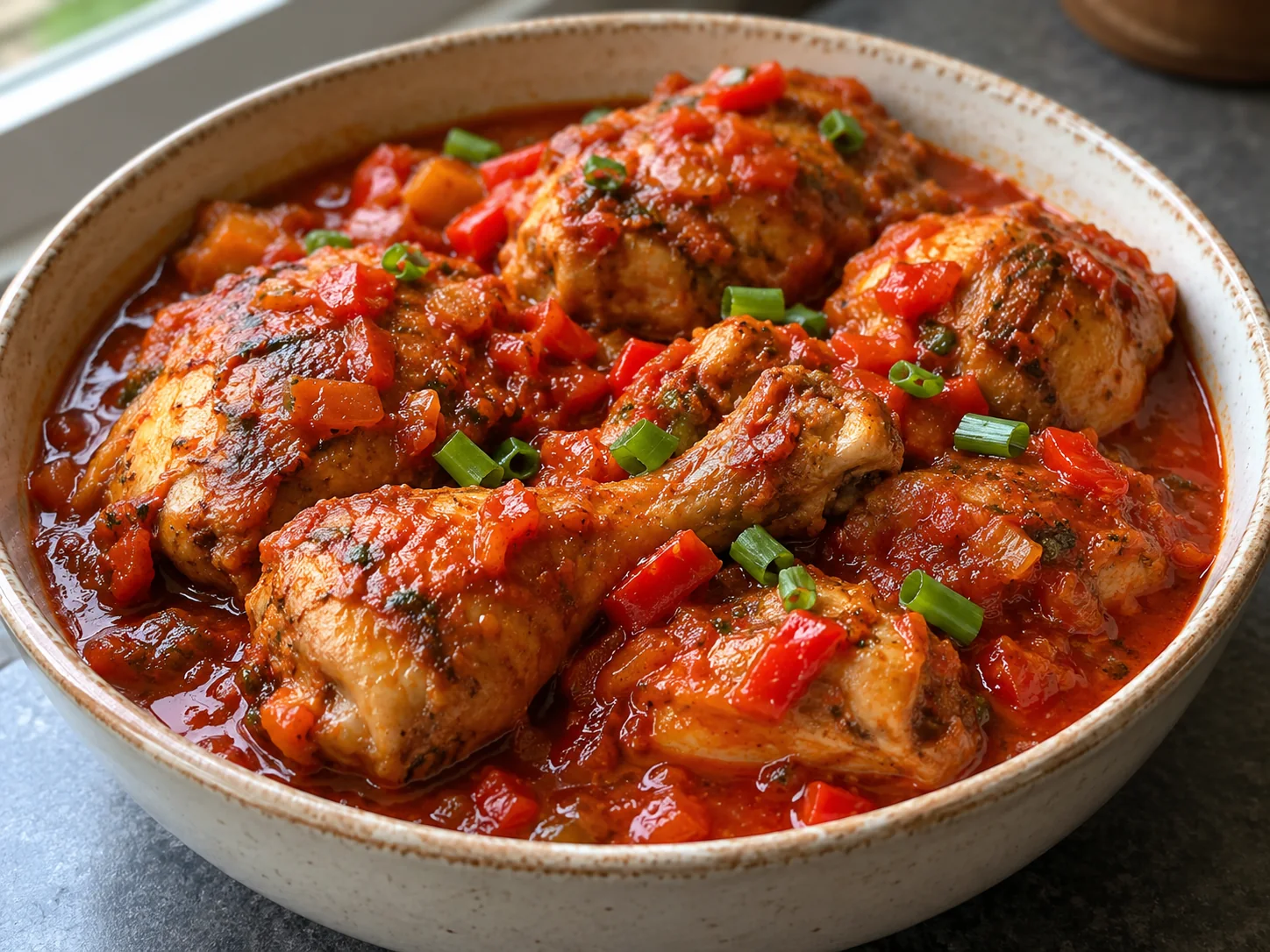
Hen in tomato sauce
🍅 This stewed hen is first gently cooked to tenderise its meat, then browned before joining a tomato, red pepper, garlic and ginger sauce. It makes four bone-in portions without an accompaniment. Use a mature hen, often called “hard chicken”, which takes longer than a young roasting chicken. Times remain approximate: tenderness must be checked as well as temperature.
Ingredients
- 1.2 kg prepared raw mature hen, in similarly sized bone-in pieces
- 1.5 litres drinking water for initial cooking, plus a small hot reserve if needed
- 200 g onion, divided into 100 g for stock and 100 g for sauce
- 12 g garlic, divided into 6 g for stock and 6 g for sauce
- 10 g peeled, chopped ginger
- 2 bay leaves, 1 for stock and 1 for sauce
- 500 g chopped ripe tomatoes
- 150 g deseeded red pepper, finely diced
- 30 g tomato purée
- 30 g washed, sliced spring onion
- 30 ml neutral vegetable oil
- Up to 4 g added salt, adjusted as needed
- 1/2 teaspoon black pepper
Preparation
Begin gentle cooking. Put hen in the casserole with 100 g onion, 6 g garlic, 1 bay leaf, about 2 g of the planned salt and 1.5 litres water. Bring to a simmer, then partly cover and lower the heat.
Tenderise for about ninety minutes. Maintain a gentle simmer and ensure pieces remain sufficiently surrounded by liquid, adding a little hot water if needed. Check at least 74 °C in the thickest part without touching bone. Cook longer if the meat remains firm: safe temperature and tenderness are different guides.
Drain and brown. Once meat is tender, remove pieces and measure 500 ml cooked stock. Drain for a few minutes without leaving to cool for a long time. Heat 30 ml oil in the sauté pan and brown pieces for about eight minutes, turning carefully. Set aside on a clean dish.
Build the sauce for about ten minutes. In the same pan, soften the remaining 100 g onion. Add pepper, tomatoes and tomato purée, stirring regularly. Add the remaining 6 g garlic, ginger and spring onion. Lower the heat if the base begins sticking.
Combine and simmer for twenty minutes. Add hen pieces, 500 ml stock and the second bay leaf. Simmer partly uncovered until sauce coats the meat. Stir carefully and add a little stock if it reduces too much.
Finish and divide. Check the whole dish is thoroughly hot and meat releases easily. Pepper, taste and add only the salt still required within the planned limit. Remove bay leaves. Share meat and sauce fairly between four people and prepare the chosen starch separately.
Introduction
The first cooking is not merely for colouring. It softens the firmer bird’s meat and provides stock for the sauce. Maintain a steady gentle simmer rather than a violent boil that breaks pieces and unnecessarily clouds the liquid. A hen may need longer than the stated guide; sauce must not be used to disguise meat that remains tough.
Tomato and red pepper make a thick red sauce, distinct from peanut or palm-fruit sauces. Oil is measured and salt adjusted at the end. No stock cube is included: the initial cooking liquid already supplies an aromatic base.
Prepare a lidded casserole, sauté pan and cooking thermometer. If needed, have the supplier prepare and cut up the bird. Share four portions according to the meat actually available rather than simply counting bones.
Cultural context
🇨🇩 Cook Gisele Cooking presents this preparation through a memory of family cooking in Kinshasa. She describes a hen, also called “hard chicken”, cooked before browning and combining with an aromatic tomato sauce. Her account documents a home practice rather than fixing one recipe for all Congolese families.
This recipe adapts quantities, reduces reliance on industrial seasonings and details cooking checks. Tenderising time varies by bird. Do not equate this preparation with the moambé chickens or grilled dishes already in the catalogue.
📚 Culinary reference: Gisele Cooking, 11 September 2022.
Tips
The total time assumes a hen tenderised in about ninety minutes. Some need thirty minutes more or longer. Allow this margin before the meal and check an especially thick piece, not only the skin’s appearance.
Draining before browning reduces splashes and improves colour. Lower pieces close to the pan’s base instead of dropping them. Do not compensate for a wet surface with excessively fierce heat.
Tomatoes should lose their watery character before stock is added. If they release much water, extend this stage a little. Conversely, a very dry base needs a little liquid, not another generous pouring of oil.
Stock may concentrate during cooking and become saltier. Taste sauce after reduction before adding remaining salt. An extra stock cube would noticeably change the balance.
Lift pieces gently when stirring to avoid breaking them into small bones. Tell diners there are bones and remove visible fragments. For someone needing boneless meat, carefully prepare that portion before covering with sauce.
Planning
Keep the bird refrigerated until cooking. Do not wash it under the tap: instead clean hands, worktop and utensils that touched raw poultry. Prepare vegetables with clean equipment. Set aside the two portions of onion, garlic and bay leaf separately to respect the recipe’s order.
Stock for the sauce is taken after the hen has completely cooked. It is neither raw juices nor marinade. Measure the required 500 ml when taking it out. Keep the remainder for another use only after appropriate cooling and storage.
Serving
Present hot sauce around pieces with fairly balanced amounts of meat. Avoid leaving completed portions uncovered during a long service. Organise hen and accompaniment cooking so both reach the table together.
Storage
Divide leftovers into small shallow containers and refrigerate within two hours. Keep at 4 °C or below and eat within forty-eight hours. Reheat only the portion needed to at least 74 °C at the centre, stirring the sauce. If necessary, freeze cooled, dated portions and thaw in the refrigerator. Do not return table leftovers to the unserved reserve.
Variations
A young chicken needs shorter cooking: do not automatically impose ninety minutes of initial cooking. This recipe is for the firm hen described in the ingredients. Chilli may be offered in a separate sauce so everyone can adjust heat.
The sauce contains neither peanuts nor cream; adding either creates a different formula. Some pepper can be blended with tomato for a smoother sauce without changing the planned liquid quantities.
Accompaniments
Serve with separately prepared rice, fufu or chikwangue. Choose one main accompaniment and offer vegetables according to the meal. Starch portions are excluded from this recipe’s nutritional values.
Nutrition notes
Hen provides protein; fat varies with skin retained and meat actually eaten. Vegetables add variety. Figures are estimates for an edible portion of meat and sauce, excluding bones and accompaniment, and do not replace measurement of the finished dish. Poultry temperature reference: FoodSafety.gov.