Spring-style pork pot
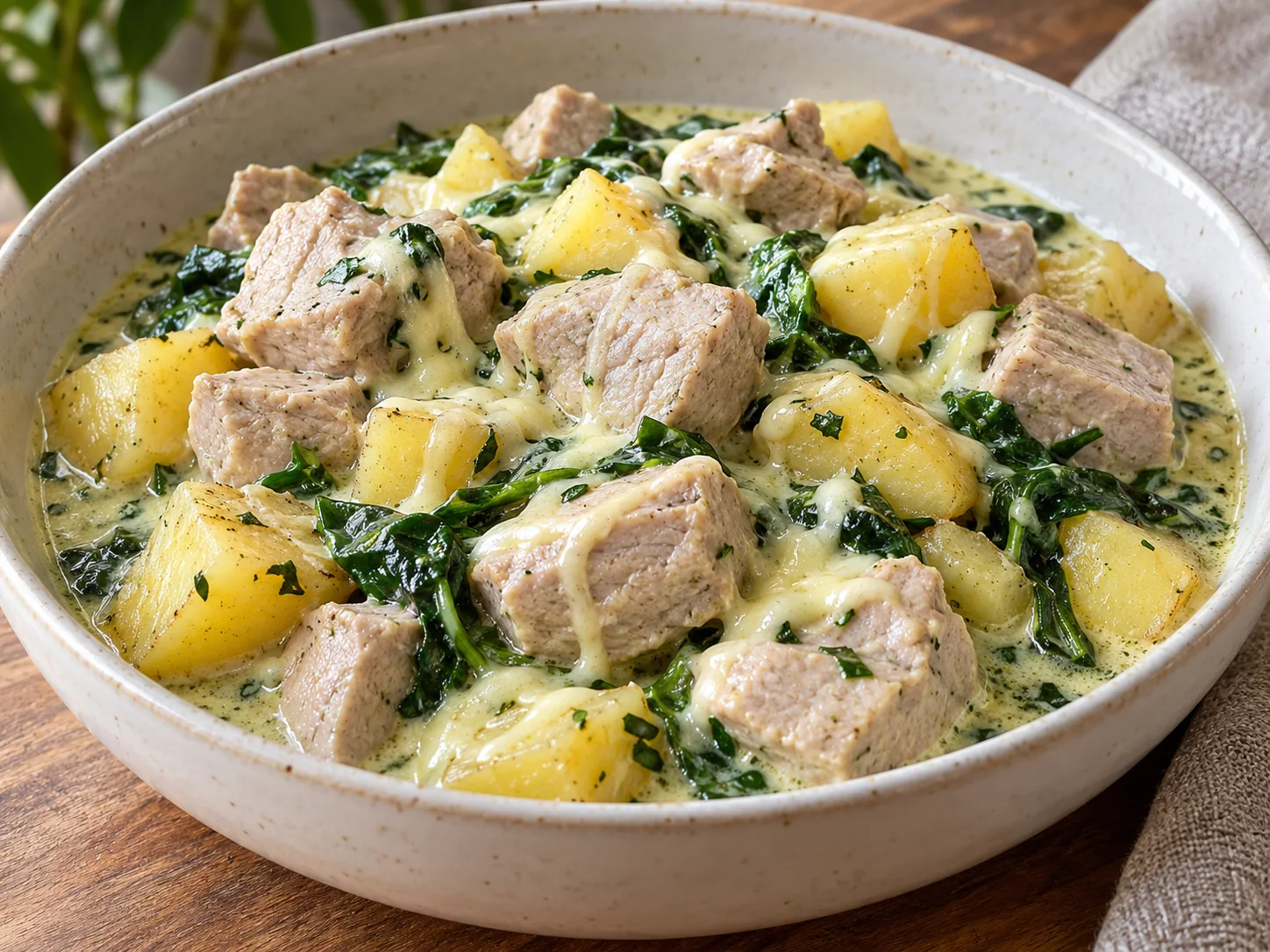
🥬 Tender pork, potatoes and spinach in a creamy dish finished with grated cheese. Despite its French name, this is not a large clear broth: serve it as a bound dish with visible pieces. Cream, butter and oil are measured for four people.
Ingredients
- 600 g raw boneless pork shoulder, trimmed, in 3 cm cubes
- 700 g firm-fleshed potatoes, raw peeled weight
- 500 g fresh spinach, cleaned weight without thick stalks
- 100 ml pasteurised cream, 30% fat
- 20 g unsalted butter
- 20 ml neutral vegetable oil
- 50 g grated Emmental
- 600 ml drinking water for pork, plus hot water if needed
- Up to 2 g salt, adjusted to taste
- 1/4 teaspoon white pepper
- Enough drinking water to precook potatoes, discarded after draining
Preparation
Put pork cubes in a pan with 600 ml water and some pepper. Bring to the boil, then reduce to a steady simmer. Partially cover and cook about 60–75 minutes, skimming if needed. Add hot water if liquid falls too far. Meat should become tender under a knife tip; continue if it still resists.
Towards the end of simmering, cover potato cubes with drinking water in another pan. Simmer about 12–18 minutes until tender but holding together. Drain thoroughly and let steam escape for a few minutes. Pieces should not enter the frying pan waterlogged.
Heat oil in a large frying pan. Add drained potatoes and gently sauté 5–7 minutes to give some faces a light golden colour. Turn with a spatula without making mash. Set aside in a clean container without prolonged waiting at room temperature.
Put still slightly damp spinach in a pan and wilt for 3–5 minutes, stirring. Drain excess water, then return to low heat with butter and cream. Stir for 2 minutes to coat leaves rather than produce lots of green liquid. Do not boil cream vigorously.
Once pork is tender, reserve 150 ml broth and set the remainder aside for another safe use or discard it. Combine pork, potatoes and creamy spinach in a sufficiently wide pot. Add 100 ml reserved broth first and simmer gently about 10 minutes. Add some or all remaining 50 ml if sauce becomes too scant.
Check the mixture is thoroughly hot in the centre and meat cooked. For pork pieces, a minimum 63 °C followed by 3 minutes’ rest is a safety reference; this simmer additionally targets tenderness. Taste and adjust with allotted salt and remaining pepper. Divide into four portions, scatter 50 g Emmental and let melt for a minute before serving.
Introduction
Meat first simmers alone until tender, without imposing its cooking time on potatoes and spinach. Choose boneless pork shoulder cut into even 3 cm cubes: this cut suits longer moist cooking rather than the few minutes needed by a quick-cooking cut. The stated time includes this stage instead of promising tender shoulder in half an hour.
Potatoes are precooked then lightly sautéed, while spinach is drained before adding cream. These operations keep sauce from being flooded with water. Cheese goes in at the end and does not conceal undercooked meat. Have three cooking vessels or work in succession while keeping ingredients properly hot.
Cultural context
🇨🇩 On 17 December 2015, Radio Okapi published a “pot au feu à la printanière” combining pork, potatoes, spinach, cream and cheese. The name identifies that contemporary DR Congo publication without claiming an exclusive tradition. Our adaptation reduces added fats, measures ingredients and lengthens time for genuinely tender pork shoulder. Source: Radio Okapi.
Tips
Do not shorten simmering merely because meat has changed colour. Shoulder tenderness takes time. Test a cube before combining so meat can cook longer without breaking down potatoes.
Drain spinach properly before adding cream. Its water does not disappear because butter or cheese is added. If abundant, drain in a sieve and press lightly with a clean spoon.
Potatoes should stay firm enough to sauté. Light browning adds flavour without a thick crust on every face. Turning too often breaks corners and unnecessarily thickens sauce.
Add reserved broth in stages because spinach and potatoes retain different water amounts. Do not pour all pork cooking water into final assembly: it would lose its creamy consistency.
For advance preparation, refrigerate components after rapid cooling, then heat completely at mealtime. Do not combine hot meat with cold spinach immediately before serving without reheating the entire mixture.
Planning
Separate utensils used for raw pork from those touching cooked vegetables. Wash hands after handling meat and do not wash meat under the tap, which may spread contamination through splashes. Keep pork refrigerated until use. Butter, cream and Emmental contain milk and introduce dairy allergens.
Wash spinach thoroughly in several changes of water if soil remains visible, then drain. The 500 g is ready-to-cook weight. Cut potatoes into roughly 3 cm cubes. Prepare cheese separately to add when serving rather than letting it stick to the pan during long simmering.
Serving
Use a broad spoon and share all three components among plates. Add cheese in a thin layer to melt with the dish’s heat rather than forming a compact mass. Serve a little sauce around pieces without drowning them.
Storage
Cool leftovers promptly in shallow containers and refrigerate within two hours at 4 °C or below. Eat within 48 hours. Reheat only what is needed to 74 °C in the centre, stirring and adding a little water if sauce thickened. Apply the same cooling precautions to separately stored broth.
Variations
A similar hard grated cheese can replace Emmental, checking salt and allergens. Nutrition estimates change slightly. Plain frozen spinach may be used after cooking and draining according to its pack; aim for a comparable prepared-leaf weight, not a mass full of ice.
Another meat needs another cooking time and makes a different adaptation. Do not substitute chicken while simply applying pork’s minimum temperature. For a pork-free meal, choose a recipe designed around the intended protein rather than retaining unsuitable instructions.
Accompaniments
Potatoes, vegetables and meat are already included. A separately prepared salad can provide a fresh contrast; bread or rice is not obligatory. Nutrition excludes added garnish and drinks.
Nutrition notes
Pork and cheese supply protein, potatoes mainly carbohydrate and spinach fibre. Cream, butter, oil and cheese contribute fat. Estimates are per quarter dish and depend on retained meat fat and dairy products selected. Vitamins are not measured and their retention depends on cooking.