Fish with spinach and cream
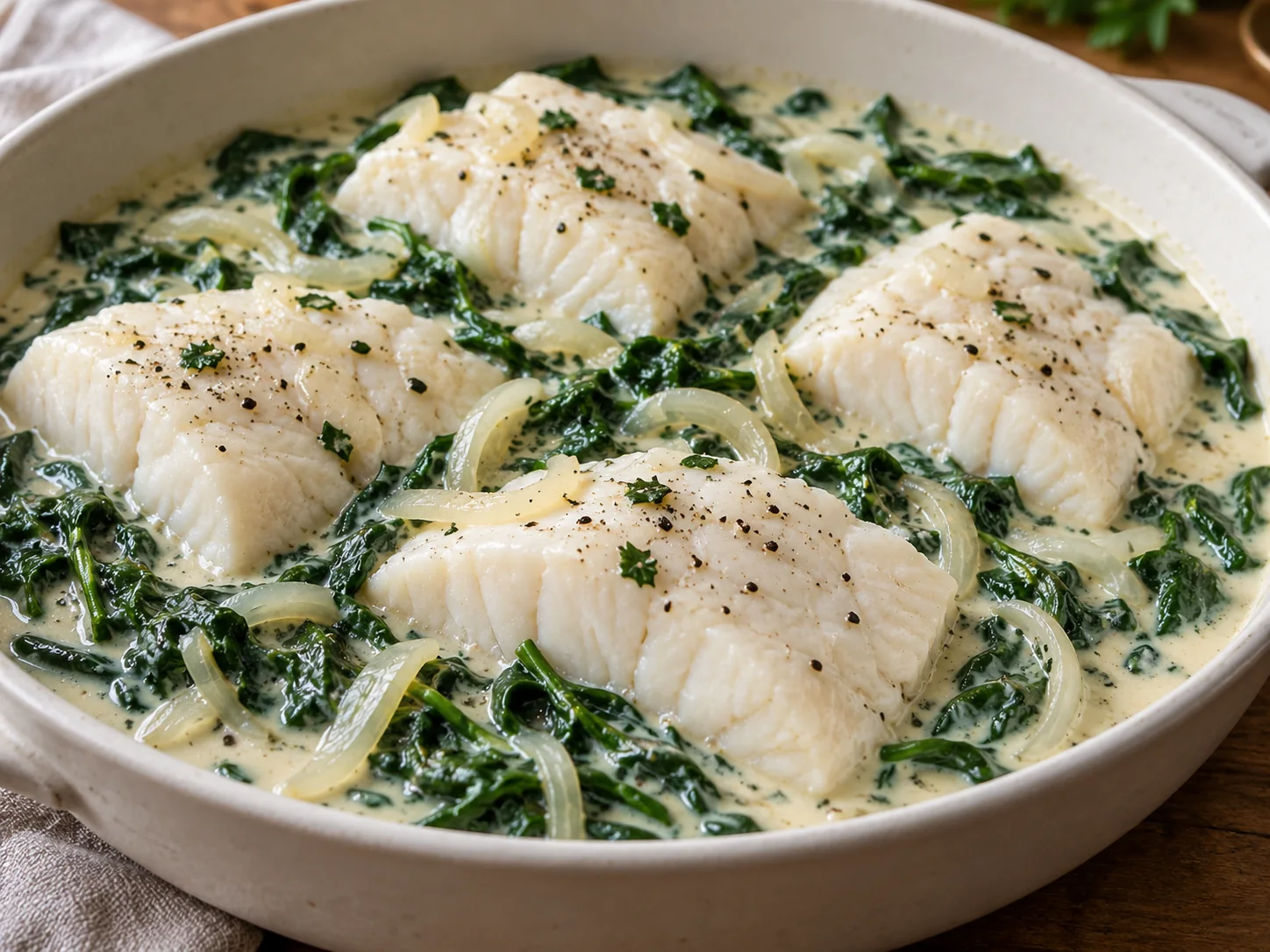
🐟 Four white-fish fillets cook gently in cream sauce before joining previously wilted and drained spinach. Onion, garlic and a small pinch of nutmeg remain restrained. This household adaptation uses 200 ml cream for four people, without frying or prolonged fish cooking. Suggested rice or potatoes are prepared separately.
Ingredients
- 800 g skinless, boneless food-grade white-fish fillets: 4 portions of 200 g, close to 2 cm thick
- 600 g washed fresh spinach, usable weight without thick stems
- 200 ml single cream containing 15% fat
- 150 g finely sliced onion
- 8 g chopped garlic
- 15 ml neutral vegetable oil
- 100 ml drinking water for the sauce
- 1 small pinch ground nutmeg
- 1/4 teaspoon white pepper
- Up to 3 g added salt, adjusted to taste
Preparation
Wilt spinach for 3 minutes. Warm the pan over moderate heat with the slightly damp leaves, without adding oil yet. Cover, stir once and remove as soon as the leaves collapse. Work in two batches if their volume exceeds the pan’s capacity. Drain in a colander and gently press with a spoon once no longer dangerously hot.
Cook onion for 8 minutes. Wipe the base if needed, then add 15 ml oil and onion. Soften over moderate heat, stirring regularly without heavy browning. Add garlic during the final minute. A very dark colour would dominate this deliberately mild sauce.
Make sauce for 4 minutes. Add 100 ml water and stir up unburnt cooking juices, then add 200 ml cream, nutmeg and pepper. Bring to a light simmer. Start with only some of the salt, keeping the remainder for final adjustment. The sauce should stay fluid enough to surround the fillets.
Cook fish for about 12 minutes. Lay all four portions in one layer in the hot sauce. Partially cover and keep a very gentle simmer. Do not stir fillets with a spoon; gently shake the pan if needed. Start checking after 8 minutes because actual time depends on thickness. Measure in the thickest part without touching the base, reaching at least 63 °C at the centre.
Reunite with spinach for about 3 minutes. Once fish is cooked, slide drained leaves around the portions rather than crushing them on top. Heat gently until all the garnish is hot. If one fillet finishes before the others, remove to a warm plate instead of cooking it unnecessarily.
Adjust and serve. Taste sauce and add only the salt needed from the stated 3 g. If too thick, a spoonful of hot water often suffices; if too thin, remove fish before brief reduction. Lift fillets with a broad spatula and share spinach and cream between four plates. Times are indicative: do not keep cooking a finished fish just to reach a fixed number.
Introduction
The main task is organising cooking stages. Spinach releases plenty of water: putting raw leaves under the fillets could dilute the sauce and needlessly extend the fish’s time on the heat. Wilt the leaves first in the same pan, drain them and return them near the end after making the sauce.
Choose four skinless white-fish fillets about 200 g each and close to two centimetres thick. Cod, pollock or another firm food-grade white fish suits the recipe according to availability and origin. Thickness is more useful than weight alone when checking cooking. Ask the fishmonger to remove skin and large bones, then inspect the fillets again at home.
A wide covered sauté pan should hold all four portions in one layer. Crowded pieces heat unevenly and are harder to turn or serve. Prepare vegetables, measure cream and keep fish refrigerated until needed. A fine-probe thermometer avoids relying only on the outer colour of a fillet.
Cultural context
🇨🇩 Radio Okapi published fish with spinach and cream on 9 May 2016. This documents a household recipe presented in DR Congo without establishing an exclusive origin.
This version develops its own method: skinless fillets, measured cream, drained spinach and short fish cooking. It does not repeat the source’s proportions. Cream is a choice in this contemporary preparation, not an obligatory ingredient in every Congolese cuisine. The spinach is the cultivated vegetable sold under that name, not automatically equivalent to other local leaves.
📚 Reference: Radio Okapi, 9 May 2016.
Tips
Draining spinach protects the sauce consistency. Moderate pressing is enough: the aim is not a dry ball, but avoiding pouring all the leaf cooking water into the cream.
Similar thickness makes serving much easier. A thin small fillet may finish while a thick piece still needs heat. Check separately instead of using the largest piece to judge the whole pan.
Cream with 15% fat needs gentle heat. Strong boiling does not usefully accelerate the dish and may change sauce texture. Lower heat after adding fish and watch the gentle simmer around the edges.
Reduce watery sauce without the fish to avoid drying it. Lift cooked portions with a clean spatula, correct the liquid and return them briefly. Do not hide the problem by adding lots more cream.
Frozen fish works after fully thawing in the refrigerator and draining well. Do not thaw on the worktop. A fillet still frozen in the centre will not follow the same timing as the portions described here.
Planning
Wash spinach in several changes of water if soil remains, then drain without trying to dry it completely. Remove thick fibrous stems. Slice onion finely enough to soften within the stated time and chop garlic separately. Measure 100 ml water; this does not include moisture naturally clinging to the leaves.
Run fingers gently over the fillets to check for remaining bones and remove them with clean tweezers. Do not leave fish beside a hot hob during preparation. The dish contains fish and milk; check the cream and other ingredients before offering it to someone with an allergy.
Serving
Serve immediately on plates wide enough to keep fillets whole. Put spinach beside or slightly under the fish and spoon over sauce without drowning it. Check once more for visible bones, particularly when serving anyone who needs assistance.
Storage
Refrigerate leftovers promptly within two hours in small shallow containers. Store at 4 °C or below and eat within 48 hours. Reheat only the required portion until hot through its full thickness, using 74 °C at the centre as a guide for reheated leftovers. Flesh will be firmer after this second heating. Do not keep fish lukewarm in sauce for hours.
Variations
Lactose-free cream can replace ordinary cream at the same volume; it is still dairy and not automatically suitable for milk allergy. A plant-based cooking preparation would alter flavour and needs its composition checked. Different leaves require different preparation: this recipe is not a process for cassava or taro leaves.
Accompaniments
White rice or steamed potatoes readily accompany the sauce. Choose one starch and cook it separately so it is ready when the fish finishes. Spinach is already included. Cool water and, if desired, a lemon wedge to add to individual plates are sufficient for serving.
Nutrition notes
Fish contributes protein; spinach adds fibre and various micronutrients that depend on cooking. Cream and oil provide most added fat. Figures are estimates per portion without rice or potatoes, varying with fish species, selected cream and how much sauce is actually served.