Pepe supu
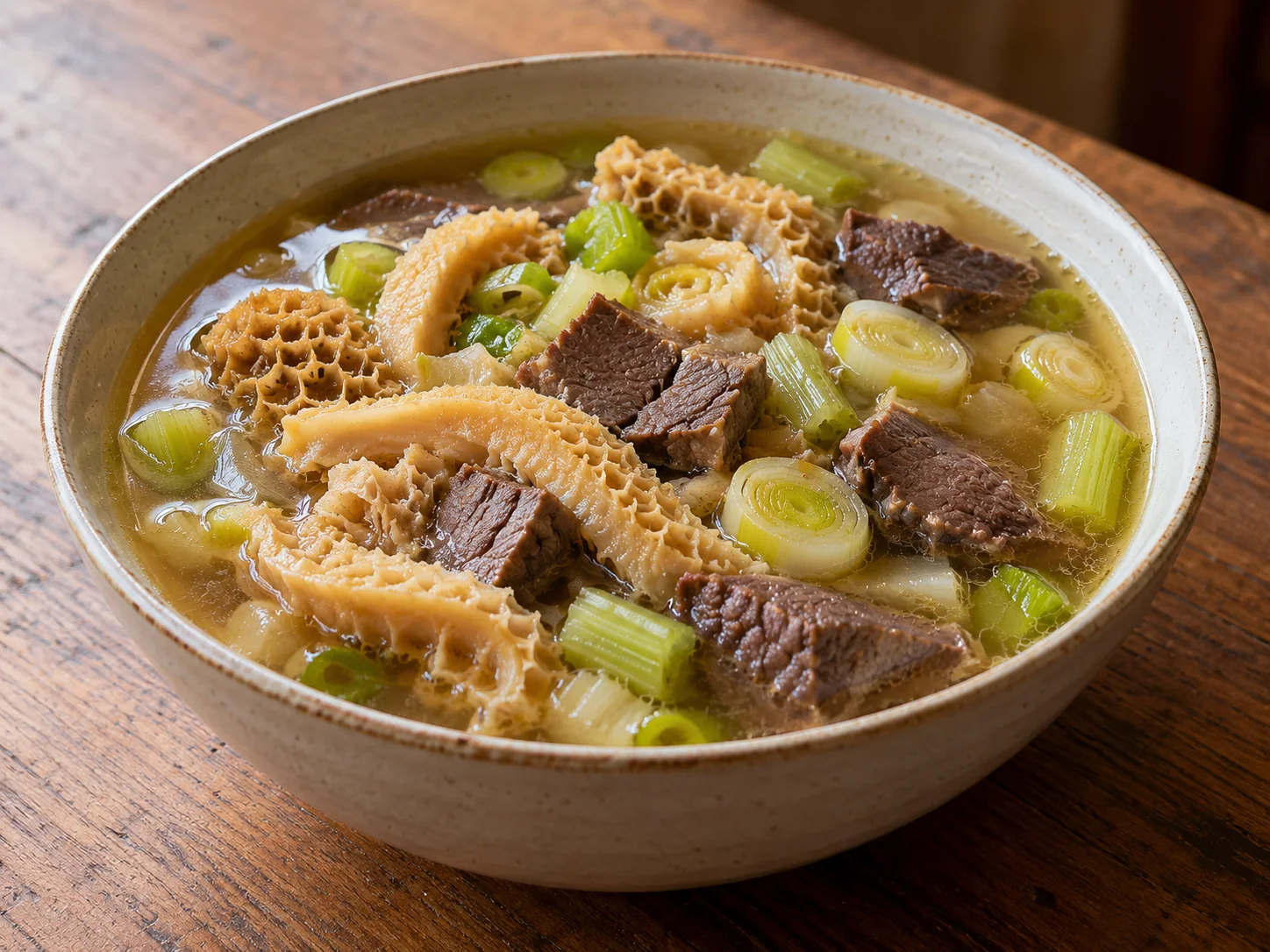
🥣 This pepe supu combines beef tripe and heart in a clear broth of leek, celery and aromatics. The recipe starts exclusively with plain food-grade offal that has already been fully cooked by a professional and is ready to reheat. It makes four substantial soup portions without tomato or added oil. A cassava or fufu accompaniment is optional and prepared separately.
Ingredients
- 400 g food-grade beef tripe, professionally cleaned and fully cooked, ready to reheat
- 400 g food-grade beef heart, professionally fully cooked, plain and ready to reheat
- 150 g washed, sliced white and tender green leek
- 100 g sliced onion
- 60 g washed celery stalk, in small pieces
- 15 g washed parsley, stems and leaves separated
- 8 g chopped garlic
- 10 g peeled, grated fresh ginger
- 1.2 litres drinking water, plus up to 200 ml hot water if needed
- 1 small pinch ground nutmeg
- 1/4 teaspoon black pepper
- Up to 2 g added salt, according to the purchased offal
- Optional fresh chilli, served separately
Preparation
Prepare the ingredients. Check labels or the supplier’s confirmation that tripe and heart are fully cooked and ready to reheat. Weigh 400 g of each, cut and keep refrigerated. Prepare vegetables, garlic, ginger and parsley. Set parsley leaves aside in a small clean bowl.
Start the broth for 15 minutes. Put 1.2 litres water in the pot with onion, leek, celery, parsley stems, garlic and ginger. Bring to a boil, then reduce to a steady simmer. Partially cover and stir once or twice. The vegetables should begin softening.
Add the offal and simmer for 25 minutes. Put tripe and heart into the broth with pepper and the small pinch of nutmeg. Gently return to a simmer and maintain moderate heat. Skim only if foam or excess fat forms on top. Vigorous boiling will not make the broth more fragrant.
Check the consistency. Stir down to the base and taste a spoonful cooled briefly. If the level has fallen substantially, add hot water gradually, using only as much as needed. If flavour seems weak, simmer uncovered for a few minutes instead of multiplying salty seasonings.
Finish for 5 minutes. Taste before salting because prepared offal may already contain salt. Add only as much as needed from the stated 2 g. Stir in parsley leaves and keep the soup thoroughly hot. A piece of heart should cut easily; follow any supplier instructions requiring a different duration.
Serve promptly. Share the two offal types between four bowls first, then add vegetables and broth. Each portion should contain heart and tripe rather than one bowl being almost entirely liquid. Offer chilli separately and your chosen accompaniment on the side.
Introduction
Pepe supu lets the offal pieces and broth take centre stage. This is neither a red sauce nor a flour-thickened soup: the liquid stays fluid, scented with vegetables, ginger and a small pinch of nutmeg. Tripe brings a supple texture and heart a firmer bite, giving variety to a seemingly simple preparation.
This home version measures two specific products: 400 g tripe and 400 g beef heart, both fully cooked and ready to reheat. Ask the supplier for plain preparations without sauce or strong salting. A merely blanched product is unsuitable for the stated forty-five minutes. Cooking times for raw offal differ by organ, size and preparation; do not mix raw pieces at random expecting everything to become tender together.
Have a three-litre pot, skimmer and ladle. Weights refer to the edible part after any draining. Organise vegetables before removing offal from the refrigerator. Chilli is offered separately so that each bowl can be adjusted without concealing all the vegetable flavours.
Cultural context
🇨🇩 Cook Jessica Lukusa presents an offal broth called pepe supu in her Congolese repertoire. This documents a preparation published by a practitioner of that cuisine.
This measured adaptation uses offal fully cooked by a professional. It does not reproduce the source’s quantities or cooking directions. Heart and tripe provide two distinct textures and a clear ingredient list; other mixtures should not be substituted without reviewing their preparation.
📚 Reference: Jessica Lukusa, Saveurs sans frontière.
Tips
The offal list is specific for a cooking reason. Liver, raw kidneys or lung pieces cannot automatically replace cooked heart at the same point and for the same time. A different composition needs a different method.
A clear broth need not be perfectly transparent like restaurant consommé. Small vegetable fragments and some natural fat are expected. Do not remove useful aromatics by filtering everything merely to achieve an artificially clear appearance.
Judge salt after adding the offal. Some suppliers cook their products in seasoned liquid. Starting without stock cubes or dehydrated broth avoids combining several salt sources before tasting.
For a livelier flavour, offer a small lemon wedge at the table rather than pouring lots of acid into the whole pot. This optional condiment is not presented as a way to clean or make offal safe.
If preparing ahead, cool and refrigerate portions rather than keeping broth lukewarm all day. Stir thoroughly when reheating: pieces in the centre must be as hot as the liquid visible around the sides.
Planning
Cut tripe into strips and heart into two- to three-centimetre cubes. Remove visible easily detached fat without trying to erase all differences in texture. Both products must already be tender before this recipe begins; the pot reheats them and combines their flavours with the aromatics.
Clean between leek layers to remove soil. Slice onion and celery finely enough to cook in broth without frying. Chop parsley stems for cooking and keep leaves for the finish. Measure water and salt separately; no stock cube is needed in this version.
Serving
Use deep enough bowls and spoons that suit the pieces. Provide a small plate for an optional accompaniment. Stir the pot between servings to distribute vegetables and offal evenly, as they may settle during a few minutes’ standing.
Storage
Divide leftovers into small shallow containers and refrigerate promptly within two hours of cooking. Store at 4 °C or below and eat within 48 hours. Reheat only the portion needed until thoroughly hot throughout, using 74 °C at the centre as a guide for reheated leftovers. Add a little water if the broth has concentrated. Freeze closed, dated portions if needed and thaw in the refrigerator.
Variations
Some parsley can be replaced with washed, finely sliced spring onion while keeping the same total herb quantity. For a hotter version, cook a small piece of chilli in a separate broth portion. Tomato would give a different expression of the dish: this recipe is deliberately based on clear broth, without tomato or added oil.
Accompaniments
A small serving of chikwangue or fufu may accompany the soup but is not essential. Prepare it separately and portion according to appetite. Cool water suits the meal; no alcoholic drink is necessary to enjoy pepe supu. Avoid so many accompaniments that the broth becomes merely a sauce for a plate of starch.
Nutrition notes
Heart and tripe provide protein with different compositions. Vegetables add flavour without added oil, but final fat and salt also depend on the prepared products purchased. Estimates below are for one quarter of the pot without fufu or chikwangue. They are indicative and do not replace supplier information or an analysis of the finished dish.