Nkovi
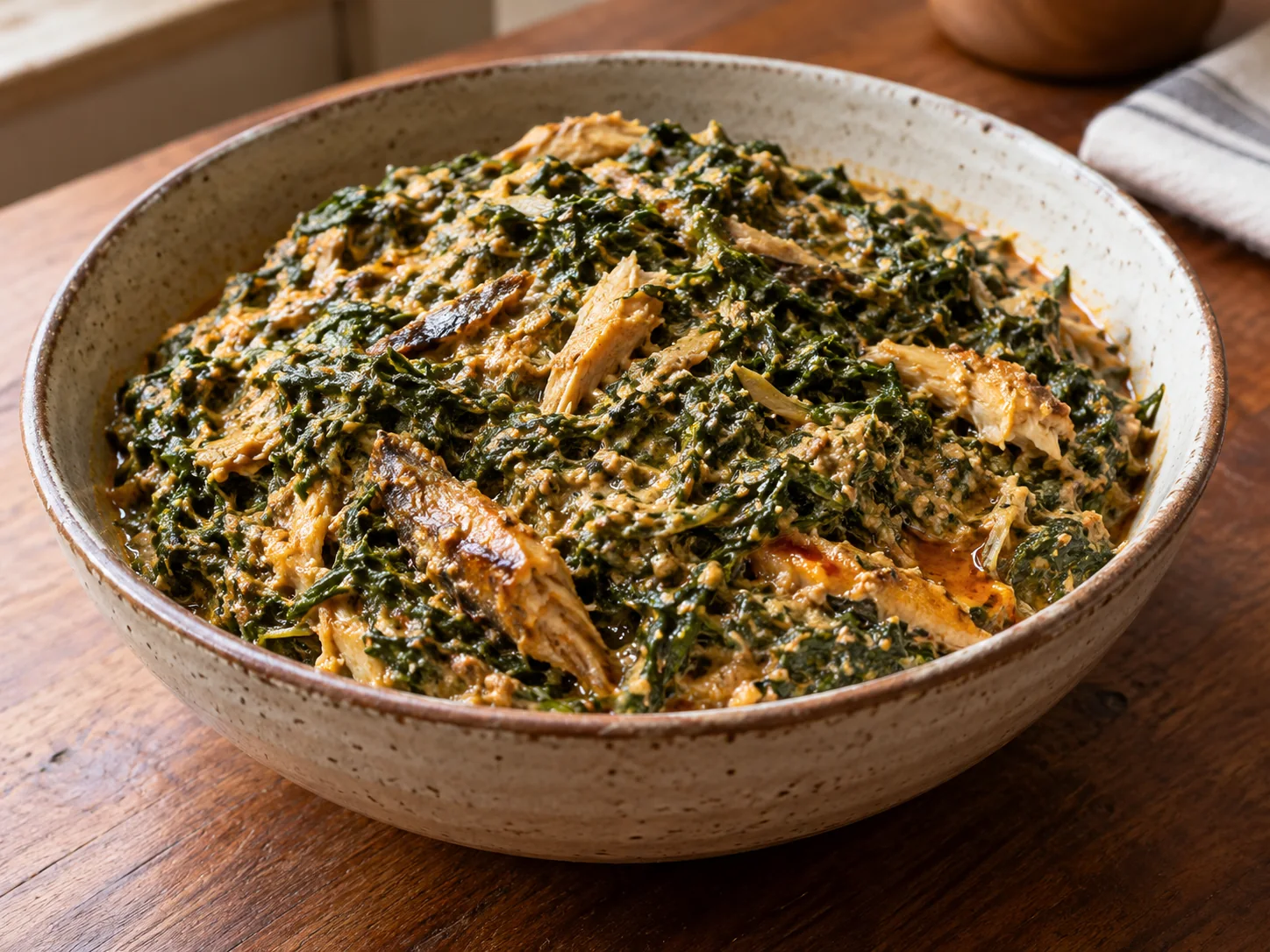
🥬 Nkovi combines finely sliced Portuguese cabbage with a thick peanut and smoked-fish sauce. The leaves first soften in their own moisture, then simmer gently with the seasonings. This measured version makes four servings of stew; prepare chikwangue, rice or fufu separately.
Ingredients
- 700 g food-grade Portuguese cabbage or collard leaves, weighed after removing thick ribs
- 150 g pure unsweetened roasted peanut paste
- 150 g food-grade smoked fish flesh, deboned and ready to cook
- 150 g finely sliced onion
- 8 g chopped garlic
- 20 ml food-grade red palm oil
- 350 ml drinking water, plus up to 150 ml hot water for adjustment
- 1/4 teaspoon black pepper
- Up to 2 g salt, added only after tasting
- Optional fresh chilli, served separately
Preparation
Wilt the leaves for 12 minutes. Put the washed, still-damp cabbage in the cold pot. Cover, heat gently and stir once it starts losing volume. Watch the base: if the leaves were drained very thoroughly and release too little liquid, add two or three spoonfuls of reserved water. Starting with leaf moisture does not mean allowing the pot to burn.
Add the aromatics and cook for 5 minutes. Stir in the onion, garlic and 20 ml palm oil, distributing them through the softened greens. Keep the heat moderate and stir regularly. The onion should begin softening without strong browning. The leaves may still be slightly firm; simmering in the sauce will finish softening them.
Pour in the thinned peanut paste and the reserved 100 ml water. Mix thoroughly down to the base, bring to a gentle simmer and immediately lower the heat. Sauce should move between the leaves. If already almost solid, add a little hot water. Avoid a rolling boil, which causes splashes and makes the peanut paste catch.
Simmer for 15 minutes, partly covered. Stir beneath the greens every few minutes. Taste a small strip for tenderness rather than judging by colour alone. Older cabbage may need extra time. Continue with a little water if necessary, then reduce gently; a tough leaf will not improve by abruptly thickening its sauce.
Add the smoked fish and cook for 10 minutes. Fold in the flakes gently and maintain a simmer until everything is thoroughly hot. Distribute the fish without turning it to a paste. Check leaf tenderness and liquid again, adding hot water a little at a time rather than flooding the dish.
Finish for about 3 minutes. Add pepper, taste and add only the salt needed, with 2 g as an indicative limit. Briefly reduce uncovered if too thin, or loosen with a little water if compact. Nkovi should remain thick but easy to spoon. Serve hot with fresh chilli separately.
Introduction
Choose food-grade Portuguese cabbage with green leaves, sold for cooking, or correctly identified collard greens. The stated weight is after removing thick central ribs: a 700 g whole bunch will not necessarily yield the required 700 g usable leaves. Choose supple leaves without slimy areas or an abnormal smell. Slicing finely makes cooking easier and avoids long strands that are awkward to divide between plates.
Use pure, unsweetened peanut paste, preferably made from roasted peanuts. A sweet sandwich spread would change the result completely. Smoked fish adds a strong flavour. Use carefully deboned food-grade flesh that is ready to cook and follow the supplier’s instructions for any preliminary preparation. Salt varies considerably between products. Reserving the final seasoning is easier than correcting an already oversalted pot.
Use a fairly wide heavy pot, a board and a wooden spoon. The leaves occupy considerable space initially but shrink during the first minutes. Do not pack them so tightly that they cannot be stirred. If the pot is small, add the greens in two batches, allowing the first half to collapse before adding the second.
Cultural context
🇨🇩 ACP describes Portuguese-cabbage nkovi as a dish appreciated by Bakongo communities, including in Kinshasa. This recipe supplies measured home quantities without claiming to represent every family practice. Reference: ACP, 19 January 2026.
Tips
A successful result has tender leaves that retain texture, surrounded by sauce rather than swimming in it. Check a small strip on a clean spoon for toughness. Cooking time varies with the cabbage’s age and the thickness of the cut.
Firm peanut paste mixes more easily with lukewarm water. Add water gradually and press out lumps with the back of a spoon. Do not increase the oil to thin the paste: it would mainly make the dish greasier without hydrating the greens.
Stir regularly without beating the mixture. Peanut paste thickens when heated and can catch before the surface looks dry. If a layer burns, transfer the upper food to a clean pot without scraping up the burnt layer. Extra chilli will not remove its bitterness.
Prepare the starch separately while the stew simmers, so everything can be served hot. The covered sauce may stand briefly off the heat, but will thicken slightly. Loosen it with one or two spoonfuls of hot water rather than starting a lengthy second cooking.
For a larger table, use a wider pot and manageable batches. Doubling the recipe does not mean blindly doubling all adjustment water. Final volume, lid and evaporation area affect reduction, so leave some room to adjust the consistency.
Planning
Wash the leaves in several changes of water if soiled. Drain them while retaining the moisture naturally clinging to their surface. Remove thick ribs with a knife, stack a few leaves without rolling too tightly, and slice into ribbons approximately three to five millimetres wide. Even cutting matters more than perfect presentation: broad thick pieces and fine strips soften at different rates.
Flake the fish and inspect every piece for small bones. Do not use fish that has been kept unrefrigerated against its packaging instructions. Mix the peanut paste with 250 ml taken from the measured 350 ml water, reserving the other 100 ml. This preliminary mixing makes incorporation easier and avoids lumps of paste at the bottom.
Serving
Divide greens and fish as evenly as possible into four servings. Use deep plates or a serving dish that holds heat. Let each person add chilli and their chosen accompaniment. Gently stir in a little oil that separates during standing; a large greasy layer suggests reviewing the oil or paste quantity next time.
Storage
Cool leftovers quickly in shallow containers and refrigerate within two hours of preparation. Keep at 4 °C or below and eat within 48 hours. Reheat only the portion needed until thoroughly hot throughout, stirring. The peanut sauce may need a little water. Freeze in closed, dated portions if necessary, then thaw in the refrigerator.
Variations
For a fish-free version, omit the 150 g smoked fish and add 100 g cultivated button mushrooms, sliced and sautéed separately before joining the greens. The flavour changes: describe it as a plant-based adaptation, not an identical reproduction of the fish recipe. Also check that the peanut paste and other products contain no added animal ingredients.
Neutral vegetable oil can replace the palm oil in the same quantity, giving a less ochre colour. A whole chilli may simmer in the pot for aroma, but only pierce it if everyone accepts the heat. Peanuts remain central and must be declared as an allergen; this is not a peanut-free recipe.
Accompaniments
Chikwangue, fufu or plain rice are possible accompaniments, prepared separately. Choose one base rather than several starches in the same plate. Fish is already included, so another meat is not needed to define the dish. Washed fresh tomato provides a pleasant contrast to the thick sauce.
Nutrition notes
The leaves add plant variety; peanuts supply fat and protein, with fish adding protein. Estimates are per serving without starch. They depend particularly on the peanut paste, fish and its salt content. These are neither laboratory measurements nor therapeutic guidance.