Ngulu mayo
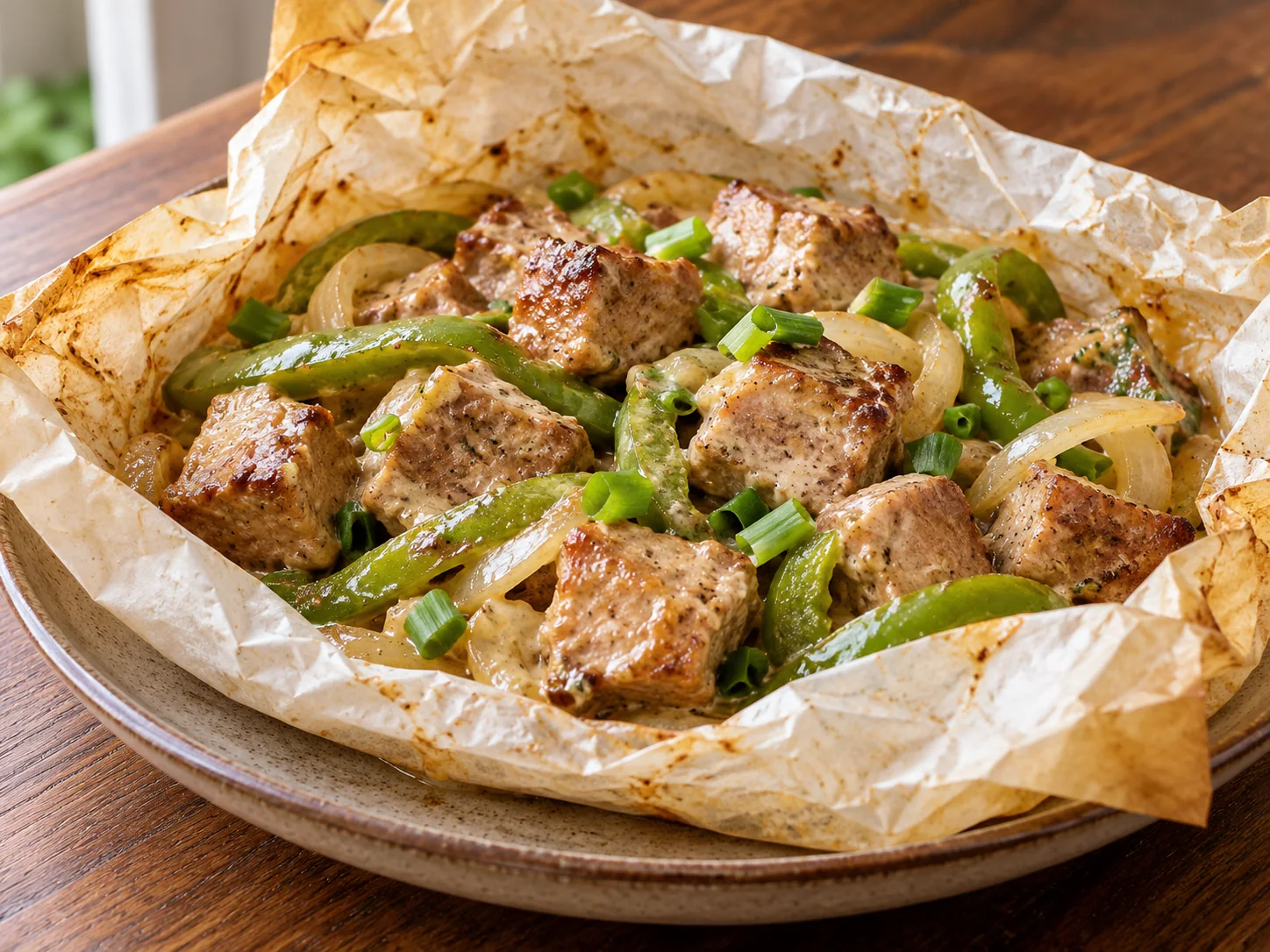
🍖 Ngulu mayo combines marinated, roasted pork cubes with onion and pepper, finished in a parchment parcel and coated with mayonnaise. This measured adaptation uses boneless loin, a two-hour refrigerated marinade and commercial mayonnaise made with pasteurised eggs. It makes four portions without accompaniment.
Ingredients
- 800 g boneless pork loin, trimmed, in approximately 2.5 cm cubes
- 200 g onion, half for marinade and half for finishing
- 10 g chopped garlic
- 15 g fresh ginger, peeled and grated
- 15 g tomato paste
- 15 ml lemon juice
- 20 ml olive oil, with 15 ml for marinade and 5 ml for vegetables
- 3 g smoked paprika
- 1/4 teaspoon ground nutmeg
- 1/4 teaspoon white pepper
- Up to 4 g salt, reduced according to mayonnaise
- 150 g trimmed green pepper, finely sliced
- 40 g washed sliced spring onion
- 60 g commercial mayonnaise made with pasteurised eggs
- Optional red chilli, offered separately
Preparation
Mix pork cubes with chopped marinade onion, garlic, ginger, tomato paste, lemon juice, 15 ml oil, paprika, nutmeg, pepper and 3 g salt. Coat all sides without crushing the pieces. Close the container and marinate for 2 hours in the refrigerator. Reserve the remaining gram of salt for any final adjustment.
Preheat the oven to 180 °C. Spread pork and marinade in a fairly wide ovenproof dish in a shallow layer. Roast for about 25 minutes, turning once. The surface should start browning without drying the smaller pieces. Timing is indicative: parcel cooking follows, so this stage alone is not the final safety check.
Meanwhile, heat the remaining 5 ml oil in a clean pan. Sauté the 100 g finishing onion and pepper for 5 minutes over moderate heat. They should start softening while remaining visible. Add a spoonful of water if needed to prevent sticking rather than more oil. Set aside off the heat.
Lay two large sheets of baking parchment in the dish, away from the oven element. Transfer hot pork and juices, then vegetables and spring onion. Mix gently and fold closed into a parcel with room for steam. Return to the 180 °C oven for about 15 minutes. Open carefully because escaping steam is very hot.
Add 60 g mayonnaise to the hot contents and fold gently to coat pork. Leave the parcel open in its dish and return to the oven for about 5 minutes. Check the centres of several larger cubes reach at least 74 °C in this assembled dish; cook longer if needed. Browning, lemon and mayonnaise do not replace this measurement.
Remove and rest for about 3 minutes before serving. Taste the juices with a clean spoon and add some or all of the reserved gram of salt only if needed. Divide pork, vegetables and coating into four portions. Offer chilli separately. Fifty minutes is a rounded cooking guide including the brief rest, excluding extra time needed to reach the verified temperature.
Introduction
Choose boneless pork loin from a whole cut and dice evenly into approximately two-and-a-half-centimetre cubes. Remove thick fat deposits and tough membranes without trying to make every piece completely dry. This recipe is not for minced meat or offal. A cut rich in connective tissue needs a different cooking approach; changing the meat while keeping identical minutes is not sufficient.
The marinade contains onion, garlic, ginger, tomato, lemon and measured spices. It adds flavour, but does not make pork safe to eat raw: refrigeration and cooking still matter. Use a closed bowl or food container for the two-hour rest. Never marinate on the worktop, even when the room feels cool.
Mayonnaise is added after the enclosed-parcel stage to form a coating, not a pool of cold sauce. Use a commercial product made with pasteurised eggs and check the label. It generally contains egg and may contain mustard. Prepare an ovenproof dish, baking parchment rated for the cooking temperature and a clean food thermometer.
Cultural context
🇨🇩 Gisèle Cooking proposes ngulu mayo as a pork variation of poulet mayo. This recipe adjusts proportions and clarifies cooking. Culinary reference: Gisèle Cooking. Assembled-dish temperature reference: FoodSafety.gov.
Tips
Even cubes make checking easier. Dry little pieces around one large cube that is still insufficiently hot indicate uneven cutting. Measure in the centre of some of the thickest pieces without letting the probe touch the hot dish base.
Do not reuse raw marinade as table sauce. Here it follows the meat through the whole cooking process. Prepare plates and chilli with clean equipment separate from utensils that handled pork before cooking.
The parcel should retain enough steam to finish the dish, not become a pressurised package. Use oven-suitable parchment in a dish that catches leaking juice. Do not place paper directly on the rack or near a flame.
Heated mayonnaise may lose some emulsion. The aim is a flavoured coating, not a perfectly cold-whipped sauce. Keep the measured amount: much more mayonnaise can make the dish greasy without improving pork tenderness.
If juices reduce too far during the first roast, add a small spoonful of hot water and check the oven temperature. Do not automatically compensate with oil. Meat already very dry before the parcel will not fully regain moisture from mayonnaise.
Planning
Do not rinse raw meat under the tap. Pat dry if needed with disposable paper, then clean hands and equipment that touched it. Prepare vegetables on another clean board, or thoroughly wash the first after dicing the pork. Finishing onions and spring onion must not enter the container that held raw meat.
Finely chop the 100 g marinade onion and mix with garlic and ginger. Slice the other 100 g for finishing. Measure mayonnaise separately and refrigerate until needed. The two-hour marinade and brief post-cooking rest are included in the stated total time.
Serving
Serve the parcel contents in the baking dish on a suitable heatproof support, or plate four portions immediately. Stir gently to distribute juices without breaking up all the vegetables. Remove paper before eating and warn guests about trapped heat when opening. Offer water and let everyone control their chilli.
Storage
Divide leftovers into shallow boxes and refrigerate within two hours of cooking. Keep at 4 °C or below and eat within 48 hours. Reheat only the portion needed to 74 °C in the centre, covering to limit drying. Mayonnaise may separate after chilling and reheating; that texture change does not justify ignoring storage requirements.
Variations
Red pepper can replace green at equal weight, giving a sweeter flavour. Add chilli to the vegetables if everyone accepts the heat; otherwise serving it separately is easier to control. Ginger and paprika are measured to support the pork rather than hide the whole dish.
Do not replace loin with chicken and automatically retain the times: that is another recipe requiring poultry-specific adaptation. Egg-free mayonnaise may be used if its label and storage requirements suit the recipe. Announce the change and check other possible allergens, particularly mustard.
Accompaniments
Serve with separately prepared rice, chikwangue or plantain. Choose one starch and, if wanted, a washed salad prepared away from raw meat. Pork and mayonnaise already make a rich preparation; another sauce is unnecessary to define ngulu mayo.
Nutrition notes
Pork provides protein; mayonnaise and oil contribute fat. Figures are estimates per portion without starch, depending on loin trimming and the chosen mayonnaise. Vegetables complete the dish without making it low in energy. No therapeutic effect is claimed.