Ngolo with sorrel
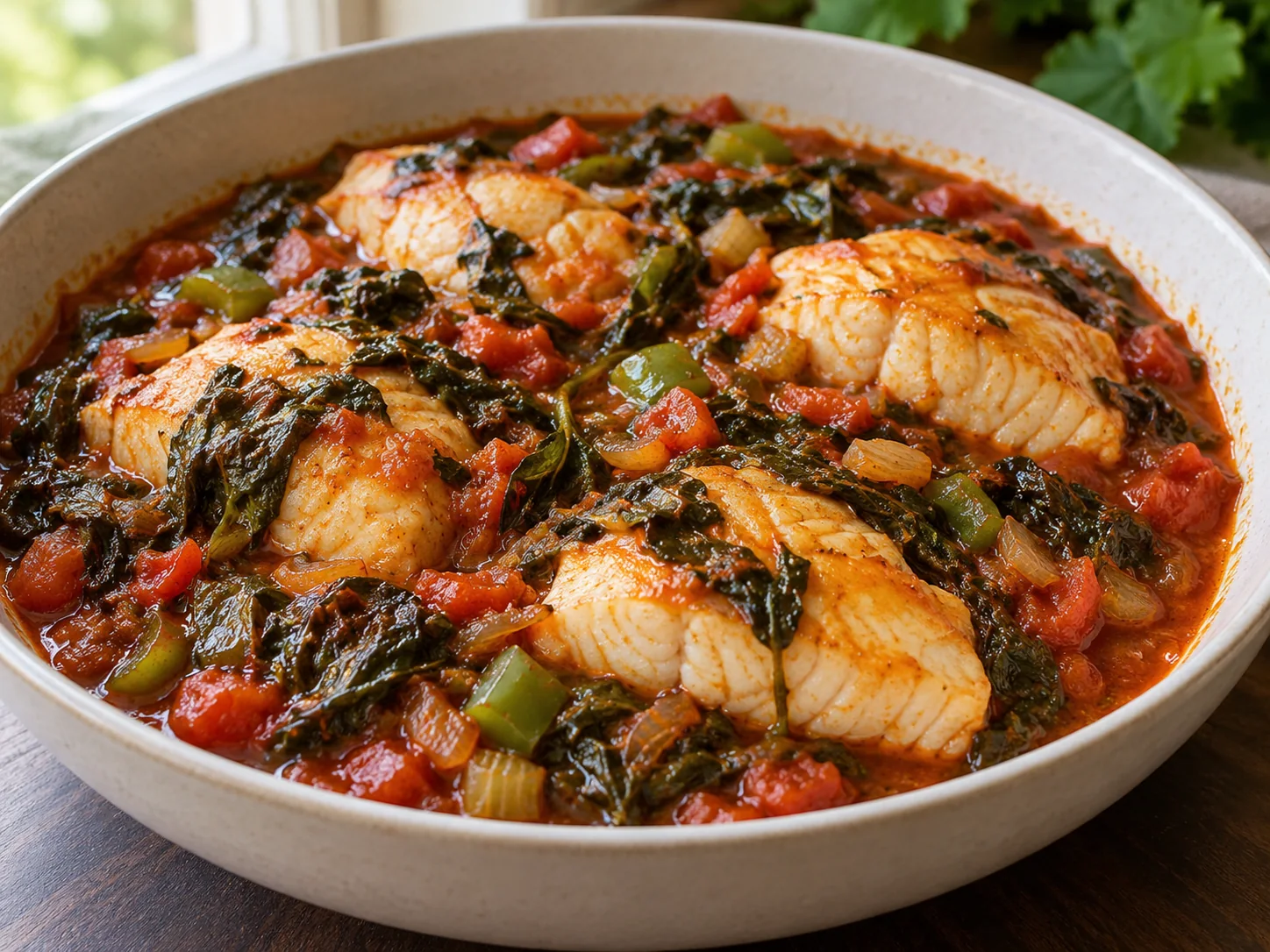
🐟 Four catfish portions simmer in a tomato sauce with sorrel, pepper and celery. This measured adaptation of ngolo with sorrel uses fishmonger-prepared fillets without shrimp powder. The leaves bring acidity, and cooking is checked at the fish’s centre. It makes four portions without accompaniment.
Ingredients
- 800 g food-grade skinless deboned catfish fillets, in 4 portions of approximately 200 g
- 150 g food-grade garden sorrel leaves, weighed after trimming
- 400 g crushed ripe tomatoes
- 150 g finely sliced onion
- 120 g trimmed green pepper, finely diced
- 50 g washed sliced celery stalk
- 20 g washed sliced spring onion
- 8 g chopped garlic
- 20 ml neutral vegetable oil
- 200 ml drinking water, plus up to 100 ml hot water as needed
- 1/4 teaspoon ground nutmeg
- 1/4 teaspoon white pepper
- Up to 3 g salt, adjusted to taste
- Optional fresh chilli, served separately
Preparation
Heat 20 ml oil over moderate heat in the sauté pan. Soften onion, pepper and celery for 5 minutes, stirring, without strong browning. Add garlic near the end so it does not burn. Leave room on the base to stir the vegetables regularly.
Add crushed tomatoes and 200 ml water. Mix and gently simmer for about 10 minutes, partly covered. Stir along the base occasionally. Tomatoes should break down and pepper begin to soften; cook a little longer with extra water if the dice remain firm.
Add sorrel and cook for 5 minutes. Distribute leaves through the sauce, then add nutmeg and pepper. Taste a little sauce with a clean spoon to assess acidity before the fish. Do not aim to keep leaves bright green: their collapse is part of the intended result.
Place four fish portions in the hot sauce in one layer. Spoon sauce gently over them, cover and simmer for about 10–12 minutes according to thickness. Avoid a rolling boil and do not stir like a meat stew. Gently move the pan instead to prevent the base catching.
Measure the centre of the thickest part of several portions, aiming for at least 63 °C. Flesh should also become opaque and separate easily, but a thermometer avoids relying on the sauce’s colour. Cook gently for longer if the centre is not hot enough; do not serve raw-centred pieces.
Add spring onion and adjust salt, up to 3 g for the whole dish. If too thick, pour a little hot water around the edge without breaking fillets. Heat for another minute or two if needed and serve immediately with chilli separately. Thirty-five minutes is a guide; fish temperature and vegetable tenderness take priority.
Introduction
Choose food-grade catfish, fresh or thawed in the refrigerator, prepared as skinless carefully deboned fillets. The 800 g weight is flesh ready to cook: a whole fish of the same weight would not give four comparable servings. Make four portions of approximately 200 g, two to three centimetres thick. Even pieces cook more consistently than thin scraps mixed with one large piece.
This version uses food-grade garden sorrel sold for cooking. Never pick a wild plant merely because its leaves resemble sorrel, or treat all sour leaves as interchangeable. Using an identified food makes the home method reproducible. Weigh 150 g after removing thick stalks and damaged areas, then wash carefully.
Fish and celery are allergens to declare. This version contains no stock powder or added crustaceans, but is not suitable for fish allergy. Use a wide sauté pan to hold four portions without stacking, a lid and a clean food thermometer. Cook the sauce before adding fish so flavour develops without unnecessarily extending fillet cooking.
Cultural context
🇨🇩 Radio Okapi includes ngolo with sorrel in its culinary collection. This is a measured version using fillets and identified garden sorrel. Reference: Radio Okapi. Temperatures: FoodSafety.gov.
Tips
A small pan forces stacking and makes checking harder. Use a wider one, or divide fish and sauce evenly between two smaller pans. Do not compress fillets to fit them in.
Sorrel acidity varies with the product and maturity. This amount is a guide; if too mild, try a little more sorrel next time rather than blindly correcting with sugar during cooking.
If fillets start breaking, stop turning them. Spoon sauce over with a small ladle or move the pan gently. A wide spatula helps lift each portion without reducing it to flakes.
Insert the thermometer to the centre without touching hot metal. For a flat piece, insert from the side. Clean the probe before and after use: a sauce-only measurement does not show the temperature inside the fish.
Have the accompaniment ready before adding fish. Sauce tolerates a short wait better than fillets kept over high heat for a long time. Gently reheat sauce if needed, then cook fish just before the meal.
Planning
Keep fish refrigerated until needed. Pat dry with disposable paper if necessary and inspect for remaining bones; even fillets sold deboned merit this check. Use a separate clean board for vegetables, or wash the fish board thoroughly before moving to vegetables.
Remove thick sorrel stalks and roughly chop leaves. They shrink considerably and become olive-coloured when heated; this is normal here. Dice pepper small enough to soften during sauce cooking. Finely chop celery and prepare garlic and spring onion before heating the pan.
Serving
Plate one fish portion per person and share sauce and vegetables. Taste with a clean spoon and lift fillets with a spatula. Warn that a bone may remain despite checks. Serve thoroughly hot without repeatedly boiling already cooked fish while waiting.
Storage
Divide leftovers promptly into shallow containers and refrigerate within two hours. Keep at 4 °C or below and eat within 48 hours. Gently reheat the portion needed with sauce to 74 °C in the centre without rough stirring. Freeze in closed, dated portions if needed, then thaw in the refrigerator; fish becomes more fragile afterwards.
Variations
Another food-grade firm-fleshed fish can cook in this sauce, but adapt its name and timing rather than calling every fillet ngolo. Retain the core-temperature check and use similar thicknesses. Bone-in pieces need particular care at serving and do not correspond to this recipe’s flesh weight.
A whole chilli can go into the sauce if everyone accepts it. Do not add shrimp powder without declaring it: this adds crustacean allergen and may increase salt. Red pepper can replace green at the same weight for a sweeter flavour.
Accompaniments
Serve with separately prepared chikwangue, plantain or rice. Choose one accompaniment for easy portions and let the sorrel sauce lead. A second protein is unnecessary as each portion already contains fish. Offer water and separate chilli.
Nutrition notes
Fish provides protein and vegetables diversify the meal. Oil is measured; no stock powder is necessary. Per-serving figures are estimates without accompaniment and depend on species, trimming and actual ingredients. Vitamins and minerals in the finished dish have not been measured.