Mujibujibu
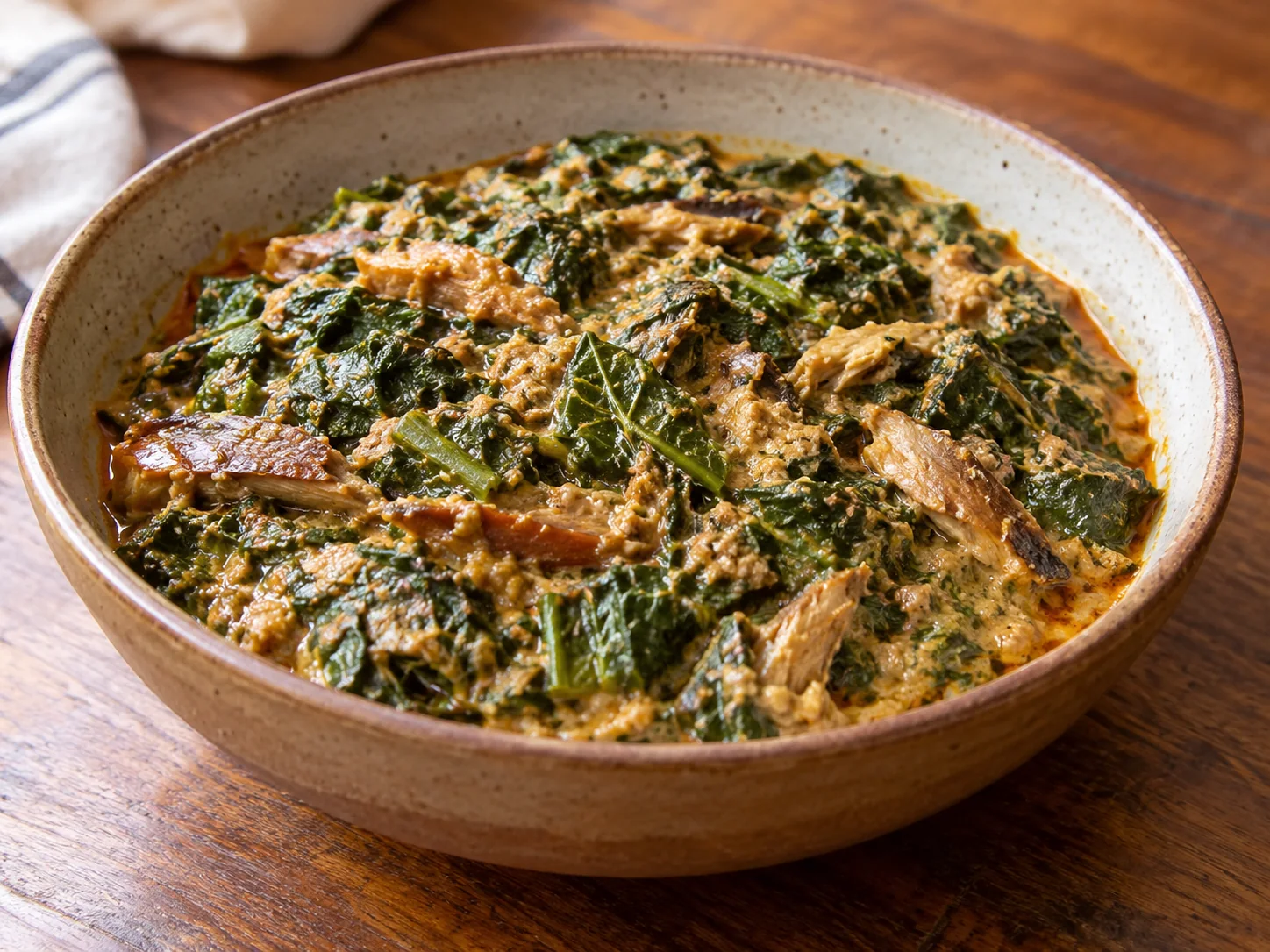
🌿 This mujibujibu uses food-grade pumpkin leaves, finely ground raw peanuts and smoked fish. Gentle simmering softens the greens and cooks the peanut base into a cohesive sauce. It makes four servings; prepare fufu, rice or chikwangue separately.
Ingredients
- 600 g young food-grade pumpkin leaves, weighed after removing tough stalks and ribs
- 120 g food-grade raw shelled peanuts, thin skins removed, finely ground
- 180 g food-grade smoked fish flesh, deboned and ready to cook
- 120 g finely sliced onion
- 6 g chopped garlic
- 20 ml food-grade red palm oil
- 650 ml drinking water, plus up to 150 ml hot water as needed
- 1/4 teaspoon black pepper
- Up to 2 g salt, depending on the fish
- Optional fresh chilli, offered separately
Preparation
Heat 20 ml oil in the pot over moderate heat. Sweat the onion for 4 minutes, stirring without browning. Add garlic during the fifth minute. Keep the base clean and let the aromatics soften. Strong browning is not needed for this leaf sauce.
Add the prepared leaves and reserved 500 ml water. Stir gently to moisten them and let their volume fall. Pour in the peanut suspension, mixing down to the base. Bring back to a gentle simmer and lower the heat. Disperse the meal throughout the pot rather than allowing a compact deposit.
Simmer gently for 25 minutes, partly covered. Stir regularly, scraping the base gently. The peanut sauce thickens and may splash if too hot. Add small amounts of hot water if it becomes compact before the greens are tender, maintaining some liquid movement between the vegetables.
Continue for another 10 minutes before adding fish. Check a leaf on a clean spoon for tenderness. The meal should no longer feel floury and uncooked. If the leaves remain fibrous, cook longer with a little water. Timing depends on the product; do not sacrifice tenderness simply to follow the timer.
Add the smoked fish flakes and cook for another 10 minutes. Coat them by lifting the greens gently rather than crushing all the pieces. Maintain a simmer until the dish is thoroughly hot. Fish may release salt at this stage, so wait until the end to adjust seasoning.
Add pepper and taste before salting, using up to 2 g according to the fish. Check for tender leaves and a cohesive sauce without separated water underneath. Briefly reduce uncovered or loosen with a spoonful of hot water if necessary. Serve hot, chilli separately. The 50-minute cooking guide includes the aromatics, without any extra time required for tenderness.
Introduction
Buy pumpkin leaves from a food supplier who sells them for cooking and knows their edible species. Never use an ornamental plant or wild leaves selected merely for their resemblance. Choose young, fresh leaves tender enough to remove their stringy parts. The 600 g weight is after trimming; allow more at purchase if bunches have long stalks.
This recipe distinguishes ground raw peanuts from roasted peanut paste. Raw nuts require prolonged simmering; roasted paste produces a different aroma and should not be substituted without explaining the change. Choose food-grade peanuts from a reliable supplier, with no added sugar or salt, and grind finely shortly before use. A dry grinder helps produce an even meal rather than clumps that are difficult to incorporate.
Weigh the smoked fish flesh after removing tough skin and bones. Use a ready-to-cook product and follow its preparation and storage instructions. A wide heavy pot and wooden spoon are sufficient. Keep hot water available: the peanut meal and leaves do not always absorb liquid identically.
Cultural context
🇨🇩 ACP documents pumpkin-leaf mujibujibu in Luba cooking. The quantities here are a measured home adaptation. Therapeutic claims in the interview are not repeated. Reference: ACP, 21 May 2025.
Tips
Choose young leaves: very thick veins require more trimming and can remain unpleasant even in a good sauce. Weigh after cleaning to keep the intended balance between greens and peanuts.
Fine meal produces a more consistent result than coarsely crushed nuts. Pulse the grinder to avoid unnecessary heating. Do not add oil while grinding: the recipe’s 20 ml is enough for the aromatic base.
The sauce must simmer, not fry dry. If it catches, lower the heat, stir and add water. If it burns, transfer the unburnt food without scraping the stuck layer. Neither salt nor chilli will remove bitterness.
Thickness is not proof of sufficient cooking. Peanuts may thicken while the leaves still need time. Retain enough liquid, continue gently and adjust consistency only when the components are cooked.
For double portions, use a wider pot and allow more time for even heating. Double the main ingredients, but keep extra water as a reserve and add gradually according to evaporation.
Planning
Wash the leaves carefully and remove tough stalks, thick ribs and easily detached strings. Wear clean food-preparation gloves if handling irritates your skin. Cut leaves into two- to three-centimetre pieces and drain. Trimming does not make an unknown plant edible: food identification must come first.
Mix the 120 g ground peanuts with 150 ml of the measured water, pressing out lumps to make a loose suspension. Reserve the remaining 500 ml. Flake the fish and check for small bones with your fingers under good light. Prepare the aromatics before lighting the stove so you can watch the initial simmer.
Serving
Share greens, sauce and fish evenly between four deep plates. Stir gently before serving to redistribute sauce at the base. If it stands covered briefly off the heat, it may thicken; add a small spoonful of hot water if needed without repeating a long simmer.
Storage
Divide leftovers into shallow containers and refrigerate promptly, within two hours. Keep at 4 °C or below and eat within 48 hours. Reheat only the portion needed until thoroughly hot throughout, stirring and adding a little water. Freeze in closed, dated portions if needed; thaw in the refrigerator.
Variations
For a fish-free adaptation, replace the fish with 200 g cultivated button mushrooms, sliced and sautéed separately. Add during the last ten minutes. The flavour differs, but the dish can remain plant-based if the other products are too. Never use unidentified wild mushrooms.
Neutral oil can replace the 20 ml palm oil. Roasted peanut paste gives a more toasted aroma: identify this as a variation rather than claiming it exactly reproduces the raw-peanut base. Fish and peanuts are allergens to declare at the table.
Accompaniments
Serve with separately prepared fufu, plain rice or chikwangue. One base is enough to build the meal. Fish is included, so another meat is not needed to complete the plate. Offer water and separate chilli rather than making the entire pot very hot.
Nutrition notes
The leaves add vegetable variety. Peanuts and fish provide protein; peanuts and oil supply a substantial share of fat. Figures are estimates per serving without starch, affected by the actual ingredients. No claim to prevent or treat disease is made.