Madesu ya pembe na makoso
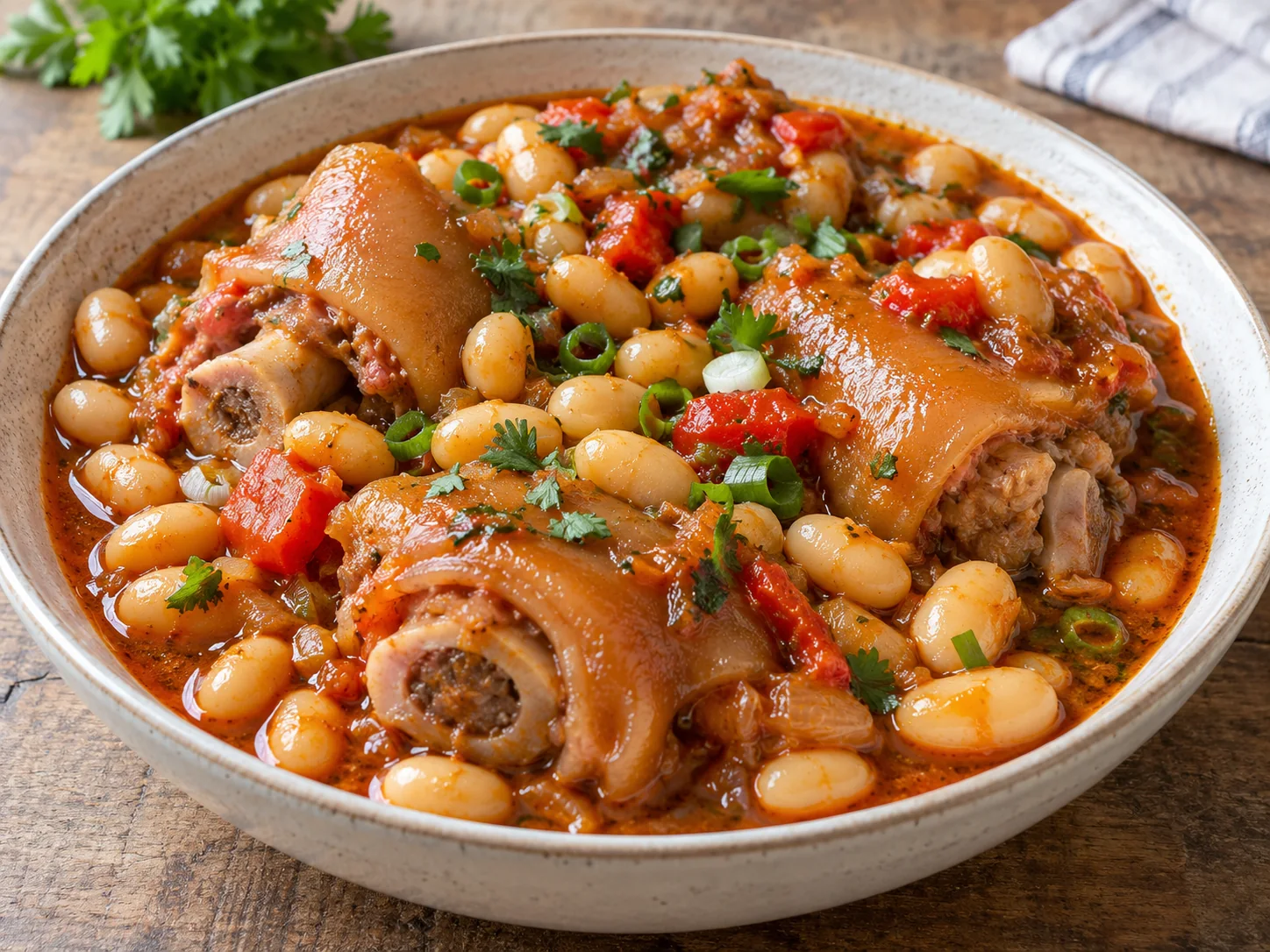
🫘 White beans in tomato sauce with long-simmered pig trotter pieces. The sauce thickens and coats beans without making them disappear. This recipe includes refrigerated soaking, separate bean and meat cooking, then final assembly with vegetables and aromatics.
Ingredients
- 300 g food-grade dried white beans
- 600 g cleaned raw food-grade pig trotters, bone-in, cut into pieces by the butcher
- 300 g fresh tomatoes
- 150 g deseeded red pepper
- 150 g peeled onion: 50 g for pork and 100 g for sauce
- 25 g tomato paste
- 8 g peeled garlic
- 15 g fresh parsley
- 20 g spring onion
- 30 ml neutral vegetable oil
- 15 ml food-grade coconut oil
- 2 bay leaves: one for beans and one for pork
- 0.1 g ground nutmeg
- Up to 3 g salt, adjusted to taste
- 1.5 litres drinking water for beans, plus hot water if needed
- 1.5 litres drinking water for pork, plus hot water if needed
- Enough drinking water for soaking, discarded afterwards
Preparation
Put trotters in a second pot with 1.5 litres water, 50 g onion, the other bay leaf and half the green seasoning. Bring to the boil, then simmer gently, partially covered, about 2 h 30 to 3 hours. Skim if needed and top up water so pieces do not dry out. Flesh should become very tender around bones.
After the pork has cooked for about an hour, start the beans. Drain soaked beans and put in a pan with 1.5 litres fresh water and one bay leaf. Bring to a full boil and maintain for at least 30 minutes. Continue at a simmer until fully tender, about another 30–60 minutes depending on beans. Add hot water to keep covered. Do not taste before the boiling stage.
When trotters are tender, transfer with a slotted spoon to a clean container. Strain and reserve 250 ml broth to remove small bone and aromatic fragments. Carefully inspect pieces and remove loose splinters; leave large bones visible or remove them if this can be done cleanly. Do not serve small fragments hidden in sauce.
Chop tomatoes and pepper or blend coarsely. Heat both oils in a frying pan. Cook remaining 100 g onion for 4 minutes, then add remaining green seasoning and tomato paste. Stir 2 minutes, add tomato and pepper and cook about 10–12 minutes until sauce has lost its raw watery character.
Remove bay from beans. Keep about 200 ml bean liquid in the pan and reserve the rest separately. Add trotters, tomato sauce and nutmeg. Pour in 150 ml strained pork broth first, then simmer gently 20 minutes. Add remaining 100 ml broth or a little bean liquid only if too dry.
Taste and add salt gradually rather than automatically using all 3 g. Check beans are tender to the centre and pork pieces soft. Crush a few beans against the side if sauce needs thickening. Remove any remaining bay, divide into four portions and clearly mention bones if retained. Serve hot.
Introduction
Pig trotters need time to become tender. Have the butcher cut them rather than trying to slice bones with an ordinary kitchen knife. Weight includes bones and is therefore not 600 g boneless meat. Buy cleaned food-grade trotters kept chilled, without relying on lemon to make them safe.
Beans cook separately so tenderness can be checked before adding tomato. Sauce then joins already-cooked beans and softened pork pieces. Running both cooking stages in parallel reduces waiting, but eliminates neither soaking nor the long simmer required by trotters.
Cultural context
🇨🇩 On 6 August 2021, Jessica Lukusa presented a personal recipe for madesu ya pembe na makoso, white beans with pig trotters in the Congolese repertoire, on Saveurs Sans Frontières. This adaptation retains that pairing and tomato-pepper sauce, specifies green seasoning, adjusts oil quantities and details bean cooking. It does not claim to be the only family version. Source: Jessica Lukusa.
Tips
Trotter tenderness is not judged by temperature alone. Prolonged simmering softens tissues around bones. If still firm, continue cooking separately instead of leaving beans in sauce for an extra hour.
A lemon bath is unnecessary in this method and does not replace correct cooking. Trotters should come from a food supplier and be prepared for cooking. Abnormal smell or questionable storage cannot be corrected with more spices.
Tomato enters after bean cooking. This allows texture adjustment in plain water and prevents already-reduced sauce with still-hard beans. Bean age affects cooking time even after soaking.
Straining broth and inspecting pieces provide complementary checks for bone splinters. Visually clear broth does not prove every meat piece is free of fragments. Warn diners if large bones are served.
The dish thickens as it rests because beans absorb liquid. Keep a little broth available until serving to loosen sauce by spoonfuls. Do not pour in the whole reserve if texture is already right.
Planning
The day before, sort and rinse beans, then soak for 12 hours in plenty of drinking water in the refrigerator. Discard soaking water and rinse before cooking. FSAI recommends soaking and a proper boil for dried beans; gentle slow-cooker cooking alone does not replace this stage. Guidance: FSAI.
Have a board reserved for raw meat and wash hands after handling. Do not wash trotters under a splashing jet. Check with the butcher that they are properly cleaned and ready to cook. Wash tomatoes, pepper and herbs. Finely chop garlic, parsley and spring onion together for a green seasoning with known ingredients and no added stock cube.
Serving
Use a ladle for beans and a broad spoon to share trotter pieces. Bones make portions unequal by weight; aim for reasonable distribution of edible parts rather than identical bone-in weight. Have a small plate for bones if needed.
Storage
Cool leftovers and broth promptly in shallow containers, then refrigerate within two hours at 4 °C or below. Eat within 48 hours. Reheat the needed portion to 74 °C in the centre, stirring with a little water if necessary. Broth may gel when cold: reheating it properly does not remove the need to respect storage time.
Variations
Replace the neutral and coconut oils with 45 ml neutral oil if desired; aroma changes. Green seasoning is deliberately specified; a commercial paste may have different salt and allergens.
Smoked fish, tripe and other meats appear in some variations but are not automatic additions here. Each needs appropriate sourcing and cooking. Canned beans can support a faster arrangement, but trotters still require long cooking.
Accompaniments
Optionally serve separately cooked plain rice, with quantity adjusted to appetite. Chikwangue or fufu are other side choices. None of these starches is included in calculated portions or nutrition estimates.
Nutrition notes
Beans provide plant protein and fibre; trotters add protein and variable fat. Edible weight after bone removal is hard to predict, so per-quarter figures remain very approximate. They exclude rice and other sides. Collagen content is not a promise of a particular health effect.