Kiyembe
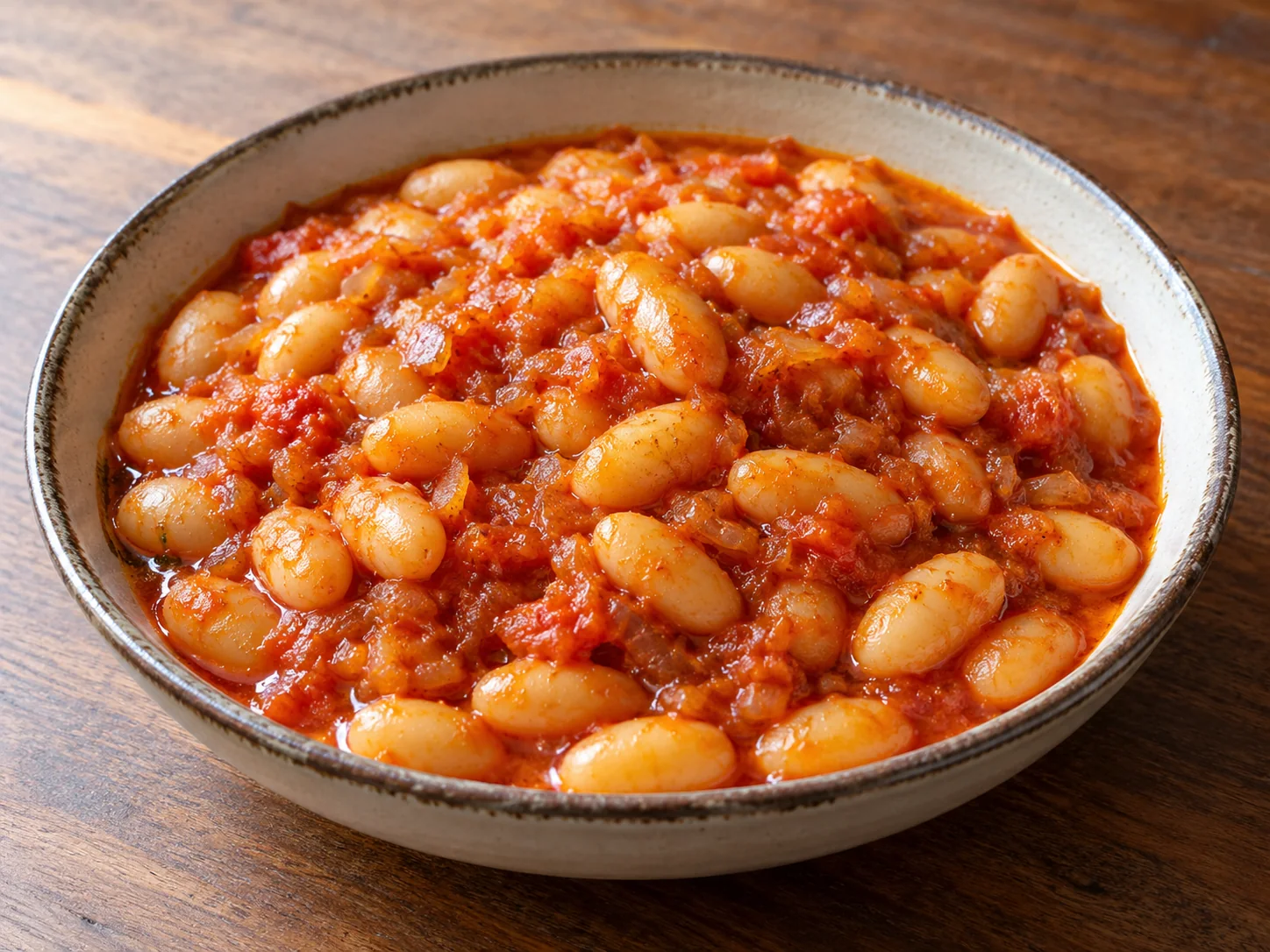
🫘 Kiyembe features soaked beans peeled by hand, cooked before joining a tomato sauce made with two oils. Their tender flesh remains recognisable in a short sauce. This measured plant-based version makes four servings. The total time includes twelve hours of soaking as well as the peeling work.
Ingredients
- 350 g food-grade dried white beans, before soaking and peeling
- 1.5 litres drinking water for soaking, to discard
- 2 litres drinking water for first cooking, plus hot water if needed
- 150 g onion, half for first cooking and half for sauce
- 100 g washed white part of leek, in large pieces
- 8 g garlic, half for first cooking and half for sauce
- 2 food-grade bay leaves, removed before serving
- 250 g chopped tomatoes without added salt
- 20 g tomato paste
- 10 ml food-grade red palm oil
- 20 ml neutral vegetable oil
- 200 ml drinking water for sauce and finishing
- 1/4 teaspoon ground nutmeg
- Up to 4 g salt, adjusted at the end
- Optional fresh chilli, served separately
Preparation
After the twelve-hour soak, peel and rinse as directed. Put beans in a large saucepan with 2 litres fresh water, half the onion, leek, half the garlic and bay leaves. Bring to the boil. Use a deep enough pan to keep beans covered with water without overflowing as boiling begins.
Maintain a brisk boil for at least 30 minutes, not merely a lukewarm simmer. Watch the level and add hot water to keep beans immersed. Stir carefully so the peeled beans do not turn to purée. This stage remains necessary even if the surface already appears tender.
Lower to a gentle boil and test a bean’s centre: it should mash easily without a hard floury core. If needed, cook for another 10–30 minutes, checking regularly, and stop once tender. Older beans may take longer. Remove bay leaves and large leek pieces. Drain gently and reserve without shaking the colander roughly.
While beans finish cooking, heat both oils in another pan. Soften remaining onion for 5 minutes over moderate heat. Add chopped tomatoes and tomato paste; cook for 5 minutes, stirring. Add remaining garlic and nutmeg, pour in 100 ml of the sauce water and simmer for another 5 minutes.
Pour sauce over tender beans. Add the remaining 100 ml water and combine by gently lifting or shaking the saucepan. Simmer over low heat for 10–15 minutes, partly covered. Coat the beans without dissolving them; some will naturally thicken the juices, but the dish is not a purée.
Taste and salt gradually, up to 4 g for the whole dish. Check that no bay leaves remain. Briefly reduce uncovered if too watery, or loosen with a little hot water if compact. Serve hot with chilli separately. Cooking times are guides, not a guarantee of tenderness at an exact minute.
Introduction
Removing the skins distinguishes this preparation from ordinary beans in tomato sauce. Choose food-grade dried white beans of a single variety and as recent a harvest as possible. Differently sized beans do not hydrate evenly. The 350 g weight refers to dry beans before soaking and peeling: substituting 350 g already cooked beans without reconsidering the other proportions would not give the same quantity.
Peeling takes patience. After soaking, the skin should come away under gentle finger pressure. Some beans separate into halves; that is not a problem, but avoid crushing them into paste. Prepare a large colander, two bowls and a container for discarded skins. Several people with clean hands can share the work without rushing it.
No stock cube is used: onion, garlic, leek and bay flavour the first cooking, with tomato defining the finish. The oils are measured to make a cohesive sauce without a greasy layer. Cooking time is an estimate: tenderness depends on the beans’ age, variety and the water used.
Cultural context
🇨🇩 Gisèle Cooking presents peeled-bean kiyembe as a childhood memory from Kivu. This is a measured adaptation without stock cubes. Culinary reference: Gisèle Cooking. Dry-bean preparation reference: FDA.
Tips
Allow enough time for peeling: omitting it loses the technique that distinguishes kiyembe. If skins resist after soaking, do not force a knife onto every bean; extend hydration a little under refrigeration and check again.
Check tenderness at the centre, not just the surface. A peeled bean may feel deceptively soft while its core remains undercooked. Do not taste raw soaked beans during peeling.
Drain gently and do not rinse cooked beans for a long time. Peeling makes them fragile, and rough handling disperses their flesh. A wide pan and slow movements help incorporate sauce better than vigorous stirring.
Nutmeg should be a restrained accent. Measure the stated quarter teaspoon rather than pouring from the container over the pan. Omit it for a simpler flavour if preferred; it does not replace onion or tomato.
Making sauce while beans finish avoids needless waiting, but never transfer still-hard beans simply to save time. They must be tender before meeting tomato; cooking longer afterwards does not always correct that start easily.
Planning
Sort the dry beans, removing stones and damaged grains, then rinse. Cover with soaking water and refrigerate for twelve hours in a container with room for swelling. Drain and discard that water. Remove skins one bean at a time, discard them and rinse the peeled beans in drinking water. Soaking and peeling do not replace cooking.
Use fresh water for cooking. Boil briskly for thirty minutes before continuing until tender. Do not replace this stage with lukewarm slow-cooker cooking. Tomato joins beans only after they are tender, since acidity does not help them soften. If peeling takes a long time, keep the remaining hydrated beans refrigerated and work in small batches.
Serving
Share beans and sauce between four portions without prolonged stirring at serving time. Sauce thickens slightly while standing; a spoonful of hot water may be enough to loosen it. Remove any last bay or leek pieces noticed and serve the beans thoroughly hot.
Storage
Refrigerate leftovers promptly in shallow containers, within two hours of preparation. Keep at 4 °C or below and eat within 48 hours. Reheat only the quantity needed until thoroughly hot throughout, mixing gently. Freeze in closed, dated portions if wanted; thaw in the refrigerator. Peeled beans become more fragile after freezing.
Variations
Other coloured beans are possible, but use one variety and retain soaking, peeling and complete cooking. Final colour and flesh texture will differ. Already cooked unpeeled canned beans make a quicker preparation, but not the same kiyembe technique: simply call it beans in tomato sauce.
For a palm-oil-free version, use 30 ml neutral oil in total. Flavour and colour change. This base contains no fish, meat or animal stock. Declare any additions of those products, and reduce final salt if a salty condiment is added.
Accompaniments
Serve with plain rice or a small separately prepared starch according to the meal. Beans are already substantial; multiple accompaniments are unnecessary. Cooked vegetables or a thoroughly washed salad can complete the plate. Offer chilli separately to keep the sauce suitable for the whole table.
Nutrition notes
Beans provide plant protein and carbohydrates; peeling changes their fibre content compared with whole beans. Per-serving estimates exclude accompaniment and vary with variety, discarded skins and actual oil used. No automatic therapeutic or digestive benefit is claimed.